



Welcome to the 68th edition of our newsletter! I’m SUN Chenghao, a fellow with the Center for International Security and Strategy (CISS) at Tsinghua University, Council Member of The Chinese Association of American Studies, a visiting scholar at Paul Tsai China Center of Yale Law School in 2024 and Munich Young Leaders 2025.
ChinAffairsplus is a newsletter that shares articles by Chinese academics on topics such as China’s foreign policy, China-U.S. relations, China-Europe relations, and more. This newsletter was co-founded by my research assistant, ZHANG Xueyu, and me. Through carefully selected Chinese academic articles, we aim to provide you with key insights into the issues that China’s academic and strategic communities are focused on. We will highlight why each article matters and the most important takeaways. Questions and feedback can be addressed to sch0625@gmail.com.
In this newsletter, we address concerns about China’s positions through a Q&A format, while also presenting key points of leading Chinese scholars’ commentaries. Through this series, we aim to provide policymakers, think tanks, and strategic communities overseas with access to Chinese scholars’ views, accompanied by curated academic perspectives that help readers better understand the considerations underlying China’s foreign policy choices.
Background
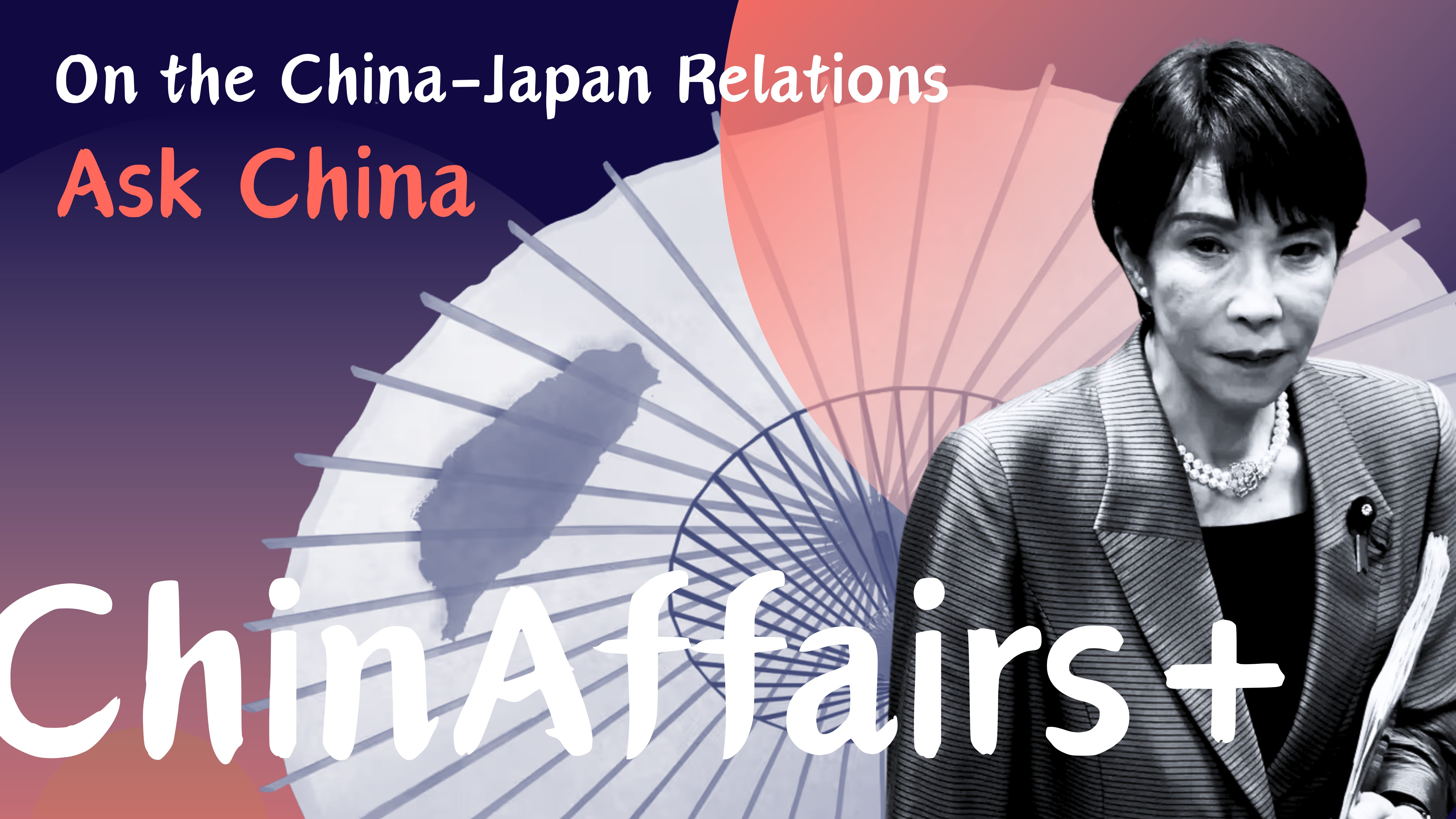
In recent months, China–Japan relations have entered a period of heightened tension, driven primarily by security concerns and sovereignty-related disputes. The most consequential development occurred on 7 November 2024, when Japan’s newly appointed Prime Minister, Sanae Takaichi, stated in the Diet that “a Taiwan contingency is a Japanese contingency,” implicitly suggesting that Japan could exercise the right of collective self-defense in the event of a conflict in the Taiwan Strait. This remark constituted a significant escalation in Japan’s political discourse, as no sitting Japanese prime minister had previously drawn such an explicit linkage between Taiwan and Japan’s security obligations.
China reacted forcefully to what it viewed as a serious provocation. The Chinese government summoned the Japanese ambassador for urgent representations, lodged formal diplomatic protests through the Ministry of Foreign Affairs, and instructed the Ministry of National Defense to respond to Japan’s actions. In parallel, China issued travel advisories warning its citizens against travel to Japan and temporarily suspended imports of Japanese seafood. These measures underscored Beijing’s acute sensitivity to any perceived challenge to its sovereignty and its growing willingness to employ a combination of diplomatic and economic instruments in response to security-related disputes.
Subsequent diplomatic engagement unfolded under sustained strain. Japanese officials sought to downplay the broader implications of Takaichi’s remarks, framing them largely as a product of domestic political dynamics, including the need to consolidate authority and mobilize support from conservative constituencies, rather than as evidence of a fundamental shift in Japan’s China policy. Nonetheless, the statement intensified political scrutiny in both countries. Chinese analysts widely interpreted it as reflecting continuity with the Abe-era strategic orientation, marked by a more assertive security posture and deeper involvement in regional security affairs, particularly in the East China Sea and its surrounding maritime environment.
Despite the sharp deterioration in the political atmosphere, China has thus far adopted a calibrated response, prioritizing diplomatic pressure and signaling restraint while urging Japan to correct what it considers inappropriate rhetoric. The episode highlights the broader risks that escalating strategic mistrust poses to regional stability, as a slide toward open confrontation would serve neither side’s long-term interests. Complicating this dynamic further is the ambiguous posture of the Trump administration, which appears reluctant to be drawn into a Taiwan Strait crisis, thereby adding another layer of uncertainty to the evolving China–Japan–US strategic triangle.
Ask China
Since Japanese Prime Minister Sanae Takaichi advanced the claim in 2025 that “a Taiwan contingency is a Japan contingency,” China-Japan relations have entered a new phase of tension. This statement reflects the deeper impact of U.S. strategic retrenchment in East Asia on Japan’s China policy. The Trump administration’s retrenchment strategy, marked by a strong “America First” orientation, seeks to reduce direct U.S. involvement and security commitments in the region while pressing allies to assume greater responsibility. Its effects on Japan’s China policy are evident in three main respects.
First, the weakening of U.S. willingness to intervene on the Taiwan issue, together with increasingly ambiguous signaling, has shaken Japan’s expectations of U.S. security guarantees. In response, Japan has turned the Taiwan Strait into a forward line for framing the “China threat,” explicitly linking cross-strait stability to its own national security. This has involved pushing beyond previous policy constraints on Taiwan and incorporating related contingencies into the scope of collective self-defense. 2025 Defense of Japan continues to describe China as an unprecedented and greatest security challenge, with particular emphasis on the security implications of developments in both the Taiwan Strait and the East China Sea.
Second, U.S. burden-sharing demands have encouraged a more self-help posture in Japan’s security policy—and, by extension, a more security-driven China policy. As Washington signals that allies must do more, Tokyo has gained both the political justification and the strategic opening to expand its defence capabilities. Under the Takaichi government, Japan announced that defence spending would rise to 2 percent of GDP in fiscal year 2025 and deepening multilateral security cooperation. Yet this shift is not only about capability. Takaichi has also sought to raise Japan’s bargaining power within the U.S. Indo-Pacific strategy by proactively signalling support for Taiwan, positioning Japan as a “front-line” ally whose commitment should be rewarded with greater attention and assurances from Washington. The problem is that she appears to underestimate a central priority in current U.S. crisis management: preventing a Taiwan Strait contingency from spiralling out of control, rather than encouraging allies to adopt escalatory positions.
Third, Japan’s China policy discourse has become increasingly confrontational. Domestically, the logic of “strong self-defense” has gained wider acceptance, with competitive narratives gradually replacing earlier language of stability and restraint. Some political forces now explicitly define China’s rise as the central security challenge and use this framing to justify tougher policy positions.
It is important to note that, despite the security uncertainty generated by U.S. strategic retrenchment, the core structure of Japan’s dependence on the United States has not fundamentally changed. The expansion of joint air exercises, closer military coordination, and more frequent high-level political exchanges all indicate that bilateral security cooperation has not weakened. This apparent contradiction reflects Japan’s dual reality: skepticism about the reliability of U.S. commitments alongside a continued reliance on the U.S. military presence. As a result, Japan’s China policy remains centered on leveraging the U.S.-Japan alliance rather than pursuing genuine strategic autonomy.
Takaichi’s motives reflect a complex intersection of personal political incentives and structural changes in Japan’s domestic political landscape. Japan’s party-faction system, the traditional stabilizer of elite consensus, has largely collapsed, creating space for individual politicians to pursue more populist or confrontational agendas. Takaichi, lacking the institutional constraints that shaped previous prime ministers, aims to build a “strong leader” persona, drawing from global trends in strongman politics. Her use of Taiwan as a tool to mobilize domestic support, distract from inflation and social-security pressures, and accelerate revisions to Japan’s security documents—including raising defense expenditure to 2 percent of GDP and reconsidering the non-nuclear principles—reflects a strategic attempt to convert external tension into domestic political capital.
Takaichi’s stance does not constitute a fundamental shift in Japan’s underlying Taiwan policy; rather, it represents the first time that Japan’s long-standing strategic anxiety has been openly articulated at the highest level. Japan has consistently viewed Taiwan as a geopolitical buffer and has long maintained covert interactions with the DPP authorities. The difference today is that a sitting prime minister has made explicit what was previously implicit. This visibility magnifies structural tensions: China’s sovereignty red line versus Japan’s security fears. These tensions are exacerbated by a pervasive “fear of abandonment” in Tokyo as Donald Trump’s return to the White House introduces new uncertainties to the U.S.–Japan alliance. Against this backdrop, Takaichi has political room to make bolder statements that, in an earlier era, would have been politically impossible.
China’s current approach is shaped by a belief that Takaichi’s remarks represent a “trial balloon” designed to test thresholds before pushing more substantive policy changes, including potential adjustments to the non-nuclear principles. Beijing’s strong countermeasures aim to prevent this initial breakthrough from becoming a structural trend. Beyond immediate retaliation, China’s strategy includes first pubicly criticising Japan as a destabilizing actor and highlighitng the importance of peace-preserving. If Japan faces no resistance at this early stage, it may gradually move toward deeper involvement in the Taiwan question, thereby directly obstructing China’s reunification process and heightening risks of great-power confrontation.
At the same time, responses within Japan were mixed. While elements of the political elite and segments of the public have criticized Takaichi’s remarks, polling data show that roughly 40 percent of the Japanese public agrees or partly agrees with the “Taiwan contingency” framing. This domestic polarization suggests a Japan in transition: exposed to populist narratives, facing erosion of traditional political institutions, and increasingly willing to link its national security identity to external threats. Yet, Japan’s policy will ultimately be conditioned by U.S. behavior. Takaichi’s remarks rely on assumptions of U.S. military involvement, and analysts note that without U.S. engagement, Japan would not independently intervene. Trump’s reluctance to endorse her statements, therefore, injects strategic ambiguity into Japan’s calculus, creating incentives for Tokyo to proceed cautiously even as it signals toughness.
Taken together, these dynamics indicate that China–Japan relations are not simply devolving into confrontation. Instead, they are entering a more complex phase characterized by intensified competition, especially in the security domain, coupled with a growing need for crisis management and guardrail construction. Takaichi may indeed represent a structural inflection point: not because she fundamentally altered Japan’s strategic logic, but because she accelerated the exposure of long-latent contradictions and forced both sides to reconsider the mechanisms needed to prevent uncontrolled escalation. The trajectory ahead is unlikely to return to the cooperative rhetoric of earlier decades; however, mutual dependence, regional stability concerns, and U.S. strategic uncertainties will push both governments to explore a “competition plus management” model as a pragmatic necessity. Managing this competitive equilibrium, rather than eliminating competition itself, will define the next chapter of China–Japan relations.
Apart from public discussion of possible military involvement, Japan has already been engaging the Taiwan issue through a range of non-military means, and these efforts are increasingly systematic.
Diplomatically, Japan has raised the profile of its contacts with the Taiwan authorities by meeting Taiwan-related figures at multilateral venues and deliberately publicizing those interactions. Parliamentary visits, “2+2”–style mechanisms, and expanded exchanges on diplomatic and security issues reflect a longer-standing push by pro-Taiwan forces in Japan to upgrade so-called working-level relations. Together, these steps stretch the boundaries set by China–Japan political documents and draw the Taiwan issue more directly into Japan’s foreign policy agenda.
At the institutional and narrative level, Japan has kept policy space open by softening the constraints of earlier commitments. Although Tokyo pledged during diplomatic normalization and in the Treaty of Peace and Friendship between Japan and China to recognize the position that Taiwan belongs to China, Japanese political discourse has often emphasized “understanding and respect” rather than clear recognition, while repeatedly reviving claims that Taiwan’s status remains “undetermined.” Framing a “Taiwan contingency” as a threat to Japan’s own survival, therefore, goes beyond tougher rhetoric and directly undermines the political foundation of China–Japan relations.
Economic policy has become another channel of pressure. Under the banner of “economic security,” Japan has restricted cooperation with China in areas such as semiconductors, artificial intelligence, quantum technologies, energy, and food security, while aligning closely with U.S. technology controls. Although not explicitly framed around Taiwan, these measures fit a broader strategy that treats Taiwan as a lever to constrain China. As tensions rise, the risk of spillover into tourism, trade, and investment also becomes more concrete.
China’s response needs to be firm but measured. The political baseline on Taiwan and historical issues must be restated clearly and consistently to prevent existing commitments from being diluted. At the same time, economic interdependence and regional cooperation frameworks should be used to limit spillover and curb the politicization of “economic security.” Finally, responses should remain differentiated: firm and timely on Taiwan-related provocations, while keeping channels for dialogue and cooperation open in economic, regional, and global affairs. This approach helps prevent structural differences from hardening into full-scale confrontation.
Japan’s sharp increase in defense spending and pursuit of counterstrike capabilities signals an attempt to overturn the postwar order and intensify the regional arms race. This shift reflects the rise of new militarist thinking and the political manipulation of a “national survival crisis”, linking the Taiwan question directly to such a contingency. Japan’s intent to intervene militarily in the Taiwan Strait has therefore become apparent, and have even been criticized for contradicting Japan’s own legal constraints.
Japan’s policy shift is pushing East Asia toward military confrontation and risks trapping the region in an arms-race spiral. And its inconsistent and “two-faced” behavior continues to undermine the basis of strategic trust with China and heightens regional concerns that Japan may once again drift toward militarism.
Against this backdrop, China’s response operates on several levels. Politically, China must continue focusing on its own development and becoming a better version of itself—an important foundation of China’s long-term success, sending a clear signal that attempts by Japanese right-wing forces to revive imperial ambitions will be condemned by history.
At the same time, sovereignty-related issues leave little room for compromise. China must not yield to Japan’s growing military adventurism, upholding a strategy of “seeking cooperation through struggle”. At the military level, the Chinese armed forces are expected to respond to Japan’s provocative actions—such as close-in reconnaissance, radar illumination, and high-risk encounters in sensitive air and maritime areas—with calibrated deterrent measures. These include tracking and monitoring, on-site warnings, visible shows of presence, and, when necessary, public disclosure of relevant incidents. This approach is consistent with the Ministry of National Defense’s repeated emphasis on handling such situations in accordance with law and regulations, opposing dangerous close approaches, safeguarding operational safety, and preventing escalation. The purpose of these measures is to establish credible deterrence and ensure security, not to proactively escalate into an uncontrolled military confrontation.
In parallel, diplomatic and security consultation mechanisms between China and Japan should be restored, while urging Japan to assess the strategic reality more soberly. Japan must anchor its future development on cooperation with China, Asia-Pacific stability, and regional win-win outcomes; disagreements should not be allowed to define the China–Japan relationship. While noting that China–Japan competition has extended into regions such as Central and Eastern Europe, China, while managing relations with the United States and other major powers, must still work to maintain a constructive and stable relationship with Japan to avoid escalation into a zero-sum rivalry.


I just think that the Japanese PM’s statement is needlessly provocative. We might have different views over whether China’s response is excessive, but the Japanese provocation has no justification, even within the narrow terms of Japan’s self interest. Just provocative for no good reason.