



Welcome to the 19th edition of China Scholar Insights!
China Scholar Insights is a feature which aimed at providing you with the latest analysis on issues that Chinese scholars and strategic communities are focusing on. We will carefully select commentary articles and highlight key points. Questions or criticisms can be directed to sch0625@gmail.com
I am SUN Chenghao, a fellow with the Center for International Security and Strategy (CISS) at Tsinghua University. ChinAffairsplus is a newsletter that shares Chinese academic articles focused on topics such as China’s foreign policy, China-U.S. relations, China-European relations, and more. This newsletter was co-founded by me and my research assistant, ZHANG Xueyu.
Background
On December 4, 2025, the White House unveiled its updated National Security Strategy Report, a document widely seen as the guiding framework for the Trump administration’s foreign policy in its second term. The report establishes a new and more complex framework for China-US relations, defining that competition will primarily revolve around economic security, supply chain restructuring, and dominance in high technology, while also defining the boundaries between competition and cooperation. The impact of the report extends far beyond bilateral China-US relations and is actively reshaping the global landscape.
Summary
Scholars assessing the new U.S. National Security Strategy generally view its “America First” strategic retrenchment not as abandoning global hegemony, but as selective resource prioritization and cost optimization to sustain long-term great power competition. They note economic security and technology competition are now central to U.S. strategy toward China. Experts warn that Washington’s push for allied burden-sharing in the Indo-Pacific, alongside increasingly ambiguous security commitments, could intensify regional security dilemmas and elevate risks in flashpoints like the Taiwan Strait. Finally, effectively countering Western narrative dominance by systematically articulating policy positions is crucial to navigating the intensified perception competition accompanying these strategic shifts.
Insights
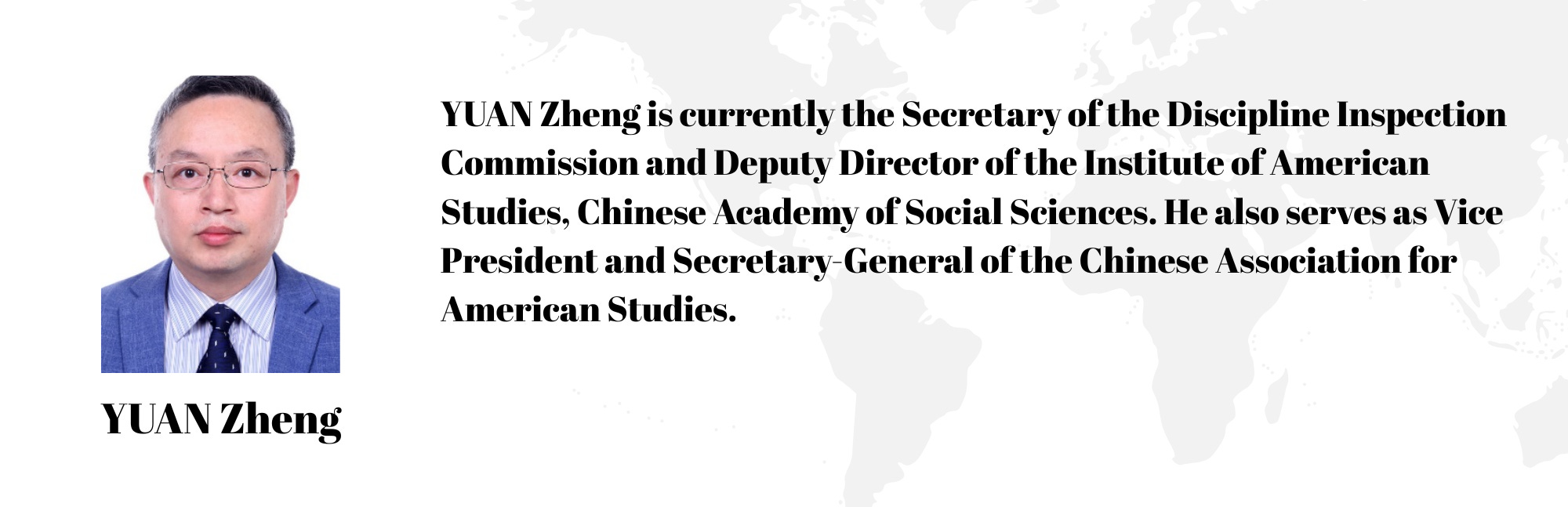
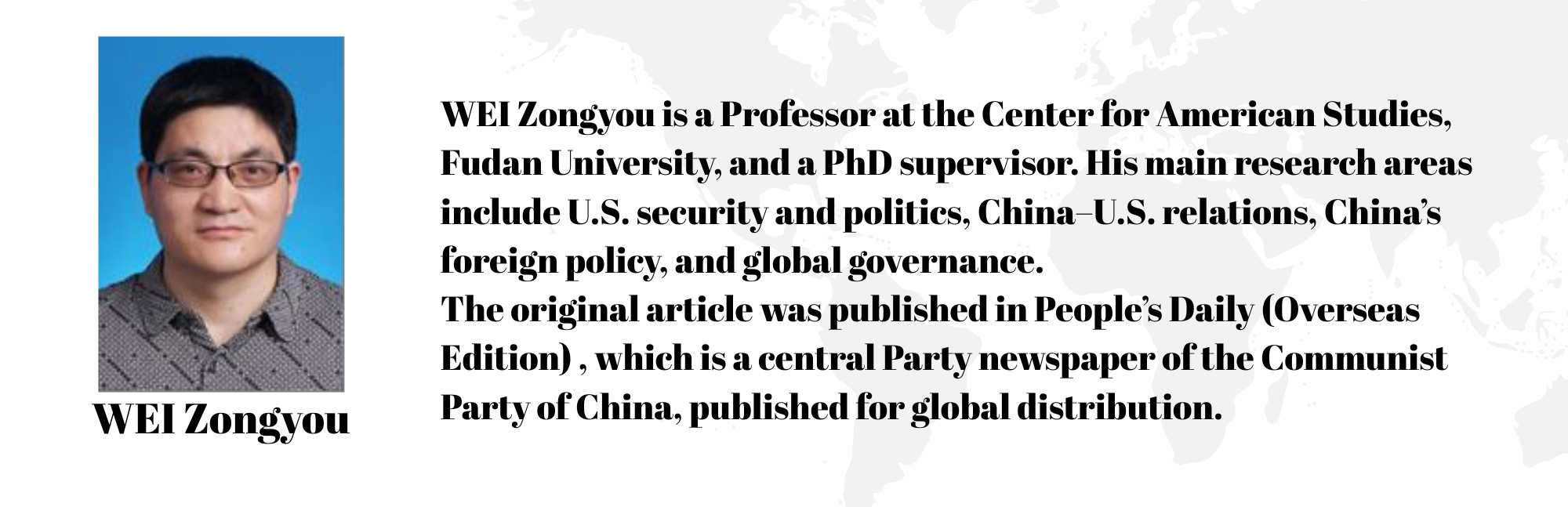
Yuan Zheng & Wei Zongyou: U.S. New National Security Strategy Report Released: Strategic Retrenchment or ‘Retreat to Advance’? Expert Interpretations
The 2025 U.S. National Security Strategy signals a selective, interest-driven recalibratiing: Washington is narrowing its priorities and responsibilities under “America First,” yet it is not abandoning hegemony. Instead, it is concentrating resources on what it defines as core interests while reducing commitments elsewhere—an approach likely to strain alliances and complicate global governance.
A Strategic Reprioritization Shaped by Nationalism and Transactional Realism
The new strategy reflects an inward-looking security outlook with strong nationalist—and even populist—overtones. It reprioritizes from broad global engagement to homeland and near-abroad concerns, advancing a “Western Hemisphere first” agenda that treats border control, counternarcotics, and preventing extra-regional influence as central interests. The report also elevates economic security—reindustrialization, supply-chain “de-risking,” and maintaining U.S. advantages in advanced technology, manufacturing, critical minerals, and energy. According to a realist worldview, it emphasizes sovereignty and competition among states, downplays ideological “democracy promotion,” and portrays global politics as a bargining arena in which power functions as currency.
Not Letting Go of Hegemony: Limited Responsibility and “Selective Dominance”
The U.S. is not truly giving up global primacy; rather, it is moving from an expansionary model toward a more protective and selective form of hegemony. Under resource constraints and domestic pressure, the strategy adopts “limited responsibility”: concentrating investments in priority regions and domains, while asking allies to shoulder more costs and reducing attention to areas deemed non-core. Strategic contraction is therefore conditional—paired with efforts to preserve decisive control in the Western Hemisphere and to sustain leadership in high-end technology, finance, energy, and other core sectors. This recalibration is both a response to perceived limits of capacity and a way to accumulate strength for long-term great-power competition.
Negative Spillovers: Alliance Frictions and Global Governance Headwinds
The shift is expected to deepen strains within U.S. alliance networks. Demands for allies’ higher defense spending and stronger policy alignment—combined with pressure on trade, investment, and other issues—may widen transatlantic cracks and generate dissatisfaction among Asia-Pacific allies. Globally, skepticism toward multilateralism and reduced willingness to provide public goods could inject instability into international institutions and increase uncertainty, while supply-chain security policies may accelerate fragmentation. At the same time, the report’s weaker emphasis on ideological export may marginally expand room for managing competition, but the overall trajectory points to greater volatility in alliances and global governance.
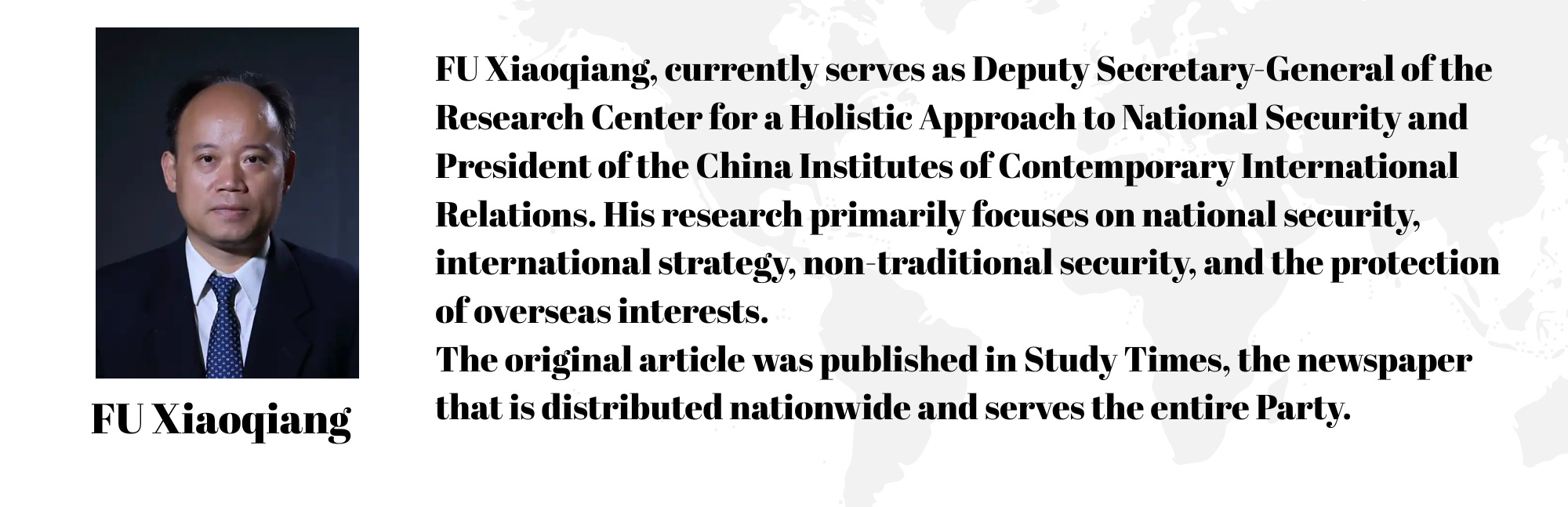
FU Xiaoqiang: New Trends in Hegemonic Logic: An Interpretation of the United States’ New National Security Strategy
The new National Security Strategy (NSS), centered on “strength advantage” and operationalized through “policy preference”, seeks to construct a new framework for sustaining U.S. hegemonyamid accelerating global power shifts. While carrying forward the political promise of “Make America Great Again,” the new NSS aims to systematically reshape U.S. hegemonic status. It is bound to generate complex and profound implications.
Three New Characteristics: America First Value Orientation, Hard-Power–Centered Advantage Building, and Pragmatic Policy Prioritization
The first notable characteristic of the new strategy is its explicit “America First” value orientation. The NSS defines the survival and security of the United States as an independent sovereign republic as the paramount national objective. In practice, this translates into prioritizing homeland security through stricter border controls, restrictive immigration policies, and the reconstruction of the defense industrial base. Economically, the strategy advances a form of economic nationalism, justified by “rebalancing global trade relations” and implemented through tariffs and industrial subsidies to encourage reshoring.. It also elevates the primacy of nation-state sovereignty as a fundamental principle of foreign policy and adopts a skeptical stance toward multilateralism and supranational institutions.
Second, the strategy frames domestic strength advantage as the material foundation of hegemony, emphasizing military deterrence, technological leadership, and energy independence as core pillars. This hard-power–centered approach seeks comprehensive leadership in key domains and consolidates hegemonic foundations through exclusive advantages.
Third, it embraces a pragmatic orientation, transcending the “liberal democratic” framework to prioritize strategic choices rooted in core national interests with flexible adjustments to foreign policies and cooperation boundaries enhancing the targeting and effectiveness of U.S. actions.
The Triple “Rebalancing” Logic: Economics, Geopolitics, and Alliances
The deep logic of NSS reflects a triple “rebalancing” intended to sustain U.S. dominance through cost control, risk contraction and responsibility sharing. In economic and trade relations, it rejects free-trade orthodoxy in favor of protectionist measures— aimed at addressing deindustrialization and widening trade deficits, structural ills stemming from neoliberal-driven globalization—even at the cost of global economic coordination efficiency. In geopolitical posture,the NSS reallocates strategic resources by elevating the Western Hemisphere, reaffirming the Monroe Doctrine, whilenarrowing U.S. interests in Europe toward ceasefire and stability and de-emphasizing ideological agendas in the Middle East and Africa in favor of interest-based cooperation. . For the alliance system, the United States seeks to shift greater security responsibilities and costs onto allies while retaining decisive control, thereby reducing the financial and military burdens of hegemony.
Strategic Shifts Toward China: From Comprehensive Competition to Sector-Focused Rivalry, From Value-Driven to Interest-Oriented Policy
The NSS signals important adjustments in the U.S.—China policy. At the strategic cognitive level, it acknowledges that China and the U.S. are “nearly evenly matched.” In terms of competition focus, the NSS shifts from comprehensive confrontation toward concentrated competition in economic and technological domains, reflecting recognition of the high costs of full decoupling. For tactics application, the United States increasingly relies on flexible, lower-cost tools, including the instrumentalization of the Taiwan issue, a practice that risks undermining peace and stability across the Taiwan Strait.
Essentially, the new National Security Strategy reflects U.S. systematically adjusting traditional hegemonic tactics for core national interests, with unilateral and exclusive traits. It fails to resolve domestic structural issues, undermines multilateralism, and fuels instability. The stability and development of China-US relationship must be based on mutual respect, coexistence and win-win cooperation.
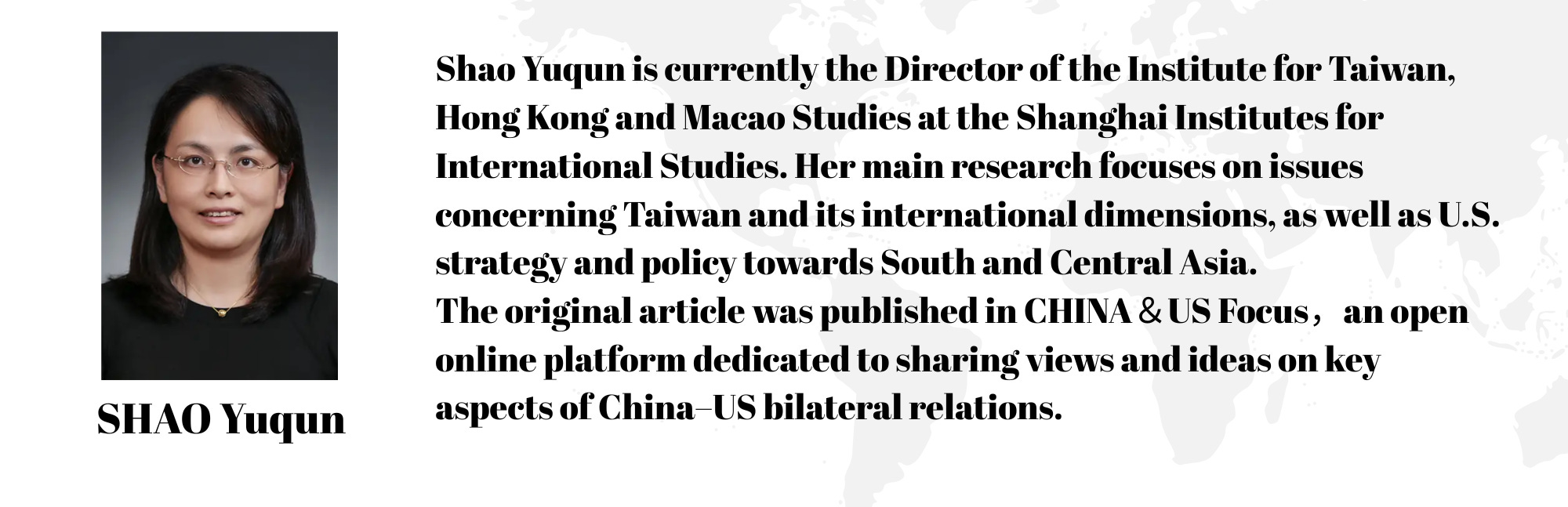
Shao Yuqun: The New U.S. Strategy and the Western Cognitive Cocoon on Taiwan
How to Understand the Attitudes of Japan and the Taiwan Authorities Toward the U.S. National Security Strategy?
The new U.S. National Security Strategy underscores an explicit “America First” orientation. Its policy signals that the U.S. Prioritizes U.S.-China relations over U.S.-Japan relations, and that the expansion of unofficial ties with Taiwan must not not come at the expense of U.S.–China relations. For President Trump, the immediate priority is to ensure a smooth China visit next spring, so he prefers that neither the Taiwan factor nor U.S.–Japan frictions disrupt this objective.
Japan and Taiwan therefore read the NSS as a negative signal—“a minus point” for both. Both also have domestic incentives to amplify U.S. statements to reassure their publics and sustain internal narratives of external support.
The U.S. demands that Japan assume greater defense responsibilities and directly confront frontline risks, which has sparked internal tension in Japan. President Trump has not explicitly committed to defending Taiwan, which leaves the DPP authorities uneasy. Their recent attempts to convey messages through U.S. media have yielded limited results.
Japan and Taiwan’s recent sensationalization of the PLA aircraft carrier Liaoning and related drills serves to reassure domestic audiences and offset the negative impact of the new NSS.
Can Trump Reach Any New Understanding with China on Taiwan?
This report does not mention opposition to “ Taiwan independence “ movements . A potential Trump 2.0 administration shows no intention of fully articulating the U . S .” one - China policy .” Its interpretation of “ maintaining the status quo “ in the Taiwan Strait is limited to “ avoiding military conflict ,” displaying little concern over whether Taiwan authorities pursue “ independence .” However, the U.S. government has consistently “ militarized “ the Taiwan question , which risks exacerbating regional security tensions .
Trump is reluctant to proactively address the Taiwan question and must balance the interests of such a visit with the Republican Party ‘ s midterm elections . Key indicators to watch regarding his stance on Taiwan include : first, whether to allow Lai Ching-te to transit U.S. territory; second, the intensity of arms sales to Taiwan.
Pro-Taiwan forces in the U.S. Congress have been pushing relevant agendas. If the Republican Party loses the 2026 midterm elections, the legislature’s negative meddling in cross-Strait issues will likely intensify.
How Can China Break Through the Western “Information Cocoon”?
Misunderstandings toward a rising China are, to some extent, natural, and China and the world must adapt to each other. The current key challenge lies in the information gap: many Western audiences are unaware of the substance of mainland China’s current policy toward Taiwan, such as promoting cross-Strait integrated development and encouraging Taiwan compatriots to live, work, study, and travel on the mainland, while Western media coverage over-focuses on military movements and reinforces one-sided perceptions.
The proposed remedy is to communicate China’s stance and policy on the Taiwan question clearly, in accessible terms and through relevant channels, in order to foster a more objective understanding within the international community.
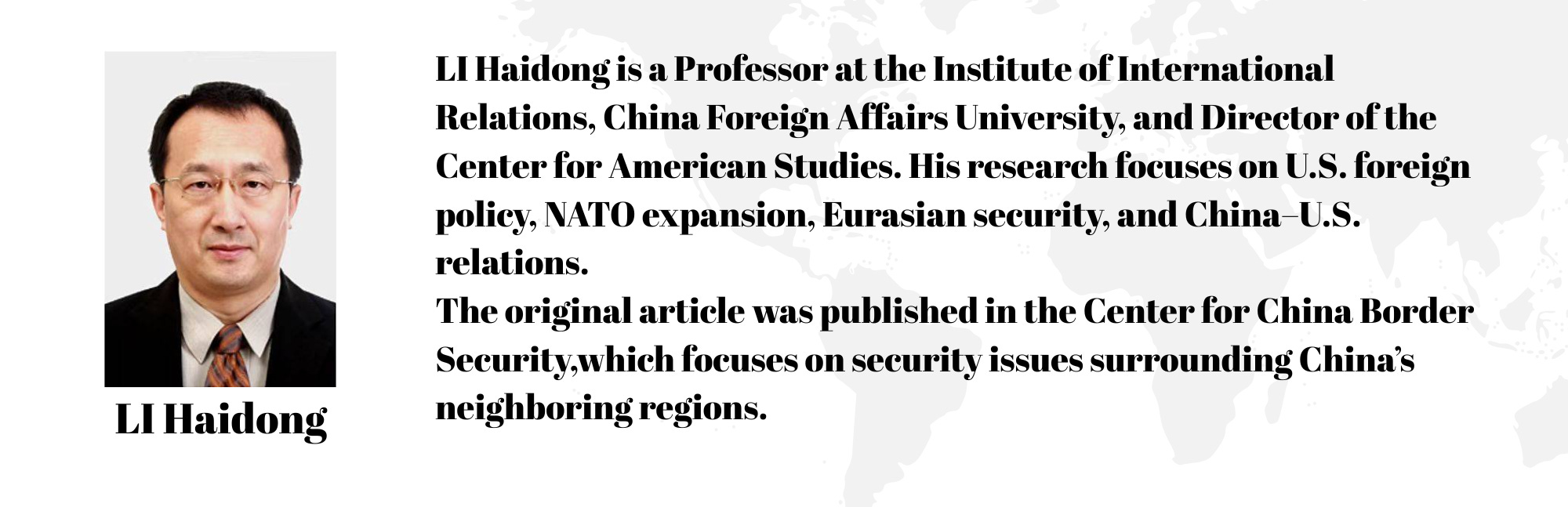
Li Haidong: The United States’ New National Security Strategy and Strategic Realignment
A Structural Shift in American Foreign and Security Policy
A Structural Shift in U.S. National Security Thinking
The new U.S. National Security Strategy (NSS) marks a fundamental departure from the globalist framework that has guided American foreign and security policy for more than three decades. It sends a clear signal that the United States no longer intends to take sole responsibility for maintaining global orders. Instead, the strategy emphasizes national interests and strategic selectivity, reflecting a major change in how the U.S. positions itself within a changing international environment.
From Globalism to Nationalism
At the core of the new strategy is a decisive shift away from elite-driven globalism toward a nationalist orientation centered on sovereignty, national identity, and core interests. International cooperation based on global norms is increasingly de-emphasized, while “America First” principles guide policy priorities such as border security, economic resilience, and supply-chain protection. According to the author, this transformation represents a relative strategic contraction rather than a comprehensive withdrawal from global affairs. It also reflects a rejection of the globalization and free-trade framework long associated with that globalist approach.
Regional Refocusing and the Western Hemisphere
Another defining feature of the NSS is the repositioning of the Western Hemisphere as the central focus of U.S. global strategy. By reinterpreting the Monroe Doctrine, the United States reinforces its leadership role and perceived right to intervene in the Americas. This adjustment illustrates a shift from global dominance toward region-centered influence management, reflecting changing power dynamics and strategic constraints.
A Recalibrated but Competitive China Policy
Compared with the 2017 and 2021 NSS documents, the new strategy adopts a more sober and realistic assessment of China. It recognizes that U.S.–China relations have evolved into a near-peer relationship rather than an asymmetric one. On this basis, it signals an intention to adjust economic relations with China on the principles of reciprocity and equality. Nevertheless, the stated objective of restoring U.S. economic autonomy indicates that strategic competition with China remains central, taking the form of long-term coexistence accompanied by intensified rivalry.
Economic Security and Technological Rivalry
The report places strong emphasis on building independent supply chains in sectors related to national defense and security. It also underscores the determination to maintain absolute advantages in emerging technologies such as artificial intelligence, quantum computing, biotechnology, and space. These priorities are likely to intensify technological competition between the two countries and increase the risk of partial decoupling within global industrial and innovation networks.
Adjustment without Transformation
Overall, the new NSS outlines an approach aimed at preserving U.S. influence through resource reallocation, selective engagement, and a focus on core interests. While the strategy appears more pragmatic in tone, its underlying logic, centered on great-power competition, regional dominance, and technological privilege remains largely unchanged. As such, this shift is more about how things are done than what is actually done, and it may be hard to put into practice.
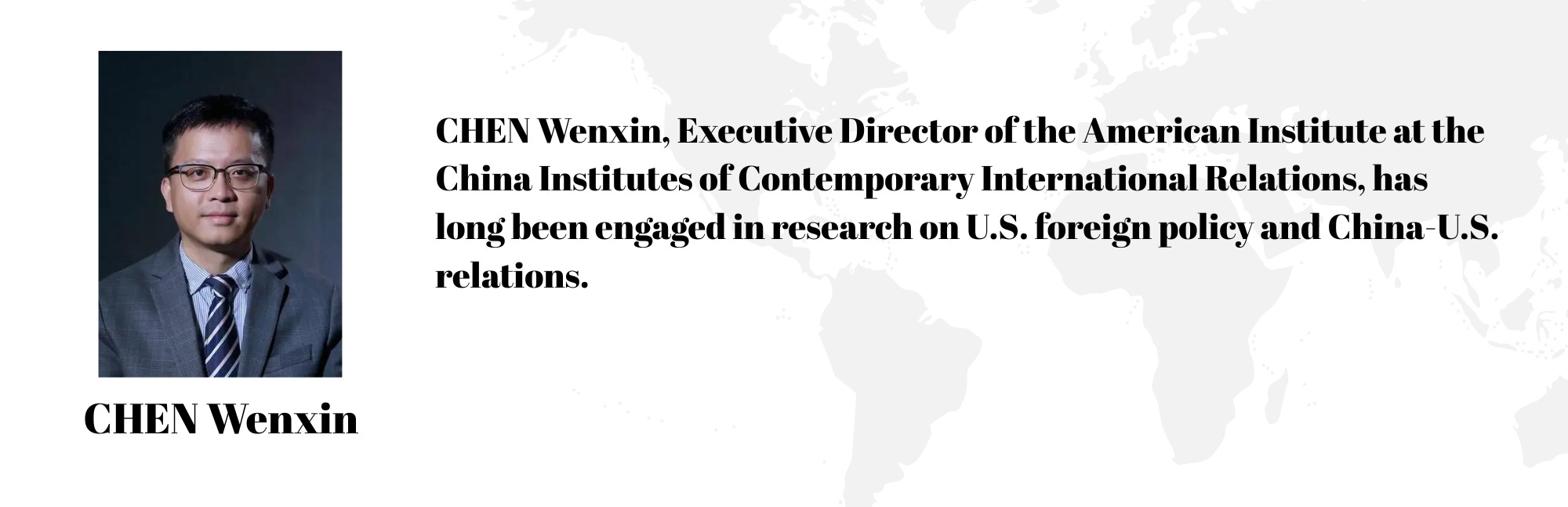
Chen Wenxin and others: An Interpretation of the United States’ New National Security Strategy
The new U.S. National Security Strategy report is the guiding framework of the Trump administration’s “America First” doctrine. It prioritizes core national interests, the economy, and the Western Hemisphere, advocating the “Monroe Doctrine” and “non-interventionism,” marking a major shift in U.S. national security strategy since the end of the Cold War.
China Strategy: Competitive Posture and Key Issues
The strategy identifies the “Indo-Pacific region” as a “critical economic and geopolitical battleground,” signaling intensified U.S. competition around China. However, its tone toward China is relatively restrained, avoiding labels such as “primary strategic competitor” or “revisionist state,” and refraining from ideological framing. The characterization of U.S.-China relations as “near-peers” reflects the Trump administration’s recognition of China’s growing strength. From this basis, new strategic adjustments are emerging, with competition in the economy, technology, supply chains, and strategic channels becoming central to bilateral relations.
Southeast Asia: Anxiety and Marginalization
Southeast Asia responds with “no surprise but greater anxiety,” feeling marginalized in the document. It reinforces U.S. security dominance in Asia-Pacific while emphasizing burden-sharing or shifting, disregarding regional stability to maintain deterrence along the first island chain. It also “securitizes” economic tools—tariffs, export controls, and supply-chain reshoring—and pressures ASEAN states to pick sides in key technologies (e.g., semiconductors and subsea cables).
India: Mixed Reactions and Transactional Friction
India shows mixed reactions with relatively polarized evaluations. While its foreign ministry highlights U.S. recognition of India’s importance, many Indian media note cooled rhetoric and a more transactional approach. India’s repeated denial of Trump’s mediation in India-Pakistan conflicts reflects domestic political factors and ongoing bilateral friction.
Japan and South Korea: Alliance Concerns and Autonomy Dilemma
Japan and South Korea, with different focuses, worry that Trump’s “new isolationism” may compromise their interests by raising their security costs. Japan focuses on the softened tone toward China and Russia, while South Korea fears its military could be leveraged against China and is concerned over the omission of North Korea. Generally, it is considered that their uncertainty and unease would persist as long as they keep their reliance solely on the U.S. alliance while giving up autonomous efforts to shape their security environment.
Russia: Cautious Optimism and Implementation Doubts
Russia adopts a “wait-and-see” stance, viewing the report positively for acknowledging the decline of the U.S.-led global order, showing pragmatism, and signaling openness to dialogue. However, it remains cautious regarding implementation, noting the U.S. is unprepared for serious strategic stability talks and may target Russia’s energy influence.
Latin America: Heightened Control and Securitization
For Latin America, the strategy implies strengthened U.S. control over the Western Hemisphere amid global retrenchment. It frames regional dominance as solving U.S. domestic problems, asserts hegemony over key passages and resources, and justifies enhanced military deployments through “securitization,” including the claimed right to use lethal force.
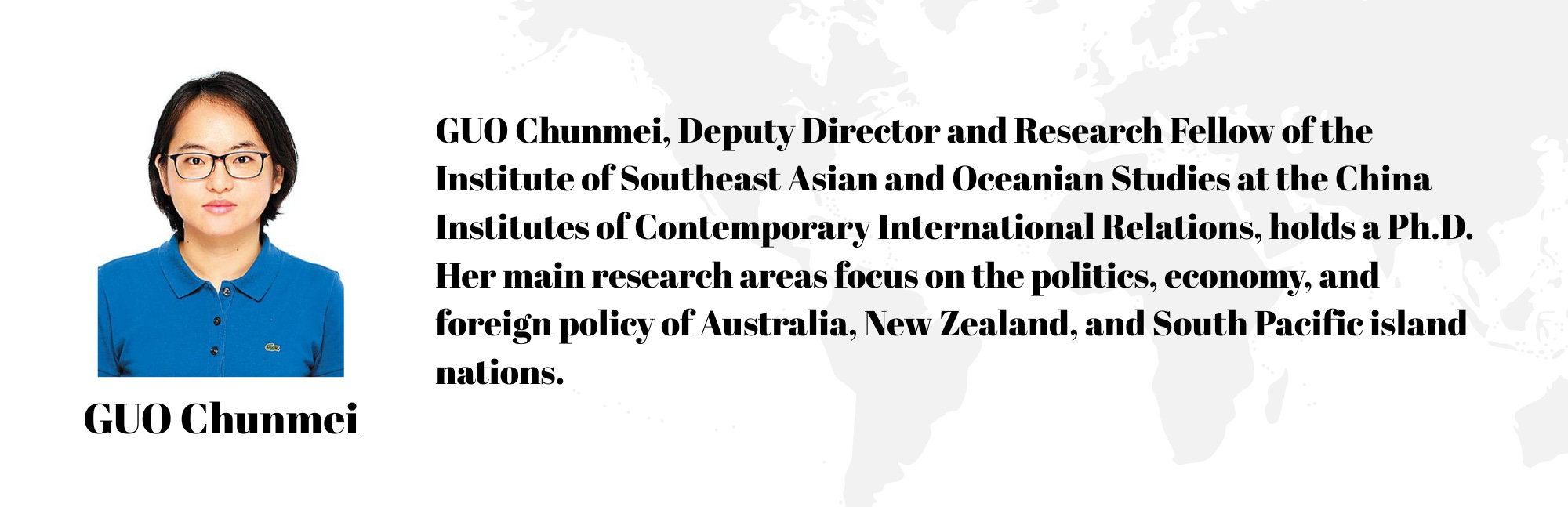
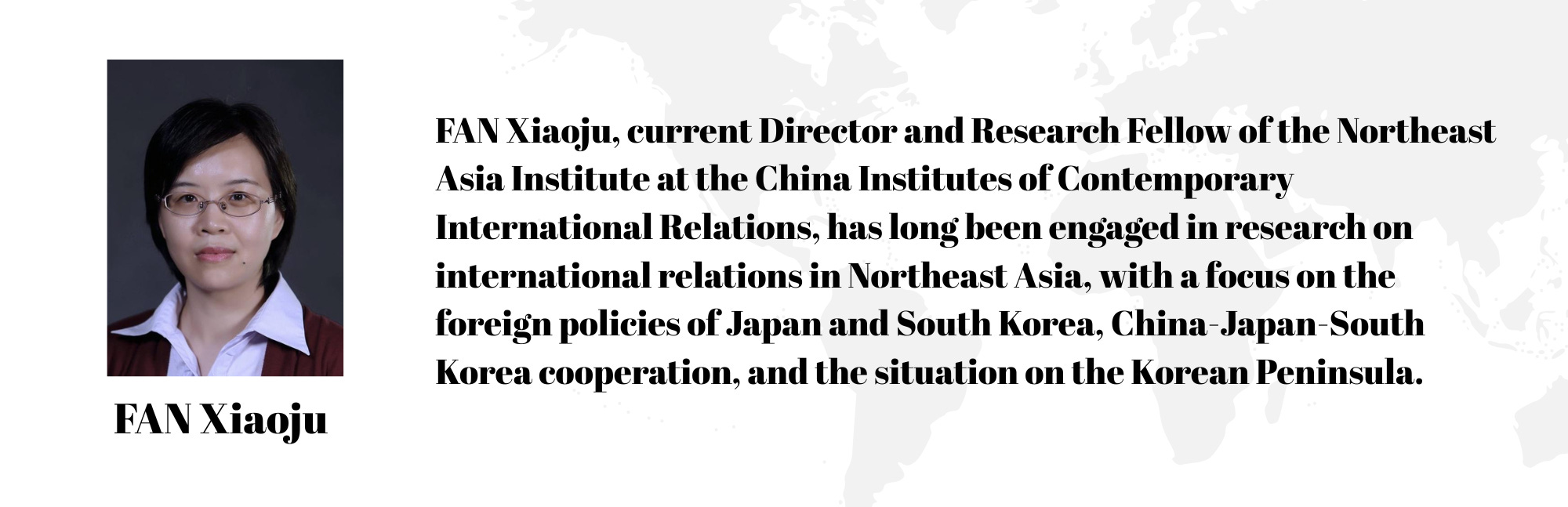


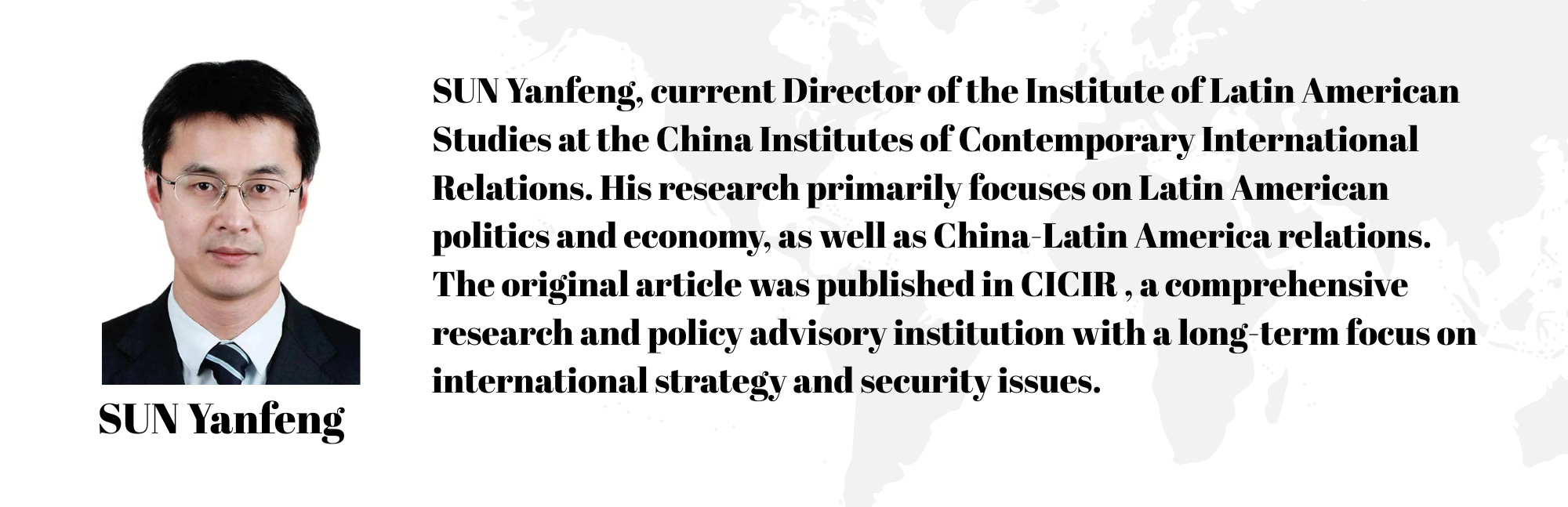
Meng Weizhan:When America Embraces “Recuperation”: The Long-Term Strategy Behind Trump’s New National Security Approach
Strategic Core: Reducing Commitments to Rebuild Strength
Trump’s second-term national security strategy is fundamentally a “recuperation” doctrine. It aims to deliberately scale back America’s global security commitments and military engagements. The objective is to curb excessive strategic overextension, conserve national strength, and concentrate resources on rebuilding comprehensive power for future great power competition.
Primary Target: Re-centering Long-Term Competition on China
A pivotal adjustment involves redefining the primary strategic competitor. The strategy softens its rhetoric toward Russia and signals interest in dialogue and strategic stability, potentially seeking stabilization or even a modus vivendi in Europe. This allows the U.S. to reallocate its strategic focus and resources decisively toward the Indo-Pacific region, targeting China as the principal long-term challenger.
Implementation Methods: Leveraging Allies and Selective Pressure
Washington plans to achieve strategic retrenchment by compelling its allies to assume greater defense burdens and responsibilities. Concurrently, the U.S. will employ targeted, high-intensity pressure on specific adversarial points. This combination creates strategic breathing space, enabling internal consolidation and the accumulation of momentum for a protracted contest.
Ultimate Objective: Reshaping the Future International Order
This is not isolationism but a calculated long-term play. The final goal is to overcome the current phase of strategic “exhaustion.” By recuperating and accumulating strength, America seeks to reclaim overwhelming strategic initiative and dominance. The aim is to decisively shape a new international political and security order that aligns with its core interests in the coming decades.

Conclusion
The 2025 U.S. National Security Strategy signals a pivotal shift toward a hardened, interest-based realism. This refocusing on economic and technological competition with China, coupled with demands for allied burden-sharing, redefines America’s global posture. It aims to forge a more sustainable hegemony but risks fueling regional instability and fragmenting international order. Navigating this era requires China to bolster its resilience, manage complex alliance dynamics, and articulate a compelling strategic narrative amidst intensified systemic rivalry.
Editors for Today’s Newsletter:
SUN Chenghao, LI Xinyi, SHAO Yujie, Stefanie Perner, Zhang Xinyue, LIU Zhuofan, CHEN Weng U, Yamada Yumi, ZHANG Xueyu

