



Welcome to the 18th edition of China Scholar Insights!
China Scholar Insights is a feature which aimed at providing you with the latest analysis on issues that Chinese scholars and strategic communities are focusing on. We will carefully select commentary articles and highlight key points. Questions or criticisms can be directed to sch0625@gmail.com
I am SUN Chenghao, a fellow with the Center for International Security and Strategy (CISS) at Tsinghua University. ChinAffairsplus is a newsletter that shares Chinese academic articles focused on topics such as China’s foreign policy, China-U.S. relations, China-European relations, and more. This newsletter was co-founded by me and my research assistant, ZHANG Xueyu.
Summary
Chinese Scholars broadly agree that the collective rise of the Global South marks a fundamental shift toward multipolarity, weakening long-standing Western dominance. This surge is amplified by expanded South-South cooperation and institutions like BRICS, enabling the bloc to better advocate for a more equitable global power structure.
China, as a member of the Global South, has effectively facilitated the development of countries in the region by adhering to multilateralism and advancing pragmatic cooperation initiatives, such as the Belt and Road Initiative. Despite significant opportunities, persistent challenges remain, driven by internal inequalities, economic fragility, and intensifying geopolitical headwinds.
Sustained progress depends on enhanced solidarity and pragmatic collaboration within the Global South. China’s role is seen as constructive—promoting mutual benefit, dialogue, and incremental reform of the international order.
Insights
LUO Jianbo: Interpreting the Collective Rise of the Global South as a Defining Hallmark of our Era’s Profound Transfomation
As Chinese President Xi Jinping has pointed out, the collective rise of the Global South stands as a defining hallmark of our era’s profound transformation. It is reshaping the landscape of the global economy and international politics. A global governance system encompassing multiple actors, dimensions, and fields is gradually taking shape.
As a natural member of the Global South, China remains committed to advancing shared development with fellow nations. It is believed that China will play an even greater role in fostering the unity and revitalization of the Global South.
The Collective Rise of the Global South
Despite current global economic headwinds, China remains to be a major driver and significant engine, injecting crucial stability into the uncertain world economy. From “the hopeless continent” to “the hopeful continent”, several African countries have demonstrated sound development trends, emerging as new growth points of the global economy. As a crucial force for the national liberation movement in Asia, Africa and Latin America in the past, today’s Global South focuses on the economic development and national rejuvenation, contributing new strength to the true revitalization today.
The Collective Rise of the Global South and Its Profound Global Impact
The collective rise of the Global South is not just a matter for developing nations, but a transformative force reshaping the global order and the future of international relations.
The centuries-old “center-periphery” system is shifting, moving toward genuine multipolarity. Many nations have found their own successful paths, altering the modern world’s wealth distribution for the first time. On issues like Ukraine and Gaza, many Global South countries pursue independent policies, resisting Western pressure.
A new pattern of mutual learning among human civilizations is taking shape. Developing nations increasingly see modernization as an autonomous quest, not synonymous with Westernization. Seeking systems suited to their own conditions, countries like China demonstrate success through alternative models.
Reforms for a fairer global governance system are underway. As developing countries now having greater influence in international affairs, the norms and principles of global governance are also evolving rapidly. Unlike unilateralism or zero-sum thinking, principles championed by China, such as mutual respect and win-win cooperation are gaining growing support and significant global influence.
Contributing Greater Chinese Strength to the Solidarity and Revitalization of the Global South
China places the Global South at the heart of its diplomacy, striving to pool its mighty strength to jointly build a community with a shared future for mankind. As the world’s largest developing country, China can play a unique role in the promotion of the Global South.
The vision of a community with a shared future for mankind builds a new path for solidarity and cooperation, where China calls for mutual respect and collaboration among all nations. To address common global challenges, China has proposed the Global Development, Security, Civilization, and Governance Initiatives, upholding true multilateralism, opposing economic decoupling, and ensuring globalization benefits developing countries. Guided by a correct approach to justice and interests, exemplified by zero-tariff policies for least-developed nations, China advocates the principle of extensive consultation, joint contribution, and shared benefits.
Jointly building the Belt and Road achieves common development. The combined imports and exports between China and the countries involved in the initiative account for more than 50% of China’s total imports and exports. The cooperation not only provides China for new economic expansion, but also gives the Global South a significant cooperation platform and crucial development motivation, even contributing to the global economic recovery.
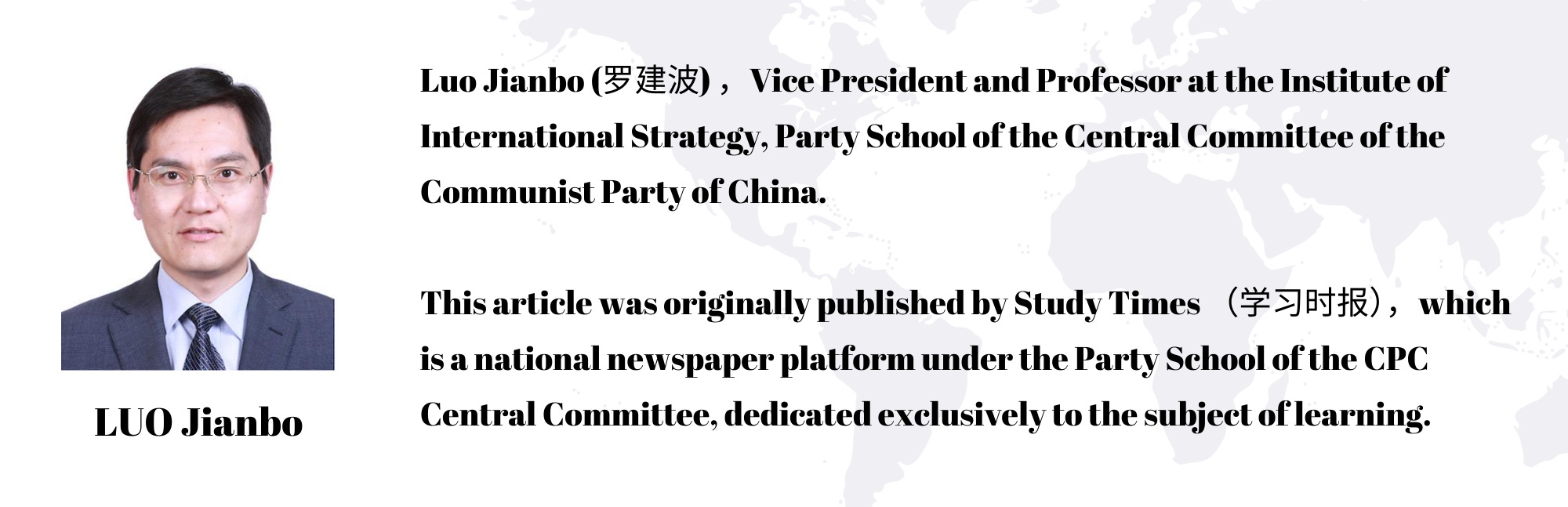
SONG Wei:The Global South Advances the Evolution of the World Configuration
The Global South, as a coalition of states united byshared interests in the international order, advocates politically for anti-colonialism, sovereign equality, and non-interference politically; opposes neo-colonialism while pursues mutually beneficial economic development; and calls for differentiated responsibilities as well as a stronger voice in global governance. These common interests bind the countries of the Global South into a cohesive whole, enabling them to speak with a common voice in the international order. Since the end of World War II, the evolution of the Global South’s collective strength can be broadly divided into four phases.
Phase I: Formation of the Global South as a Political Force
The formation of the Global South began in the aftermath of World War II and accelerated throughout the mid-1960s, when national liberation movements gave rise to numerous new independent states in Asia, Africa, and Latin America. They substantively altered the post-World War II situation where Western countries monopolized international affairs. The Bandung Conference held in 1955 is the first large-scale international conference held by Asian and African countries and regions without the participation of colonial powers. Meanwhile, the founding of the People’s Republic of China greatly strengthened the power of the Global South.
Phase II:Emergence on the Global Stage Through Unity and Self-Strengthening.
From the 1960s to the late 1980s, the Global South began to play a more active role in international institutions. By leveraging its numerical strength, it pushed for reforms such as amendments to the UN Charter and expanded the membership of the Security Council. Their collective stance prevented major powers from dominating those international organizations that adopt the “one country, one vote” decision-making method. The Eight Principles for Foreign Economic and Technical Assistance proposed by China emphasize equality, non-interference in internal affairs, and not attaching any political conditions. During this period, the Global South substantively transformed the world pattern and the world order of that era.
Phase III: Accelerated Rise Driven by the Economic Ascent of China and the “BRICS” Nations
From the end of the Cold War to 2012, rapid economic growth—especially China’s rise to the world’s second-largest economy—reshaped global power balances. The emergence and institutionalization of the concept of “BRICS” provided a relatively coherent framework for coordination for the Global South. The evolution from the G7 to the G20 demonstrated that representative major countries within the Global South had gained the capacity to to jointly discuss and decide global affairs alongside Western developed nations,reflecting the broader trend of “the East rising and the West declining.”
Phase IV: A New Phase of Multipolar Evolution
Since 2013, the rise of the Global South has entered a new phase. From a long-term perspective, multipolarity has become a fundamental trend in the development of internatinal stystem, with the United States, China, Russia, Japan, India, and the European Union emerging as potential key poles, particularly China and India. Through initiatives such as the Belt and Road, China is increasingly providing international public goods and moving closer to the center of the world stage. As long as countries of the Global South can unite, strengthen themselves, and continuously enhance their capabilities, the long-standing dominance of Western nations over the world order and global landscape will continue to be weakened and transformed.
Challenges to the Rise of the Global South
Economically, the Global South faces challenges in maintaining sustainable economic growth and social stability amid rising trade protectionism and unfavorable international trade conditions. Strategically, the test lies in whether its member countries can unite as one, seek common ground while preserving differences, forge a unified force in global governance, and speak with a collective voice. In this process, China’s stability and development serve as a ballast stone and stabilizer.
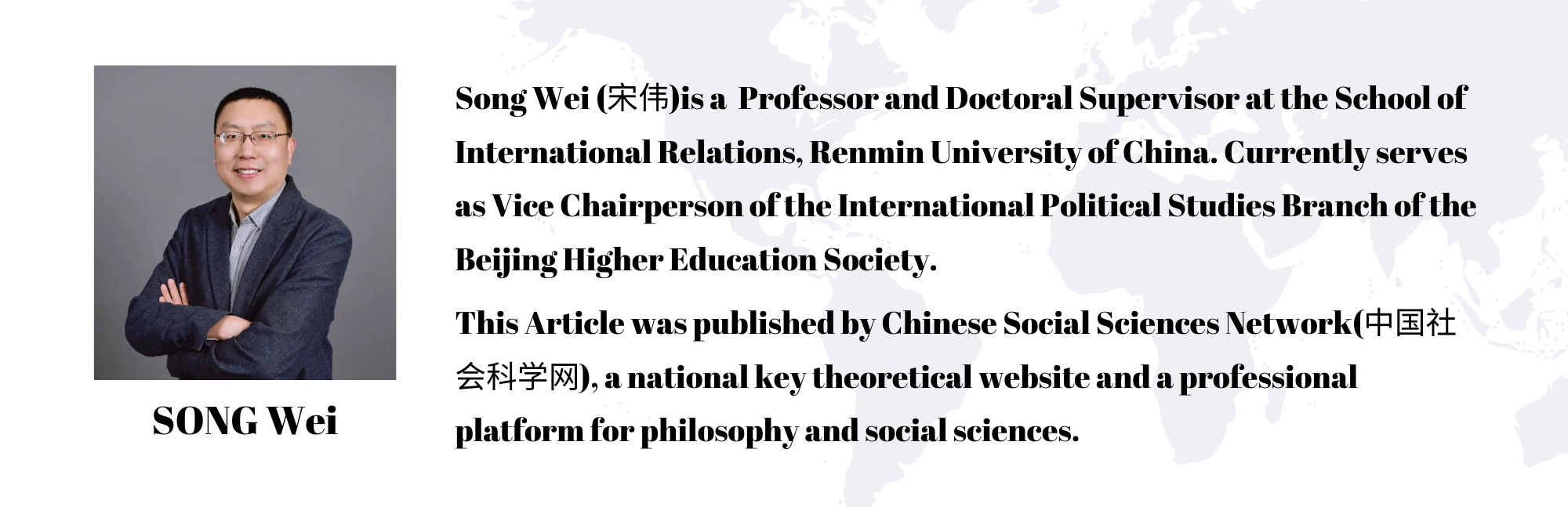
WANG Min:China and Global South——a major role change in the era of globalization
Over the past 45 years, China has transformed from a closed low-income economy into a major open economy and trading power. Its rapid rise has significantly boosted the weight of middle-income economies in the world economy and weakened the previously centre–periphery structure.
Deepening Trade and Evolving Comparative Advantage
Trade expansion is a key channel of China–Global South cooperation. By 2023, exports had reached USD 3.56 trillion and imports USD 2.71 trillion, about 15% and 11% of global totals. Low- and middle-income economies now account for a rising share of this trade and already exceed high-income partners in China’s imports. The composition of trade has shifted from importing capital and intermediate goods and exporting labour-intensive consumer goods to high-income markets, to a pattern in which China imports raw materials and exports capital goods. Between 2000 and 2023, the share of Global South economies in China’s capital-goods exports rose from 16.5% to 41.5%, while their share in China’s raw-materials imports jumped from 14.4% to 69%. This two-way flow links China’s industrial transformation with the Global South’s industrialization needs, turning trade into a channel for capacity-building.
Outward Investment, Industrial Relocation and South-South linkages
By the end of 2023, China’s cumulative outward FDI had reached almost USD 3 trillion, with annual flows of over USD 170 billion,already exceeding inward FDI and marking a shift from being mainly a capital-importing country to a major outward investor. At the same time, the structure has changed: the share of cross-border M&A has fallen, while greenfield investment has become the main form of outward investment. Manufacturing investment—surpassing mining—has become a key channel for China’s industrial relocation. China’s industrial relocation now follows a “four-direction” pattern, with Chinese firms investing simultaneously in Southeast and South Asia, Africa, Central Asia, and South America, including in regions next to US and EU markets. Together, China’s industrial relocation and infrastructure financing are helping reshape development pathways across the Global South.
Structural Constraints and Operational Challenges
Despite this dense web of trade and investment, China–Global South economic linkages face serious constraints. External debt in developing economies rose from USD 3.87 trillion in 2010 to USD 8.84 trillion in 2023, but Chinese official lending accounts for only about 5% of the total, calling the so-called “Chinese debt-trap” narratives into question. The deeper bottlenecks are largely domestic: low savings and capital shortages, weak human capital and productivity, macroeconomic fragility (especially exchange-rate volatility), and governance deficits. These structural constraints—not China’s involvement per se—remain the primary obstacles to turning China–Global South trade, investment, and infrastructure initiatives into sustained, development-enhancing cooperation.
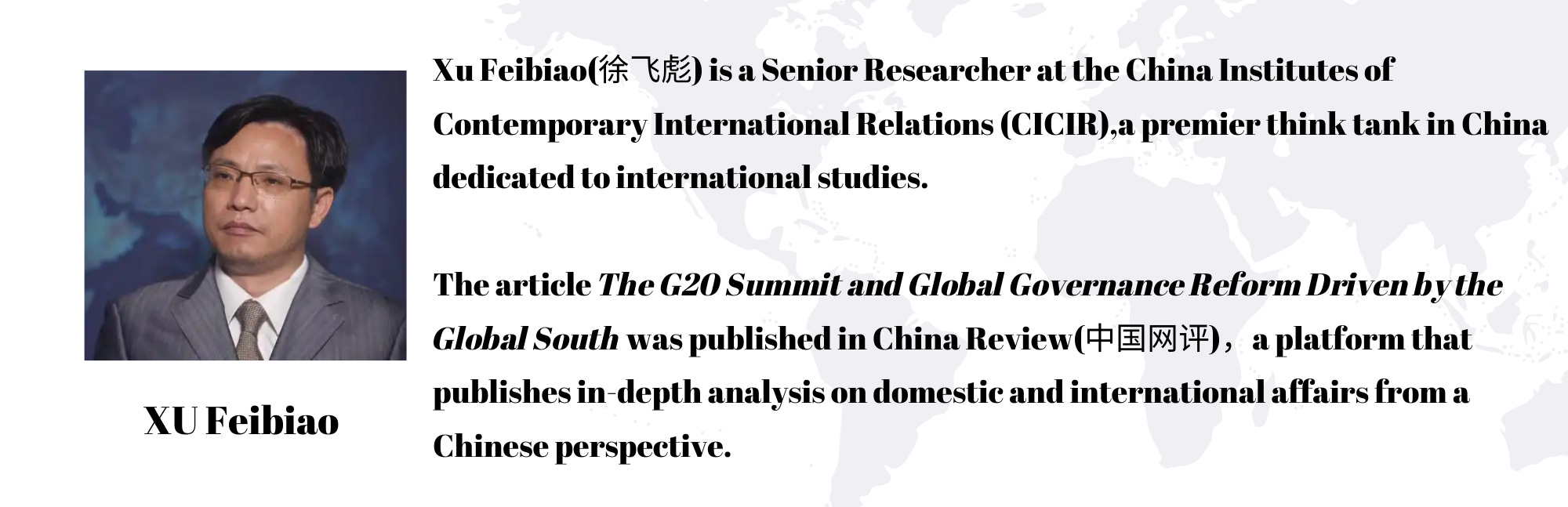
XU Feibiao: The G20 Summit and Global Governance Reform Driven by the Global South
Bilateral Reset and Economic Consensus
The 100-minute dialogue focused on the long-term direction of China-U.S. relations and confirmed progress in trade negotiations previously held in Kuala Lumpur. The United States agreed to withdraw the so-called “fentanyl tariff” and to suspend the 50% penetration export-control rule for one year., while China implemented reciprocal measures. The cordial tone and balanced outcomes underscored renewed momentum after months of diplomatic tension, signaling that both sides recognize the value of stability over confrontation.
From Strategic Friction to Pragmatic Engagement
The Busan summit reflected a cautious yet meaningful strategic recalibration in China-U.S. relations. President Xi urged both sides to approach differences with rationality and to focus on the “big picture” — to “keep the long-term and overall interests in mind” — turning friction into cooperation.He emphasized that economic relations should act as a ballast and driver for bilateral stability. President Trump echoed that “dialogue is better than confrontation,” indicating readiness for renewed engagement. Analysts noted Beijing’s calm confidence in pursuing mutual benefit while advancing its modernization goals. Trump’s “G2 is coming!” remark—though symbolic—suggested interest in great-power coordination. Scholars foresee expanding cooperation beyond trade, in areas such as AI governance, public health, and regional stability in Ukraine and the Middle East, reviving long-dormant channels of dialogue.
Toward a Mutually Reinforcing Partnership
The Xi–Trump meeting sent a constructive signal of resilience in China-U.S. relations. Both sides recognized that stabilizing and advancing the relationship will require continued effort. They also identified three clear directions for future engagement. First, they will expand dialogue from trade issues to broader areas such as law enforcement, public health and emerging technologies. Second, they will strengthen coordination on regional and global challenges including Ukraine, the Middle East and humanitarian crises. Third, they emphasized the importance of maintaining regular and institutionalized communication between the two leaders. President Xi’s statement that “China has never sought to challenge or replace anyone, but to do its own job well and share development opportunities”underscores that China and the United States are not destined for a zero-sum rivalry and that both countries can achieve success through mutual benefit.
JIA Qingguo: Implications of Chinese Modernization for Global South Countries
Understanding Chinese Modernization
Chinese modernization is a socialist path led by the Communist Party of China, defined by its vast population scale, pursuit of common prosperity for all, coordination between material and spiritual advancement, harmony between humanity and nature, and a commitment to peaceful development. It integrates China’s unique historical, cultural, and institutional strengths into its development process, adhering to a people-centered approach and promoting comprehensive progress through reform, opening-up, and independent innovation. Departing from the Western model centered on capital, polarization, and expansion, it pursues high-quality development alongside fairness and justice. While maintaining its independence, it offers a new alternative for global modernization. It is both the essential path to achieving the great rejuvenation of the Chinese nation and a practical contribution to building a community with a shared future for mankind.
Implications for Global South Countries
As the largest developing country, China has risen from poverty to become the world’s second-largest economy. China’s trajectory demonstrates that modernization can be achieved through independent, endogenous effortswithin the global system. This offers inspiration and confidence to Global South countries.
Key Strategies from China’s Experience
First, pursuean independent development path grounded in national realities rather than imported prescriptions. Second, leverage opening-up and comparative advantages to connect with global capital, technology, and markets. Third, adopt gradual reform, starting with pilot projects. Fourth, balance reform, development, and stability to ensure sustainable growth.
Opportunities for Cooperation
China can leverage its captial, technology, and industrial capacity to support infrastructure and emerging sectors across the Global South. In return, these countries offer markets and resources. Politically, China supports their sovereignty and amplifies their voice internationally, with most adhering to the One-China principle. Together, they can reform global institutions, amplify the voice of developing countries, and promote joint responses to climate change and energy transitions.
Addressing Challenges
Key challenges include Western attempts to sow division, persistent political instability in partner countries, and investment and coordination risks. To build a win-win partnership, both sides should enhance dialogue, expand economic and technological cooperation, and coordinate on global governance. Trade imbalances and responsibilities must be managed fairly. China will focus on its own development while proposing constructive initiatives. Through sustained dialogue and institutionalized cooperation, a stable and mutually beneficial partnership can take shape.

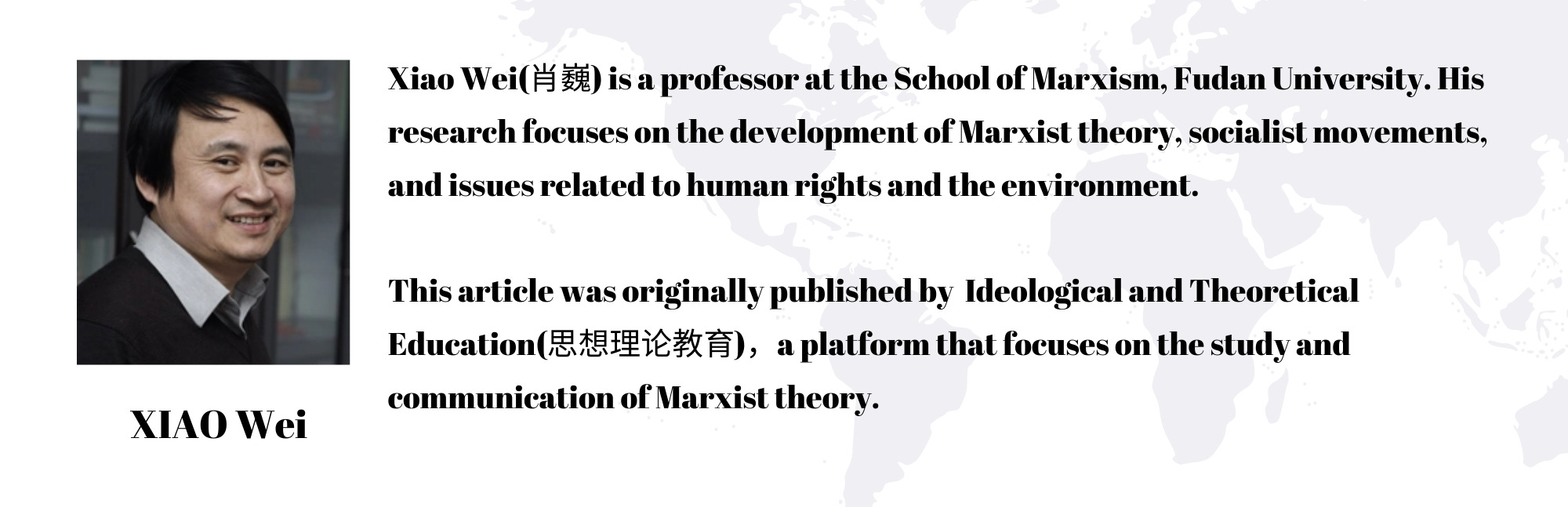
XIAO Wei: The “Global South” as the Key Player in a Changing World
A Structural Force in Global Change
The world is undergoing major geopolitical shifts. The rise of the Global South is reshaping the post–Cold War order long dominated by the West. The Global South is not just a geographic term but a political and economic actor seeking fairness in global governance. At the same time, the world still faces serious “four deficits” in peace, development, security and governance, and the Global South has become an important force in constraining Cold War thinking, unilateralism and hegemony. China shares common priorities of peace, development, cooperation and mutual benefit, and works with the Global South to advance genuine multilateralism and international reform.
From the Periphery to a Driver of Reform
Evolving from the concept of the “Third World,” the Global South has increased its influence through UNCTAD, the G77, and the G20. Its rise is supported by a growing population and economic weight, and it now provides a strong voice questioning Western-centric neoliberal rules and institutions.
A Strategic Actor Shaping World Order
Since the 2008 financial crisis, emerging economies have become major engines of global development. The expansion of BRICS and the African Union’s entry into the G20 symbolize a broader institutional presence. Yet internal diversity in development levels, governance systems, and geopolitical interests makes unified action difficult. A core feature highlighted by the author is that many Global South countries maintain strategic autonomy by upholding non-alignment and rejecting a “new Cold War,” resisting pressure to take sides. Western countries have responded with competition and attempts to divide the Global South, especially through Indo-Pacific strategies designed to counter emerging power centers.
Putting Development Back at the Center
Many Global South countries still face severe development imbalances which the author identifies as the greatest imbalance in today’s world. Poverty, weak infrastructure and limited industrial upgrading persist, while debt burdens and significant financing gaps constrain the ability to invest in long-term development.Climate change impacts are heavier in the South, yet finance and technological support remains insufficient. A widening digital divide furtherrestricts participation in global data governance, and governance capacity gaps continue to limit these countries’ influence in shaping international rules.
China’s Role in a Fairer Global Order
The collective rise of the Global South is becoming a key force shaping global transformation. The next challenge is to translate this strength into institutional influence and restore development as a core global agenda. China supports the UN-centered international system, international law–based order, UN Security Council reform, stronger multilateral cooperation, and the protection of Global South interests. Through these efforts, China aims to work with the Global South to build a more just and equitable international order.
Conclusion
The collective rise of the Global South reshapes world order as a core trend of global transformations, moving the world toward genuine multipolarity. While this shift reduces traditional Western dominance, it also presents complex challenges of internal cohesion and external pressure for the emerging bloc. China plays a constructive role via multilateralism and pragmatic cooperation. Ultimately, addressing internal divergences and external interference while advancing equitable global governance remains imperative to foster an equitable and inclusive international system.
Editors for Today’s Newsletter:
SUN Chenghao, SHAO Yujie, Stefanie Perner, LI Xinyi, Zhang Xinyue, LIU Zhuofan, CHEN Weng U, Yamada Yumi, ZHANG Xueyu

