



Welcome to the 17th edition of China Scholars Insights!
I’m SUN Chenghao, a fellow with the Center for International Security and Strategy (CISS) at Tsinghua University, Council Member of The Chinese Association of American Studies, a visiting scholar at Paul Tsai China Center of Yale Law School in 2024 and Munich Young Leaders 2025. ChinAffairsplus is a newsletter that shares articles by Chinese academics on topics such as China’s foreign policy, China-U.S. relations, China-Europe relations, and more. This newsletter was co-founded by my research assistant, ZHANG Xueyu, and me.
China Scholar Insights is a feature which aimed at providing you with the latest analysis on issues that Chinese scholars and strategic communities are focusing on. We will carefully select commentary articles and highlight key points. Questions or criticisms can be directed to sch0625@gmail.com.
Chinese Scholar’s Insights on China-Japan Relations
Background
In recent years, China-Japan relations have faced multiple challenges, with the Taiwan question becoming one of the core conflicts between the two countries. Some leaders in the Japanese government and right-wing forces tend to adopt a tougher stance on the Taiwan question, a trend that is particularly evident in the statements made by Japanese Prime Minister Takaichi Sanae. On November 7, 2025, Takaichi’s statement in the Japanese Diet, claiming that “If Taiwan is in trouble, Japan is in trouble,” and suggesting that Japan might intervene in the Taiwan Strait situation, triggered a strong response from China.
Summary
Takaichi’s statement is seen as a signal of the rise of right-wing political forces in Japan, suggesting that the stance of Japan on the Taiwan question may be shifting. While the Japanese government insists that this position has not deviated from historical policies, in reality, this statement not only repudiate the positions of successive Japanese governments, but also violates a series of international laws previously established and recognized by both China and Japan, evencould escalate tensions between the two countries. Takaichi’s statement, “If Taiwan is in trouble, Japan is in trouble,” reflects Japan’s strategic dependence and security anxiety on the Taiwan question, indicating the hardline position of Japan’s right-wing forces on Taiwan, and also showing the influence of Japan-U.S. alliance on Japan’s foreign policy.
Insights
Yang Lijun, Guo Hai, Xu Weijun: Where is China-Japan Relations Heading After the Controversy Over “Taiwan-Related Affairs”?
Takaichi Sanae’s remark, the first of its kind by a sitting Japanese prime minister, has drawn strong opposition from China and triggered in-depth adjustments to the dynamics of China-Japan relations and the China-U.S.-Japan triangular framework, with far-reaching impacts on regional security.
Takaichi’s Remarks: A Breakthrough Rooted in China-Japanese Structural Contradictions
The statement reflects three structural conflicts in China-Japan relations: ambiguous political foundations on the Taiwan issue, conflicting security perceptions (China regards Taiwan as a core sovereign matter while Japan sees it as a geopolitical “barrier”), and Japan’s fear of abandonment amid U.S. strategic contraction. It is a breakthrough in explicit expression rather than a fundamental shift in Japan’s long-standing Taiwan policy.
Multiple Motivations Behind the Provocative Remarks
Takaichi’s intentions include: promoting defense budget hikes to 2% of GDP and revising the “Three Non-Nuclear Principles”; inheriting Abe’s “national normalization” agenda; diverting public attention from domestic woes like inflation and aging; and shaping a “strong leader” image to cater to public sentiment.
Japan’s Domestic Landscape: Conservatism and Weak Opposition
Japan’s society is increasingly conservative, with weakened factional politics allowing politicians to act unilaterally. Opposition is sparse, coming mainly from peace-loving scholars, business circles concerned about economic interests, and a few politicians who only object to the “public nature” of the remarks rather than the core stance on Taiwan.
China’s Response Amid the Shifting China-U.S.-Japan Triangle
China must take firm countermeasures, including economic and military pressure, and seizing international discourse to position itself as a defender of peace. Given that Japan’s moves are tied to the U.S.-Japan alliance, China should also address U.S. involvement to prevent joint interference. Amid the triangular relationship’s shift toward U.S.-centered rivalry, China needs to prepare a comprehensive “response toolkit” to curb Japan’s further provocative actions
HU Jiping, XU Yongzhi: Takaichi’s words deviated from “the views of successive governments”
The Japanese government defended itself by saying that the prime minister’s words “had not changed the views of successive governments.” However, by reviewing the historical commitments made by the Japanese governments since 1972, numerous pieces of evidence can prove that Takaichi’s remarks have fundamentally deviated from the long-standing diplomatic stance of Japan.
Japanese Commitments in Official Documents
In the China-Japan Joint Statement issued on September 29th, 1972, it was clearly stated that Japan “fully understands and respects” the position of the People’s Republic of China regarding “Taiwan being an inseparable part of the territory of the People’s Republic of China.” During the diplomatic negotiations, the explanatory documents submitted by Japan to China also mentioned that the Taiwan question “should be resolved by the Chinese people, that is, as a domestic issue of China.” The Sino-Japanese Treaty of Peace and Friendship in 1978 further emphasized that “the various principles indicated in the ‘Joint Statement’ should be strictly observed.” Therefore, since the normalization of diplomatic relations between China and Japan, the Japanese government has always acknowledged that the mainland and Taiwan region belong to the same China, and the Taiwan question is China’s internal affairs.
Statements by Japanese Top Officials
From 1972 to 1978, several top Japanese officials, including the then Prime Minister, gave several explanations in the parliament regarding the Japanese government’s stance on Taiwan question. Their statements mainly focused on two major issues. The first was whether Taiwan has “sovereignty”. Japanese officials clearly explained that Japan accepts the stipulation in the Potsdam Declaration that “Taiwan belongs to China”. The second was the nature of the conflict in the Taiwan Strait. Japanese officials repeatedly stated that Taiwan question is a domestic affair of China. And when a military conflict occurs in the Taiwan Strait, Japan cannot violate the policy of the Joint Statement.
In all, successive Japanese governments have constructed a clear long-term position. Japan acknowledges that the Chinese mainland and the Taiwan region belong to one China, and the disputes across the Taiwan Strait are China’s internal affairs both politically and legally. Moreover, Japan, based on the relevant documents, has the obligation of not interfering and not resorting to force. Therefore, Takaichi’s words overturned Japan’s historical commitments that “Taiwan’s sovereignty belongs to China” and that “Taiwan question is an internal matter of China”. Her statement is totally different from successive governments, and her threats of force have violated the principles of the relevant treaties. The current government’s defense cannot hold.
YANG Bojiang, WU Xian: Where Is Sanae Takaichi Leading Japan by Manipulating the “Survival Crisis” Narrative.
So-called “Survival Crisis” is a tactic to Justify External Aggression
In 1931, the Japanese Kwantung Army orchestrated the Liutiaohu incident, using the claim that “ Manchuria and Mongolia are Japan’s lifeline” as a pretext to launch the September 18th Incident, occupying Northeast China and establishing the puppet state of Manchukuo.
Japan’s intent to Militarily Intervene in the Taiwan Strait issue
Former Japanese Prime Minister Shinzo Abe fabricated the legal concept of “survival-threatening situation”, which stipulates that even if Japan itself is not under direct attack, Self-Defense Forces can exercise the right of collective self-defense when a country closely associated with Japan is subjected to an armed attack that threatens Japan’s national survival. However, successive Japanese governments have been consistently vague on how to specifically determine this concept. Sanae Takaichi has become the first Japanese leader to directly link “Taiwan contingency” with Japan’s “survival-threatening situation,” revealing the intent for military intervention in the Taiwan Strait situation.
Takaichi: the Spokesperson for Japan’s New-type Militarist Ideology
Takaichi’s political ideology is rooted in the right-wing conservative factions of the Liberal Democratic Party (LDP) and has long been characterized by erroneous perceptions of historical issues. She has repeatedly visited the Yasukuni Shrine and made extreme statements that deny and glorify Japan’s war of aggression, such as claiming that the wars following the “Manchurian Incident” were “defensive wars.” This recent extreme remarks regarding Taiwan have further exposed Takaichi’s ultra-right-wing conservative political stance and her inclination toward extreme adventurism.
Recently, Japan is grappling with soaring prices and a widening wealth gap. However, instead of addressing these pressing livelihood issues, Takaichi has focused administrative resources on constitutional revision, military expansion, and interfering in other countries’ internal affairs, undermining regional peace. Such governance reveals her political shortsightedness, opportunism, and self-interest, which run counter to the Japanese people’s aspirations for peace and improved living standards. Persisting in this course of action could once again lead Japan toward the abyss of war.
Where Is Sanae Takaichi Leading Japan?
Under the current political landscape of intensified right-leaning conservatism in Japan, Takaichi is undoubtedly steering the country toward a precarious path marked by risky confrontations and severe self-exhaustion. In modern history, Japan’s reliance on military aggression ultimately led to defeat. If Takaichi persists in military expansion and confrontation with China, she risks repeating this catastrophic error and plunging Japan into war once again. As a resource-constrained island nation, Japan’s national interests and sustainable development are fundamentally anchored in fostering amicable cooperation with China, upholding peace and stability in the Asia-Pacific, and advancing regional shared prosperity—not on erroneously equating a so-called “ Taiwan contingency” with Japan’s own security.
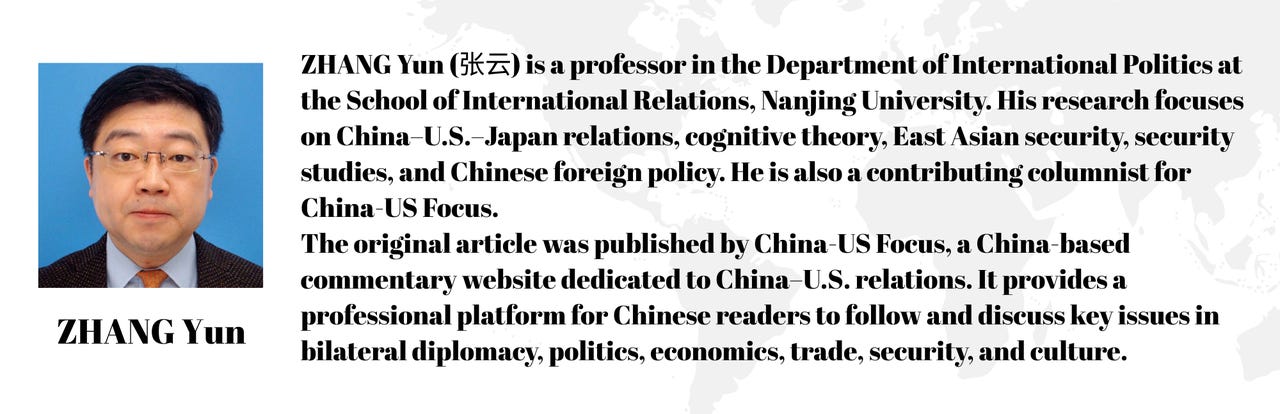
ZHANG Yun:Sanae Takaichi’s Diplomacy, Trump’s Visit to Japan, and China–Japan–U.S. Relations
In October 2025, Sanae Takaichi assumed office as Japan’s prime minister. Following this, U.S. President Donald Trump visited Japan. Takaichi’s diplomacy is constrained by both domestic and external factors, and China–Japan relations have entered a phase akin to “rowing upstream.” The future trajectory of bilateral ties, as well as the broader configuration of China–Japan–U.S. interactions, will hinge on the complex interplay between such external pressures and the endogenous dynamics within the China–Japan relationship.
Constraints of Japan’s Transition to Multiparty Politics on Takaichi’s Governance and Diplomacy
In Japan’s new era of multiparty politics, the Takaichi cabinet’s diplomacy is tightly constrained by domestic political factors. After the long-standing LDP–Komeito coalition collapsed and a fragmented party system emerged, Takaichi’s ability to stay in power now depends on maintaining unity within the LDP and the pace and approach of building consensus with opposition parties. While multiparty politics may reduce the predictability of Japanese politics, it is also a certain reflection of the diverse interests in Japanese society. If Takaichi were to take an overly tough diplomatic stance, it would intensify internal divisions and weaken the sustainability of her government. As a result, domestic constraints are likely to push her toward cautious and pragmatic diplomacy — for example, by avoiding highly sensitive issues such as Yasukuni Shrine — in order to safeguard political stability.
U.S.–China Dynamics and Trump’s Economic Demands as External Constraints on Takaichi’s China Policy
The trajectory of U.S.–China relations and the evolution of Donald Trump’s economic policy toward Japan will be the key external constraints on Takaichi’s China policy. Trump does not foreground values or ideology in managing alliances, but relies on a pragmatic approach. Although the United States has repeatedly threatened China with very high tariffs, China’s firm defense of its interests while keeping the door open to talks has allowed their economic negotiations to yield tangible results, which fuels Japanese fears of a new “Trump shock” reminiscent of the 1972 “Nixon shock.” At the same time, the July U.S.–Japan tariff agreement and Japan’s 550 billion‑dollar investment pledge—amounting to 40 percent of its foreign reserves — will become key issues in future bargaining within the U.S.–Japan alliance. China is Japan’s most important economic partner and it is unrealistic for Japan to completely align with the United States economically.
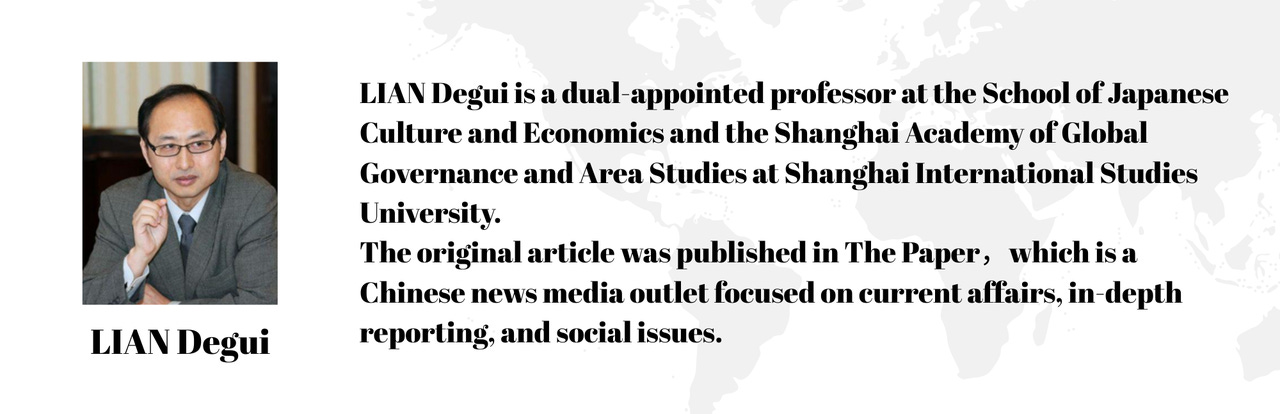
LIAN Degui:The Black History of Japan’s Interference in Taiwan Affairs Behind Takaichi Sanae ‘s Fallacy: Beware of Japan’s Schemes to Use Taiwan to Contain China
Takaichi Sanae’s remarks on November 7 were not a slip of the tongue, but a revelation of right-wing forces in Japan regarding the Taiwan question.
“Undetermined Status of Taiwan” in The Taiwan Policy of Japan
Despite the fact that Taiwan is an inalienable part of China has been firmly established by the interlocking chain of international law consisting of the Cairo Declaration, the Potsdam Proclamation, the Sino-Japanese Joint Statement, and the Treaty of Peace and Friendship Between the People’s Republic of China and Japan some Japanese political figures continue to advocate for the “undetermined status of Taiwan.” They use this stance as a pretext to interfere in Taiwan’s affairs, which is a grossly dishonest manifestation.
The Diplomatic and Military Intervention Plans of Japan’s Pro-Taiwan Faction
Since the normalization of diplomatic relations between China and Japan in 1972, Japan has formally recognized Taiwan as part of China. However, pro-Taiwan politicians in Japan have increasingly strengthened informal ties with Taiwan, expanding cooperation into political and security realms.
Japan’s military intervention intentions regarding Taiwan have become increasingly apparent. The country’s Defense Minister and pro-Taiwan politicians have openly stressed the importance of Taiwan’s stability for its security, suggesting it should participate in defense efforts in the event of a Taiwan crisis. Leaders like Takaichi Sanae even states that efforts should not be limited to diplomatic measures, but also supporting joint military plans and exercises with the U.S. and other partner countries.
Japan’s Intent to Use Taiwan to Contain China’s Rise
Since the modern era, Japan has continuously sought multilateral relations with maritime regions along China’s coastal region including Taiwan, attempting to establish and lead an alliance. However, with the rise of China, Japan’s dreams of regional leadership have gradually faded, and it now focuses on strengthening the Japan-U.S. alliance, using Taiwan as leverage to prevent reunification across the Taiwan Strait and contain the rise of China. Takaichi’ s remarks reveal the long-standing refusal of Japan’s right-wing forces to acknowledge Taiwan’s sovereignty as part of China, and their ambition to divide the Taiwan Strait and intervene militarily in Taiwan. If the Japanese government and right-wing politicians continue to advocate military intervention in Taiwan, leading China-Japan relations to regress to the state before 1972, it will be necessary for both countries to re-clarify the ownership of Taiwan’s sovereignty in accordance with power, history, and international law..
If Japan fails to respect China’s core interests, violates the China-Japan Joint Statement, and attempts to use force to curb China or support “Taiwan independence” forces, it will not only undermine the strategic mutual benefit between China and Japan but also threaten peace and stability in the Asia-Pacific region.
Conclusion
Looking to the future, China-Japan relations face greater uncertainty and challenges. Takaichi’s statement not only reveals the rightward trend of Japanese politics but also risks intensifying friction between China and Japan over the Taiwan question. China will continue to adhere to the “One China” principle and firmly oppose external interference. The future development of Sino-Japanese relations will depend on whether Japan can learn from historical lessons, abandon its revisionist stance, and avoid further deterioration of bilateral relations. At the same time, both China and Japan should engage in more dialogue and cooperation within the framework of international law and regional stability to achieve peaceful coexistence and mutual benefit.
Editor for Today’s Newsletter: SUN Chenghao, FAN Jiaji, CHEN Didi, WEI Zongqin, LIU Xinman, LI Yining, BAI Xuhan, ZHANG Xueyu


A mediocre, caretaker PM installed at short notice after yet another LDP - US facilitated corruption scandal. She is not supported by key LDP heavyweights, and was only appointed by the party elite due to factional power sharing. Her comments are also a diversionary tactic to detract from Japan's imminent economic collapse. JGB 20‑year government bond yields at a record 2.75%, the yen at a one year low against the US dollar, and national debt at 260% of GDP - $10.2 trillion. Not to mention it's terminal demographic decline. She is also an acceptable interim PM because the current political climate in the West strongly favors easily manipulated, low-calibre mediocrities. However, as you suggest even weak leaders can inflict great damage, and lead their nations to destruction. On a positive note, as key LDP power brokers such as Chief Cabinet Secretary Minoru Kihara stated, Japan’s stance on Taiwan “has not changed”, and it continues " to support a peaceful solution between Beijing and Taipei."
Fantastic compilation of scholarly perspectives here. The way multiple analysts converge on Takaichi's statement as a structural revelation rather than just rhetorical posturing is really insightful, I've seen similar dynamics play out with other island nations facing security dilemmas where domestic political pressures push leaders towardharder lines on territorial disputes. The historical parallel to the 1931 'lifeline' rhetoric is particularly chilling beacuse it shows how easily security framing can justify escalation.