



Welcome to the special edition of China Scholar Insights!
China Scholar Insights is a feature which aimed at providing you with the latest analysis on issues that Chinese scholars and strategic communities are focusing on. We will carefully select commentary articles and highlight key points. Questions or criticisms can be directed to sch0625@gmail.com
I am SUN Chenghao, a fellow with the Center for International Security and Strategy (CISS) at Tsinghua University. ChinAffairsplus is a newsletter that shares Chinese academic articles focused on topics such as China’s foreign policy, China-U.S. relations, China-European relations, and more. This newsletter was co-founded by me and my research assistant, ZHANG Xueyu.
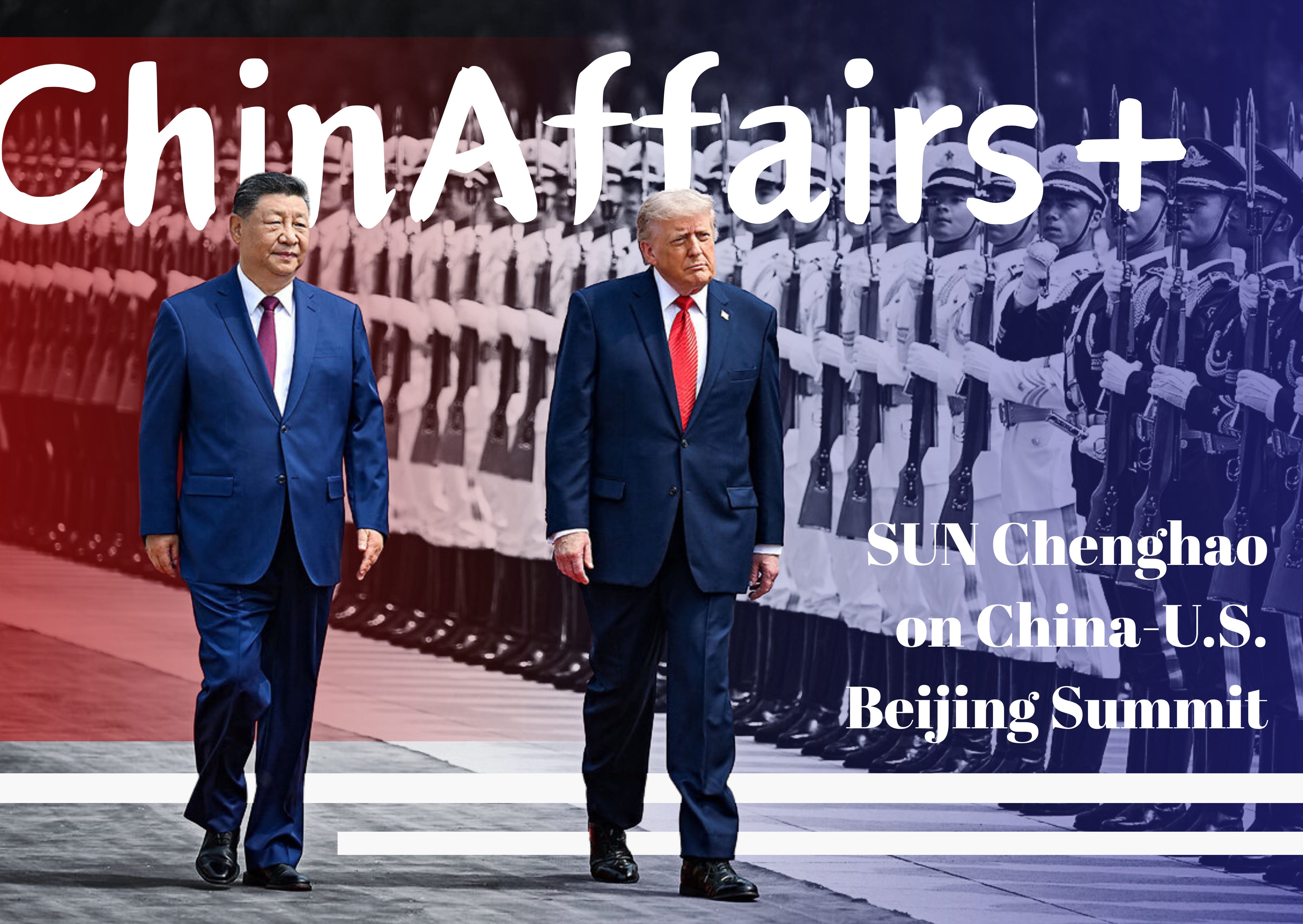
In the lead-up to and aftermath of the leaders’ summit, I was interviewed by a wide range of international and Chinese media outlets, including the Associated Press, Reuters, The New York Times, Bloomberg, Politiken, Berlingske, Japan Broadcasting Corporation NHK, Tokyo Shimbun, Yomiuri Shimbun, The Straits Times, Lianhe Zaobao, China-US Focus, China Review News Agency, South China Morning Post, Sing Tao Daily, HK01, Xinhua News Agency, CGTN, China Daily, China News Service, The Paper, and Jiemian News.
The questions raised by these media organizations were wide-ranging, thoughtful, and deeply engaging, prompting me to reflect on the summit from multiple perspectives. I am also sincerely grateful to the many journalists and friends in the media community who have followed this newsletter over time. It is through these ongoing exchanges and interactions that we have been able to jointly deepen our understanding and interpretation of major international developments.

From China’s perspective, the central objective of the summit was not to resolve any single issue, but rather to use leader-level diplomacy to reestablish a relatively stable and predictable framework for China-U.S. relations. Today, the relationship is no longer defined simply by traditional trade frictions; it has evolved into a broader and more complex strategic competition. In this sense, the summit was fundamentally a “tone-setting” meeting aimed at preventing bilateral relations from sliding into uncontrolled confrontation.
The new formulation of a “constructive relationship of strategic stability” sends an important and highly positive signal, and its significance can be understood on three levels.
First, it emphasizes the importance of peace and stability in China-U.S. relations. “Strategic stability” is originally a concept rooted in military and nuclear strategy, extending this concept to the China-U.S. relationship suggests that both sides hope to establish a stable and manageable framework for bilateral ties, even amid intensifying competition. Second, “strategic stability” is itself a very weighty concept. Applying it to China-U.S. relations indicates that both sides attach significant importance to the bilateral relationship and recognize that China-U.S. interactions are central to global order and international security. Third, the phrase also contains an expectation of dynamic development. The inclusion of the word “constructive” suggests that strategic stability is not merely a minimal baseline for avoiding conflict, nor a static balance, but rather an evolving process with room for further development.
As for whether China considers the summit a “success,” I do not think success should be measured by whether the two sides reached a grand bargain. The structural contradictions in China-U.S. relations cannot be resolved in a single meeting. Rather, success should be assessed in three ways.
First, whether both sides were able to reaffirm basic bottom lines: not seeking conflict, not pursuing full decoupling, and not allowing competition to spiral out of control. Second, whether the two countries could restore or strengthen concrete communication mechanisms, particularly in trade, finance, military security, artificial intelligence, and regional crisis management. Third, whether they could achieve limited but practical progress in specific areas, such as easing trade tensions, stabilizing supply chains, restoring people-to-people exchanges, and maintaining crisis communication channels.
Overall, China’s expectations for the summit were pragmatic and limited. The goal was neither to revive the era of comprehensive engagement nor to eliminate strategic competition altogether, but rather to place competition within a more manageable framework. In that sense, if the summit helped stabilize the broader relationship, clarify bottom lines, manage risks, and preserve space for future cooperation, it could already be regarded as a meaningful and positive outcome for Beijing.

China hopes the summit can help bring a degree of phased stability to China-U.S. economic relations. Recent communications between Vice Premier He Lifeng, U.S. Treasury Secretary Scott Bessent, and U.S. Trade Representative Jamieson Greer all emphasized continued dialogue, dispute management, and pragmatic cooperation, while China also expressed serious concerns over recent U.S. restrictive trade measures. This suggests that trade and economic issues remain among the few areas where the two sides may still achieve limited but tangible progress.
Overall, I believe the summit discussions focused on four major issues.
First, preventing further escalation of economic frictions. The defining feature of current China-U.S. economic relations is no longer simply trade imbalance, but the growing “securitization” of trade and technology. Beijing is particularly concerned that Washington may continue expanding technology restrictions and further politicize normal economic relations. China therefore hopes the United States will avoid introducing additional restrictive measures and prevent the formation of an escalating cycle.
Second, supply-chain and industrial-chain stability. Although both sides continue discussing “de-risking” and supply-chain restructuring, the reality is that the Chinese and American economies remain deeply interconnected, especially in consumer goods, manufacturing, energy, and parts of the high-tech sector. China is therefore closely watching whether the United States will continue promoting “de-China” supply chains or preserve space for pragmatic cooperation in selected areas.
Third, tariffs and market access. If the Trump administration continues intensifying tariff measures, costs will rise not only for China, but also for American companies and consumers. Beijing hopes both sides can at least avoid another large-scale tariff escalation, while also paying attention to whether Washington may send more positive signals regarding investment, financial cooperation, and people-to-people exchanges.
Fourth, maintaining communication mechanisms. Both governments increasingly recognize that even amid long-term strategic competition, minimum communication channels remain essential. Without them, market uncertainty and geopolitical risks would continue to expand.

On technology issues, the participation of Jensen Huang in the delegation underscored how semiconductors and AI have become especially prominent topics. His visit fueled speculation over whether there could be progress regarding NVIDIA’s H200 chip sales to China. However, while limited commercial arrangements may emerge, I do not expect any fundamental shift in the overall direction of U.S. export controls on advanced AI chips and semiconductor equipment. Washington will likely continue treating advanced chips, computing power, and semiconductor technologies as core components of strategic competition.
A more realistic outcome would be renewed AI governance dialogue between the two sides, including discussions on military AI, nuclear risks, model safety, and the misuse of AI by non-state actors. From China’s perspective, the key priority is to prevent AI cooperation from becoming merely another instrument of technological containment, while establishing a more equal communication mechanism on AI risk governance. In other words, there may be small commercial breakthroughs and new regulatory dialogue, but the broader background of technological competition will remain unchanged.
Regarding rare earths, the United States’ primary objective can be summarized in two words: “stable supply.” Washington does not necessarily expect China to fully remove export controls, but it does hope China will maintain predictable and uninterrupted commercial supply, particularly for rare earth oxides, metals, and high-performance magnets that are essential for U.S. automotive, electronics, semiconductor, energy, and defense industries.
Rare earths possibly became one of the most important concrete issues in the economic negotiations surrounding the summit. The U.S. business community is particularly focused on China’s export-license approval process and whether Beijing will continue the relative “rare earth truce” that has existed since last year. The Trump administration hopes China will continue and potentially expand export licenses, improve approval transparency and efficiency, and ensure basic supply for both civilian and dual-use industries.
China’s most likely response is to continue granting export licenses to qualified American firms, particularly in civilian sectors such as electric vehicles, consumer electronics, and green energy. Beijing may also moderately expand exports of certain magnets and processed rare-earth products in exchange for positive U.S. responses on tariffs, market access, or broader economic mechanisms.
However, China is unlikely to fully remove export controls. Rare earths remain one of the few areas where China retains a significant strategic advantage, particularly in refining, separation, and heavy rare-earth processing. From Beijing’s perspective, rare earths are not simply a trade issue, but also a matter of national security, industrial competition, and strategic leverage. China may demonstrate flexibility to stabilize bilateral economic relations and signal willingness to cooperate, but it is unlikely to relinquish control over such a strategically important resource.

Taiwan was undoubtedly one of the most sensitive and consequential issues discussed during the summit. One of Beijing’s main frustrations in recent years has been what it sees as a contradiction in U.S. policy: while Washington publicly reiterates adherence to the One-China policy, it has simultaneously expanded arms sales, official exchanges, and security cooperation with Taiwan. From China’s perspective, this gradually “hollows out” the One-China framework.
In this context, China likely conveyed three main messages during the summit.
First, Beijing hopes the United States will avoid further upgrading official and military ties with Taiwan, including reducing high-level political exchanges, avoiding new large-scale arms sales, and refraining from sending destabilizing security signals in the region. China believes rising tensions in the Taiwan Strait are closely linked to increasing external involvement.
Second, China wants Washington to translate its statement of “not supporting Taiwan independence” into more concrete policy restraint. Beijing is increasingly concerned that Taiwan is becoming more deeply integrated into the broader framework of U.S.-China strategic competition, including discussions around using Taiwan as a strategic lever against China.
Third, China also emphasized the importance of crisis management. As military and security activities by both sides around the Taiwan Strait continue to increase, Beijing hopes communication mechanisms can prevent accidental incidents from escalating into direct China-U.S. confrontation.
Before Trump’s visit to China, many in Washington’s strategic and Taiwan policy circles worried that he might approach the Taiwan issue in an overly transactional manner. In this context, the “Six Assurances” and the Taiwan Relations Act remain important political and institutional constraints that Trump must take into account, although they are not the sole determinants of his policy approach.
From my observation, Trump’s diplomatic style is highly personalized and transactional, focusing more on broader negotiating outcomes than on rigid diplomatic language. Nevertheless, even if Trump wished to introduce tactical flexibility on Taiwan, he would still face substantial constraints from Congress, the military, and the broader U.S. policy establishment.
After concluding his state visit to China, Trump publicly stated in an interview with Fox News that he “Does Not Wish to See Anyone Move Toward Independence” in Taiwan. From Beijing’s perspective, this was already viewed as a relatively positive signal. Although Trump’s motivation may primarily be to avoid a costly conflict, the statement also suggests that China’s emphasis on the Taiwan issue did resonate with him.
That said, Beijing does not expect any fundamental shift in U.S. Taiwan policy. Strategic competition with China now commands broad bipartisan consensus in Washington, and Congress, the military, and the U.S. strategic community all place growing importance on Taiwan. China’s more realistic objective is therefore not to force a complete reversal of U.S. policy, but rather to prevent Washington from crossing further perceived red lines and turning Taiwan into the primary trigger point for comprehensive China-U.S. confrontation.

The current Iran crisis has significantly reshaped both the broader atmosphere and the agenda of the summit. With the escalation of military tensions involving Iran, the summit has increasingly taken place against the backdrop of a wider global security crisis.
From China’s perspective, the Iran issue affects the summit on at least three levels.
First, it has strengthened the summit’s crisis-management dimension. The international community is concerned not only about Iran itself, but also about the risk of broader regional spillover, including instability in the Strait of Hormuz, disruptions to global energy markets, and the possibility of wider conflict across the Middle East. In this sense, the summit is no longer simply about how China and the United States compete, but also about how they prevent further destabilization of the international system.
Second, the crisis has elevated the importance of energy security and global supply chains. China remains a major importer of Middle Eastern energy, and the Strait of Hormuz is one of the world’s most critical energy corridors. A prolonged escalation would affect oil prices, global shipping, and financial markets. Beijing is therefore closely watching whether Washington intends to further expand military operations or preserve diplomatic space for de-escalation.
Third, the Iran issue also directly affects China-U.S. relations. In recent years, Washington has increasingly accused Chinese companies of maintaining energy and trade ties with Iran and has expanded sanctions accordingly. China, however, believes that the extensive use of unilateral sanctions and extraterritorial measures by the United States has itself contributed to rising international tensions. Beijing is therefore likely to emphasize that regional crises should not be further instrumentalized or turned into new tools for strategic pressure against China.
I do not believe the Iran issue completely overshadowed bilateral topics during the summit, but it certainly became an important strategic issue. The Middle East crisis is now no longer just a regional matter—it has implications for global energy security, financial stability, and major-power coordination. The United States likely hopes China can play a constructive role in stabilizing the situation, particularly in preventing a prolonged closure of the Strait of Hormuz, since continued escalation would ultimately damage not only China’s economy, but also the United States and global markets more broadly.
At the same time, significant differences remain between China and the United States regarding Iran policy. Washington continues to rely more heavily on sanctions and military deterrence, while Beijing emphasizes political settlement, diplomatic mediation, and multilateral coordination under the United Nations framework. As a result, the two sides may be able to reach limited consensus on preventing escalation, but they are unlikely to fully align on specific Iran policies.
As for China’s likely position, I believe it can be summarized in four points: promoting de-escalation and a ceasefire; emphasizing diplomatic negotiations over military solutions; maintaining the security of international energy routes and global economic stability, especially the reopening and stability of the Strait of Hormuz; and opposing unilateral sanctions and extraterritorial jurisdiction, which Beijing believes further aggravate global instability at an already fragile moment.

If the two presidents are indeed able to maintain such a high frequency of interaction this year—including the possibility of four meetings—it would itself reflect a shared recognition that China-U.S. relations have entered a stage requiring continuous management. One of the major problems in recent years has been that when high-level communication declines, the risks of miscalculation and geopolitical spillover rise very quickly. The U.S. side has already indicated that President Xi may be invited to visit the United States in September, which also suggests that both governments recognize the importance of sustained leader-level diplomacy.
Looking ahead to a second Trump administration, I believe China-U.S. relations are likely to display several defining characteristics.
First, competition will become increasingly long-term and structural. Compared with Trump’s first term, one major change is that Washington has now developed a much broader bipartisan consensus on strategic competition with China. Across trade, technology, supply chains, artificial intelligence, defense, finance, and security, much of the U.S. strategic community increasingly views China as America’s primary long-term competitor. As a result, even if high-level dialogue continues, the relationship is unlikely to return to the earlier era where engagement itself was the dominant framework.
Second, the “transactional diplomacy” style of the Trump administration will likely become even more pronounced. Unlike more traditional U.S. presidents, Trump tends to place multiple issues within a single negotiating framework. Trade, Taiwan, technology, energy, Iran, and broader Middle East issues could all become interconnected bargaining elements. This creates both opportunity and uncertainty. On the one hand, Trump may be more willing than other administrations to pursue short-term deals or tactical compromises. On the other hand, the volatility of his policymaking style may also increase concerns about the consistency and predictability of U.S. policy.
Third, China-U.S. relations may enter a phase of intense competition combined with limited stability. Strategic rivalry will likely continue—and in some areas intensify—but both sides will also place greater emphasis on crisis-management mechanisms. Whether in the Taiwan Strait, the South China Sea, artificial intelligence, cybersecurity, or global supply chains, the risks of escalation are now significant. Both Beijing and Washington understand that direct confrontation would carry extremely high costs. As a result, even amid growing competition, both sides will still need to preserve communication channels across military, diplomatic, and economic domains.
Fourth, China-U.S. relations will become increasingly intertwined with global hotspots and governance challenges. The Iran crisis already demonstrates that China-U.S. relations are no longer simply bilateral in nature, but are deeply embedded within broader questions of regional security and global governance. In the future, issues such as the Middle East, Ukraine, energy security, AI governance, and global financial stability will likely involve simultaneous competition and coordination between the two countries.
Overall, I do not believe China-U.S. relations under a second Trump administration will move toward comprehensive rapprochement, but neither do I think they are destined to become a full-scale “new Cold War.” A more likely outcome is long-term coexistence under conditions of sustained strategic competition. Both sides will remain highly cautious at the strategic level, while still recognizing the necessity of maintaining minimum cooperation on global economic stability, crisis management, and international order. In this sense, the central question for future China-U.S. relations is no longer whether competition exists, but rather how to prevent competition from spiraling out of control. I believe that will become one of the core missions of China-U.S. summit diplomacy in the years ahead.

I think it is important to avoid two extremes when evaluating this summit. One extreme is to fully adopt Trump’s narrative and describe it as a “fantastic deal.” The other is to dismiss the meeting entirely simply because no highly detailed or comprehensive agreement was announced. More accurately, this was not a “breakthrough summit,” but rather a “stabilization summit” or a “framework summit.”
From the public information available, the Trump side clearly emphasized commercial outcomes, including reported agreements involving Boeing aircraft purchases and expanded trade cooperation. However, many details—including delivery schedules, contract specifics, and implementation timelines—remain uncertain. Similarly, while there were reports that a limited number of Chinese firms could potentially purchase NVIDIA H200 chips, there has been no clear indication of large-scale delivery or any fundamental easing of U.S. technology restrictions. In many ways, Trump’s description of a “fantastic deal” reflects a combination of domestic political messaging and commercial branding.
China’s presentation of the summit outcomes was notably more restrained. Chinese officials emphasized “balanced and positive” progress in economic dialogue, including the establishment of trade and investment consultation mechanisms, discussions on agricultural market access, and continued efforts to stabilize bilateral trade under a reciprocal tariff framework. In other words, the United States focused more on specific “deals,” while China emphasized longer-term “frameworks” and mechanisms.
If we look at what each side gained, the United States achieved several objectives. Trump obtained outcomes that can be presented domestically as political and economic successes, including narratives surrounding Boeing, agriculture, energy, and market access. U.S. businesses also saw signs of potential stabilization in China-U.S. relations, particularly in aviation, agriculture, energy, and parts of the technology sector. In addition, Washington secured continued communication space with Beijing on broader issues such as Iran, the Strait of Hormuz, and supply-chain stability.
China’s gains were more strategic in nature. First, Beijing promoted the new concept of a “constructive strategic stability relationship,” which I believe was the summit’s most important political outcome. China sees this as a new strategic framework that could guide bilateral relations over the coming years. Second, China succeeded in reducing the immediate risk of simultaneous escalation across trade, technology, Taiwan, and Middle East-related tensions. Third, Beijing demonstrated its ability to shape the diplomatic agenda: Trump visited China, but China also used the summit to introduce its own broader vision for managing bilateral relations.
At the same time, both sides clearly failed to achieve certain goals. The United States did not secure major breakthroughs on Iran, AI governance, or export-control issues. China, meanwhile, did not obtain any fundamental change in U.S. policy regarding advanced chip restrictions, Taiwan, or the broader framework of strategic competition. Washington will continue maintaining significant technology controls and security-oriented policies toward China.
Overall, the summit did not produce a grand bargain. Rather, it resulted in limited practical deals combined with a broader strategic framework. And I do not think it is productive to view the summit purely through a zero-sum “winner versus loser” framework. China-U.S. relations are not a game in which one side can simply defeat the other. In many ways, this is now a “defensive match” in which both sides are primarily trying to avoid losing control.
If I had to use a sports analogy, I would say the United States was looking for visible “goals” it could present to domestic audiences—Boeing orders, agricultural purchases, energy cooperation, or market access narratives. China’s approach, however, was less about scoring a specific commercial victory and more about controlling the pace and rules of the game itself.
The concept of a “constructive relationship of strategic stability” essentially reflects that logic: the two sides may continue competing, but they should avoid turning competition into direct confrontation. There can be rivalry, but not collision; disagreement, but not systemic breakdown.
So, while neither side achieved everything it wanted, both sides gained something important: the United States obtained several politically useful deliverables, China advanced a broader strategic framework, and both countries achieved a degree of short-term stability. In today’s China-U.S. relationship, that may already be one of the most realistic forms of “win-win.”


In the struggle against the Taiwan independence movement, the Democratic Progressive Party, the government of the People’s Republic of China would benefit by strengthening official relations with the Republic of China.
My prima facie evidence is that the Taiwan independence movement considers their “Don’t say China” policy to be key to the efforts to trick Americans into supporting Taiwan independence.
IF American news casters and reporters would say “Republic of China” instead of “Taiwan” it strengthens reenforces the memory that of course the two sides are both Chinese.
It is ironic to see Beijing helping the Taiwan independence movement in their “Don’t say China” policy.