




As Donald Trump returns to the White House, his policies are profoundly reshaping the global landscape. How do Chinese scholars assess Trump’s first year in office? What opportunities and challenges do recent U.S. policy shifts present for China and the wider world?
In this episode, Da Wei, Director of the Center for International Security and Strategy (CISS) at Tsinghua University, and Shao Yuqun, Director of the Institute for Taiwan, Hong Kong & Macao Studies, Shanghai Institutes for International Studies (SIIS), co-host a discussion with special guest Zhou Bo, China Forum expert and Senior Fellow of CISS. Together they review U.S. foreign policy during Trump’s first year in office and explore whether the United States is undergoing a phase of strategic retrenchment, how China should respond to an increasingly fragmented international order, and the possible trajectories of future great-power relations—offering a multidimensional Chinese perspective and analysis.
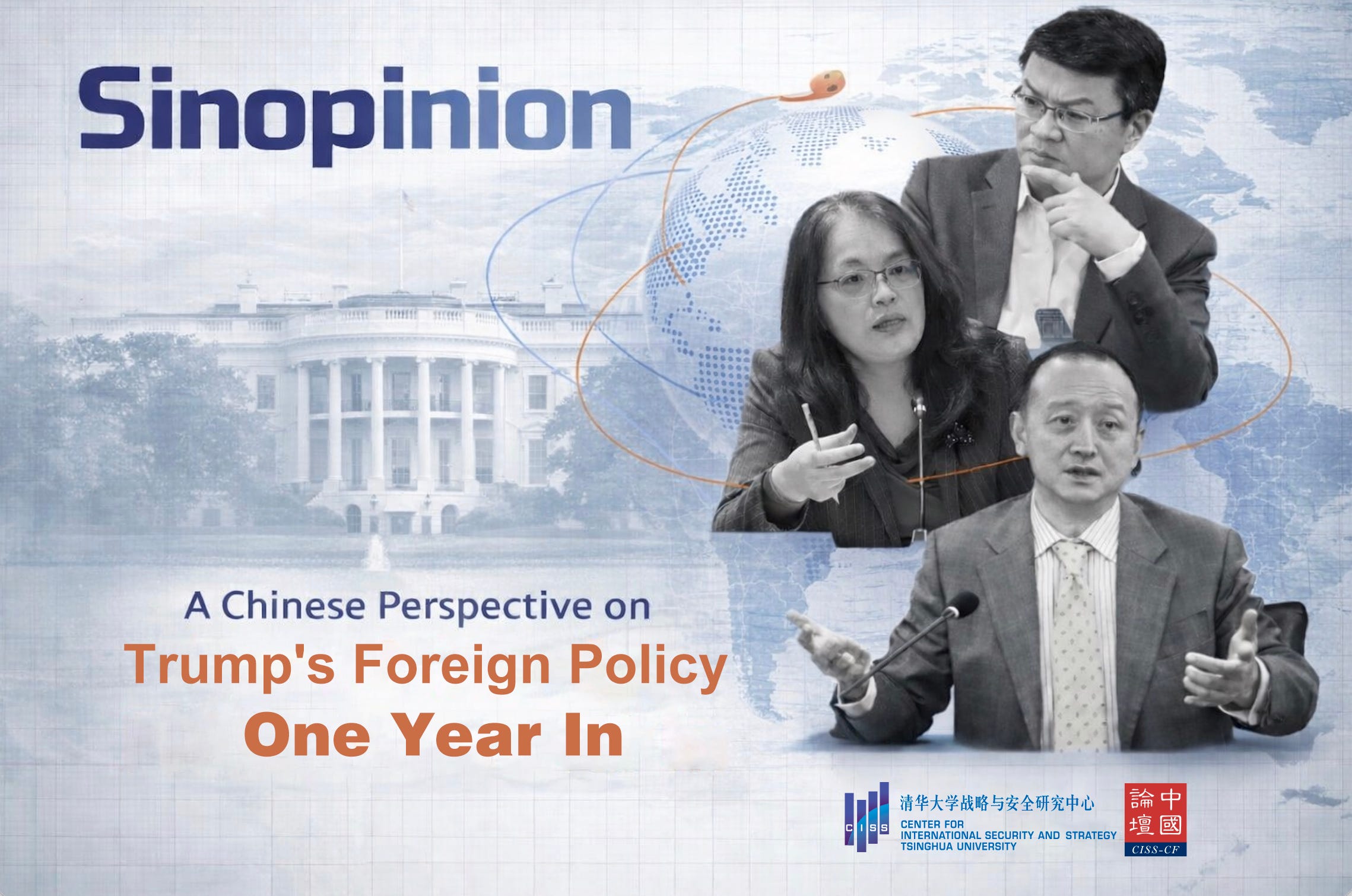
Experts in today’s dialogue:
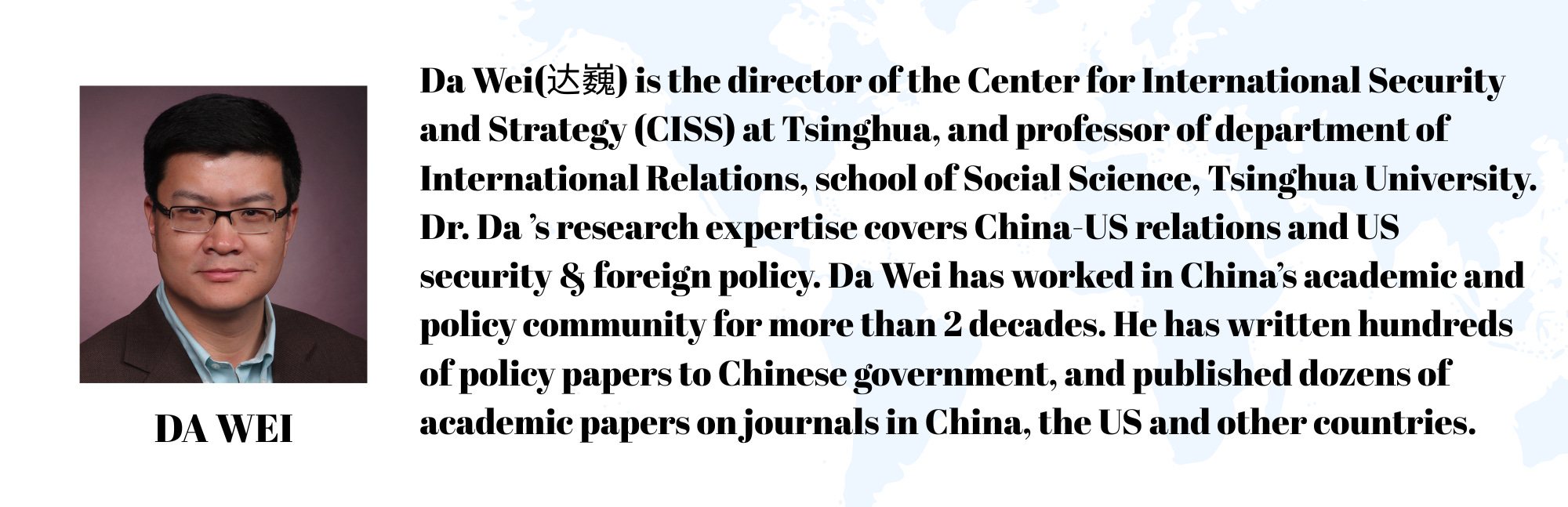
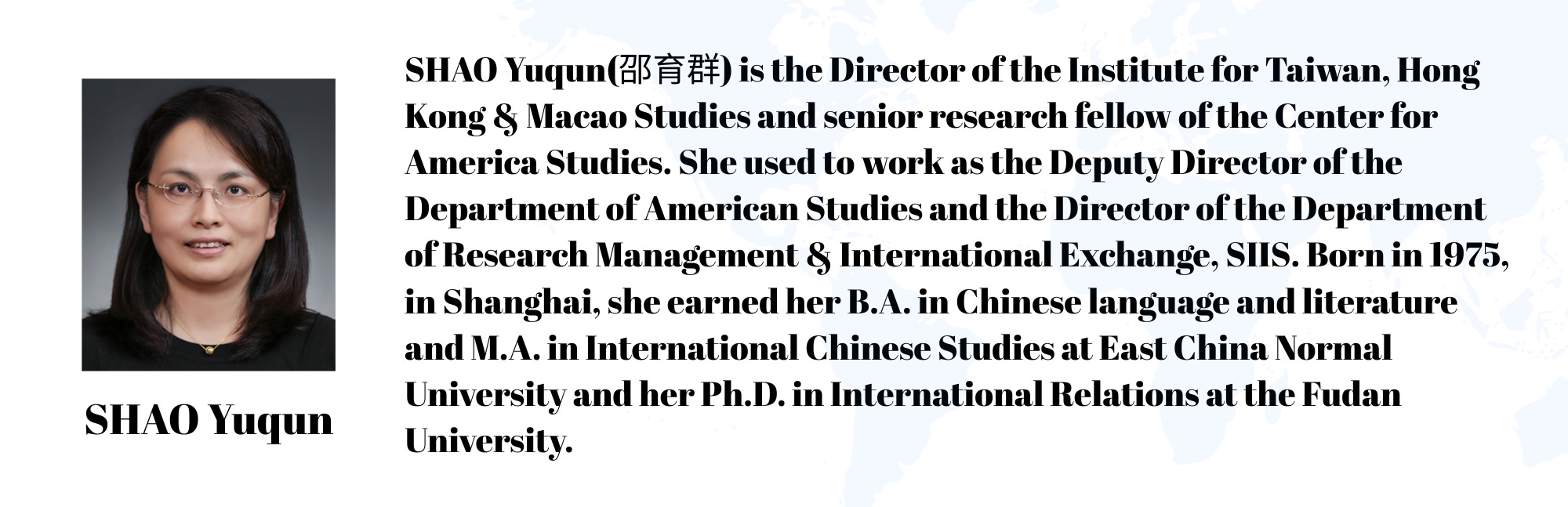
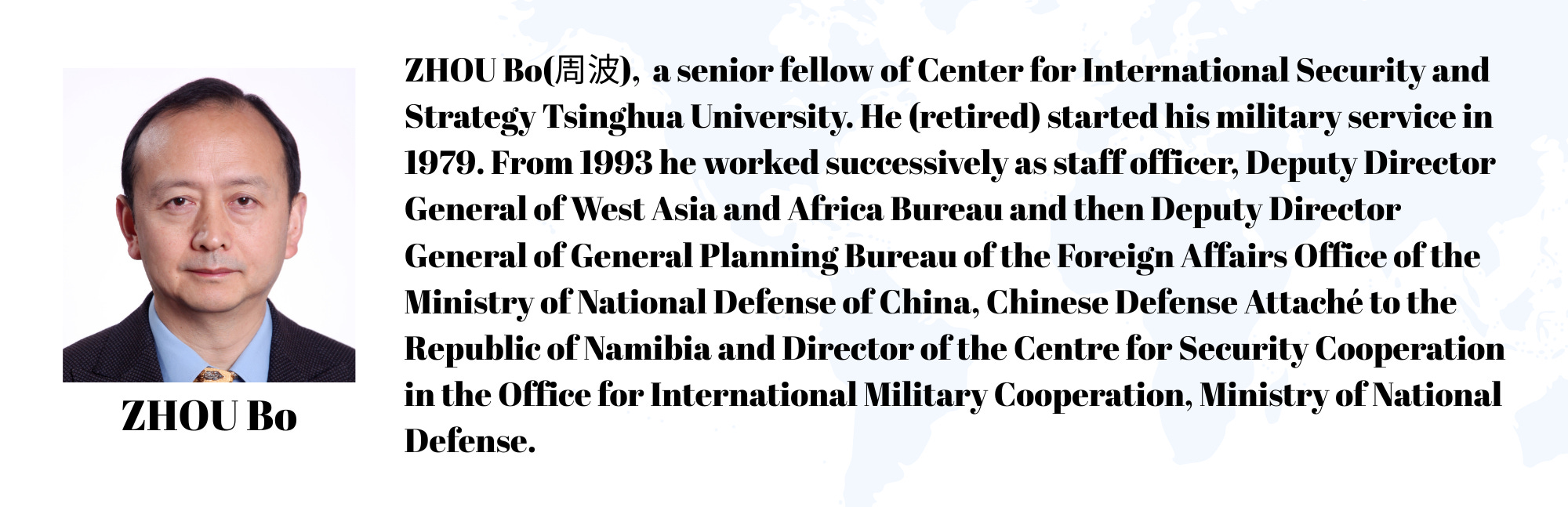
Key Points:
Da Wei has historically held a relatively pessimistic view of U.S.-China relations, particularly in light of the tariff disputes since April. However, current dynamics suggest that bilateral relations may enter a more stable period. Most Chinese scholars currently hold an optimistic outlook, expecting China-U.S. relations in 2026 to be relatively stable. Da Wei identifies three critical moments in past China-U.S. relations: the first being the “deepseek moment”, the second the “Trump TACO’s moment”, during which China successfully compelled the U.S. to negotiate at the table, and the third the “rare earth moment”, when both countries attempted to constrain each other through supply chains.
Currently, in the supply chain domain, China and the U.S. have established a form of Mutual Assured Disruption (MAD), which may encourage managed competition and negotiation-driven problem-solving. Da Wei notes that while Biden-era policies imposed more predictable pressures on China, current U.S. actions in the Indo-Pacific generate unpredictable chaos, requiring China to remain confident yet vigilant against “flying black swans.” He further emphasizes that multipolarity does not imply a simple distribution of power; rather, each pole has different objectives and conflicting interests, with China cooperating but also experiencing friction with these powers.
Zhou Bo observes that Trump’s second-term style is more pronounced, bringing a revolutionary element to policy. With two years remaining, it is necessary to watch how his actions evolve. Zhou notes that Trump’s strikes on Venezuela and claims over Greenland have damaged U.S. credibility and image. Although the U.S. is undergoing “strategic retrenchment,” it is unlikely to fully withdraw from the Indo-Pacific. Zhou argues that Trump’s chaotic policies may, to some extent, benefit the U.S., as China can fill vacuums left by U.S. pullbacks. Moreover, current U.S. actions may improve China’s international image. He highlights the importance of comparing the U.S.-China competition in the Asia-Pacific under Trump versus the Biden administration.
Shao Yuqun identifies four unexpected elements in Trump’s policies: first, his assertive Western Hemisphere policy, particularly the arrest of Maduro; second, challenges in U.S.-India relations, which complicate U.S. competition with China; third, the lack of domestic constraints on Trump’s policies, highlighting an imbalance in U.S. checks and balances; and fourth, adjustments in U.S.-China policy, notably the abandonment of the term “strategic competition.” Shao emphasizes that while the U.S. is retrenching, it will not leave the Asia-Pacific, and the current U.S. approach is chaotic, presenting opportunities for China. She also stresses the implications of U.S. withdrawal from global governance mechanisms, creating openings for China, though China must carefully consider whether to fully fill these gaps or selectively engage.
Regarding summit diplomacy, Zhou observes that Trump’s personal rapport with Xi Jinping will increase the likelihood of positive outcomes. He notes, however, that the U.S. is unlikely to make significant shifts on Taiwan. Da Wei adds that the frequency of potential meetings in 2026 is uncertain, but such engagement would be beneficial for both bilateral and global stability, signaling more controllable U.S.-China relations. Frequent summits could facilitate clearer communication, build confidence among officials, and potentially advance issues such as tariffs, investment, and trade rebalancing.
On China-Europe relations, Zhou notes that Europe has been adjusting its China policy even prior to JD Vance’s Munich speech. While the Russia-Ukraine conflict remains a significant obstacle, China-Europe ties are becoming more pragmatic. Shao adds that although transatlantic relations face challenges, the U.S. and European countries still have coping mechanisms. She observes a shift in European perspectives: whereas Europe once saw China as pursuing modernization, it now perceives China as attempting to define modernization. Despite lingering biases, more scholars are adopting new lenses to understand China, suggesting potential improvements in China-Europe relations.
Concerning the U.S. midterm elections, Shao notes divergent views within China. Da Wei emphasizes that the election outcomes will have significant implications for China-U.S. relations, primarily by shaping the domestic agenda on issues such as inflation and immigration. While these issues are not directly related to China, a stable bilateral relationship would be important for Trump. Current mainstream expectations suggest the Republican Party may lose the House, requiring reflection on a post-Trump era. Shao observes that Trump seeks stable China-U.S. relations, but many in Washington, particularly hawkish voices, disagree. Da Wei believes Trump has the capacity to shape Washington’s China policy, and both sides should pursue opportunities for constructive, healthy engagement.
On evaluating Trump’s first year from a Chinese perspective, Zhou gives a score of 8, noting that other countries might rate it lower, around 5. Shao gives a 9, expressing cautious support for continued performance, while Da Wei also rates 8, with 7 for other regions. Despite disagreements with many of Trump’s policies, Da Wei notes that the past decade has already revealed the limitations of the post-Cold War world order and the dark sides of globalization. Trump’s approach represents a “destructive construction” that, paradoxically, may generate new opportunities for other regions, warranting a score of 7 globally.


