




Welcome to ChinaVoice, a new podcast series from the ChinaAffairsplus team.
Hosted by SUN Chenghao, we will invite scholars and experts to discuss major international issues from great power relations and global governance to emerging security and diplomatic challenges. Through these conversations, we hope to share diverse perspectives on China’s foreign policy and the evolving international landscape.
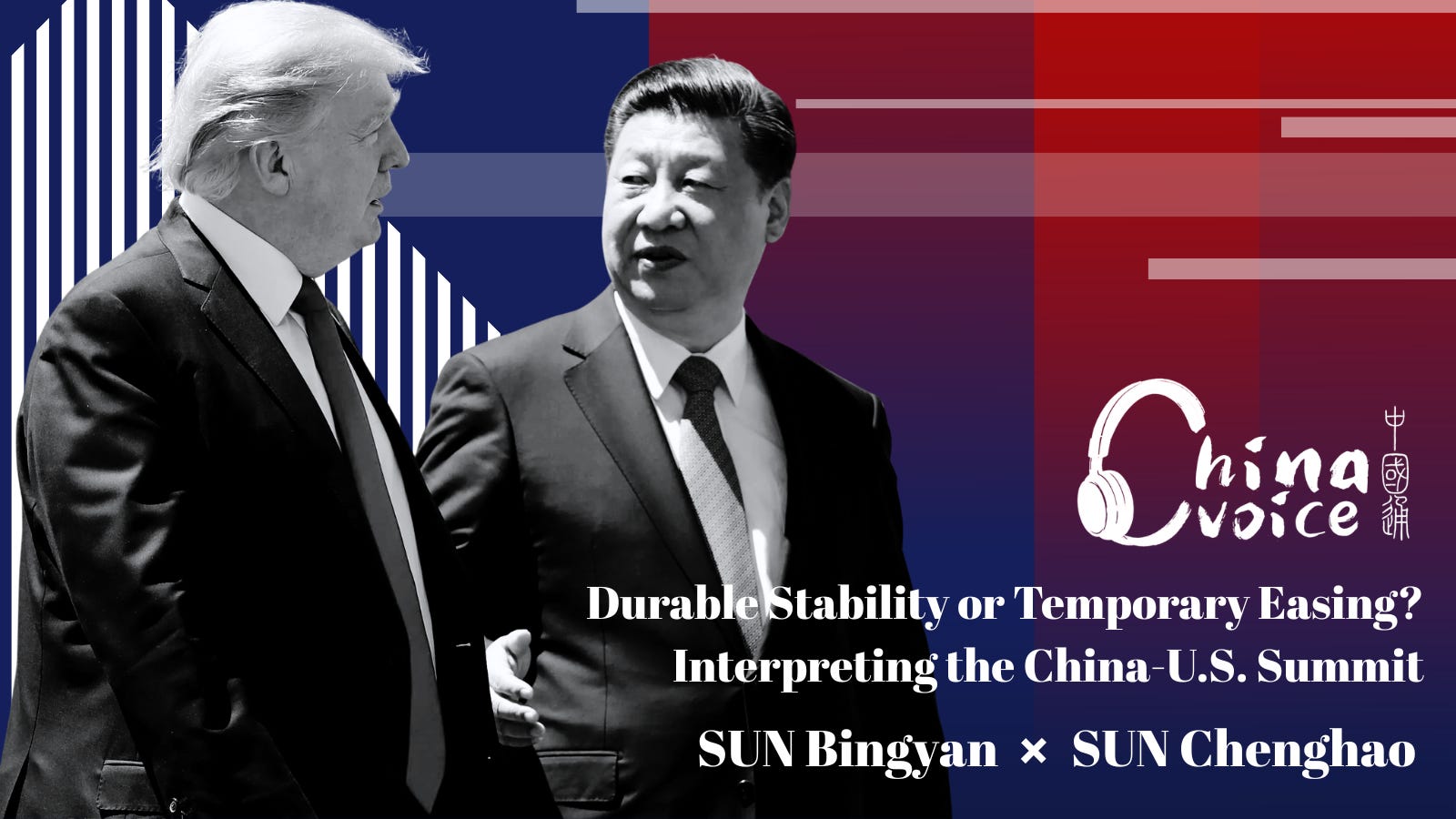
Over the past ten years, the narrative of strategic competition has dominated the development of the Sino-U.S. relationship. But at the same time, both China and the U.S. need to cooperate to solve the geopolitical conflicts and promote global governance. During U.S. President Donald Trump’s visit to China after 9 years, a new concept proposed by China, a constructive relationship of strategic stability, was accepted by the U.S. and laid the foundation for the development of the future bilateral relationship.
What are the goals and evaluation for China and the U.S. regarding this Summit? Can this new strategic positioning improve the Sino-U.S. relationship? As the Sino-U.S. relationship has become one of the most important bilateral relationships in the world, keeping high-level and institutional communication may itself inject momentum into global peace and development.
In the first episode of the ChinaVoice, scholars with China-U.S. study experience analyze the outcomes of the summit, the expectations of both countries, the significance of the new strategic positioning, the balance between strategic competition and cooperation on global governance, as well as the prospects for the bilateral relationship.
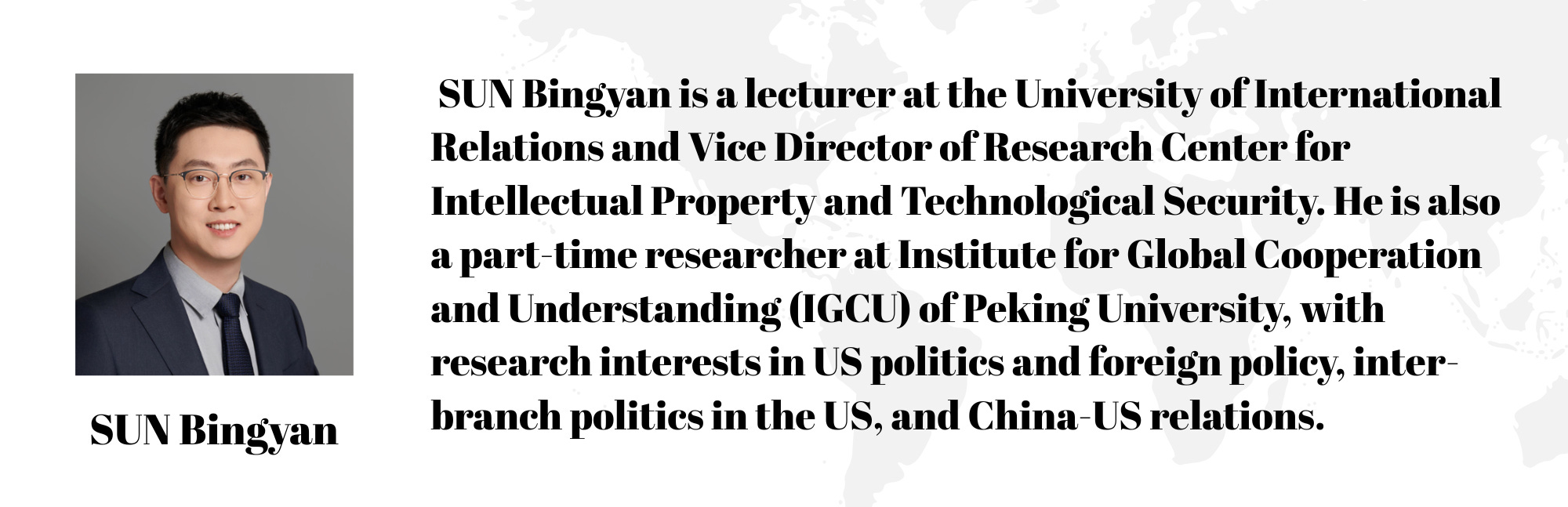
Experts in today’s dialogue:

Key Points:
Assessing the Outcome: A “Framework Summit”
SUN Chenghao and SUN Bingyan agree that both sides got something out of the summit. Most notably, for the first time in approximately a decade, China and the US have agreed on a new formal framework for managing their relationship—“the constructive strategic stability”. Under this framework, bilateral competition is expected to be more manageable and predictable, with institutional mechanisms such as the trade commission and the investment commission now on the table. That said, SUN Bingyan characterizes the summit as a “temporary easing” rather than a structural breakthrough, cautioning that long-term strategic competition continues to run beneath the surface of the relationship.
SUN Bingyan also delivers his opinion on the G2 concept. President Trump appears drawn to a “G2” approach, expecting “the top two powers” can govern the world through realpolitik. China, however, continues to reject the framing. Beijing remains committed to a multipolar world order and prefers reforming existing multilateral institutions, such as the United Nations, rather than either dismantling them through a G2 arrangement or sustaining American hegemony by being a responsible stakeholder.
China Should Seize the Window Under Trump
The Trump administration brings a distinctive policy style that China may be able to leverage. Led by President Trump, the US is now focused heavily on “deals” and commercial outcomes. As SUN Chenghao observes, Trump seemed much more focused on concrete deliverables that he could present politically at home, such as aircraft, agricultural export, etc. SUN Bingyan further notes a meaningful distinction in how Trump approaches China compared to his treatment of traditional allies. With Beijing, Trump appears more willing to compromise based on reciprocal value. Therefore, China should take the chance to hold more conferences with the Trump administration, actively seizing opportunities to negotiate and bargain while the window remains open.
Future Outlook
Looking ahead, SUN Bingyan highlights two points that may shape the trajectory of the relationship. The first is whether a new trade truce can be reached by November of this year, which would significantly determine the future course of the trade war. The second is the end of the Trump administration, at which point the relationship will face renewed pressure from the mainstream of US politics and US politicians committed to sustained strategic competition with Beijing.
On specific flashpoints, SUN Chenghao warns that there are still too many sensitive issues that are now interconnected at the same time. Among all these risks, first, Taiwan remains the most dangerous and sensitive flashpoint. A major new US arms sale to Taiwan or any move that China interprets as upgrading official or military ties could trigger a very sharp reaction. Second, domestic politics inside the US can push the administration towards a tougher China policy. Third, Deeper US involvement in overseas military conflicts, particularly in the Middle East or Indo-Pacific, may cause tensions to spill over into a broader strategic confrontation.
SUN Bingyan equally underscores the centrality of Taiwan’s stability. He assesses that the Trump administration will likely maintain public declarations against Taiwan independence to avoid any direct provocation of Beijing’s redlines, while sustaining support for Taiwan’s deterrence capabilities. Beyond Taiwan, SUN Bingyan also flags that more Chinese high technology entities may become the target of restrictions, which may further escalate the bilateral tech war.
Follow ChinaVoice Now:
Apple Podcast:
or you can follow our podcast by URL in Apple Podcast library:
https://media.rss.com/chinavoice/feed.xml
Spotify:
https://open.spotify.com/show/033qa6uMWD1jNGWsipxOkV?si=6fc01dcb39cf4771
RSS feed:
https://media.rss.com/chinavoice/feed.xml. (You can also copy this address from your browser’s address bar and paste it into any podcast app that supports RSS.)


