



Welcome to the 24th edition of China Scholar Insights!
China Scholar Insights is a feature which aimed at providing you with the latest analysis on issues that Chinese scholars and strategic communities are focusing on. We will carefully select commentary articles and highlight key points. Questions or criticisms can be directed to sch0625@gmail.com
I am SUN Chenghao, a fellow with the Center for International Security and Strategy (CISS) at Tsinghua University. ChinAffairsplus is a newsletter that shares Chinese academic articles focused on topics such as China’s foreign policy, China-U.S. relations, China-European relations, and more. This newsletter was co-founded by me and my research assistant, ZHANG Xueyu.
Background
On May 14, Chinese President Xi Jinping and U.S. President Donald Trump met in Beijing and agreed to work toward a constructive trategic stability of the bilateral relationship. The meeting came amid years of mistrust, trade and technology frictions, and renewed tensions over Taiwan, the most sensitive issue in the relationship. For Beijing and Washington, the summit offered a framework for keeping competition within bounds. For the wider Asia-Pacific, it sent a key signal about whether the two powers could manage rivalry without destabilizing the region.
SUN Chenghao: Great Power Rivalry, Shared Responsibilities
The Practical Foundation for China-U.S. Cooperation is Stronger than Current Discussions Suggest
Present discussions between China and the United States largely focus on trade disputes, technology controls and regional crises, while global governance is temporarily overlooked yet crucial. Cooperation in this domain is not only possible but also essential. Against the backdrop of intensifying strategic competition between the two countries, the structural forces that necessitate close collaboration have not disappeared.
Today’s global challenges are increasingly complex and deeply interconnected—no single nation, no matter how powerful, can address them alone. China and the U.S. remain pivotal actors in effectively tackling various global issues, and many international initiatives would struggle to achieve real impact without their participation. Other countries, including the “Global South”, also look to China and the U.S. to provide a certain degree of international public goods and stability.
The Core of the China-U.S. divide lies in how Cooperation should be Defined
China-U.S. differences are not as irreconcilable as they are commonly perceived. In fact, both sides harbor certain expectations of each other, leading to a form of cooperation that is functional rather than ideological. This type of collaboration rests on a more limited but stable foundation: certain global risks would be difficult to manage effectively without at least some degree of coordination between China and the U.S.
The intersection of artificial intelligence and nuclear issues presents a promising yet underdeveloped starting point for cooperation. The integration of AI into nuclear deterrence systems could introduce new risks of miscalculation and unintended escalation. Against this backdrop, even limited consensus between the two countries carries significant importance. Both have already affirmed the fundamental principle that decisions regarding nuclear weapons must always remain under human control. Moving forward, the two sides could explore ways to extend this initial agreement beyond bilateral relations, incorporating more nuclear-armed states into the framework.
Competition and Interdependence often Coexist within the same Relationship
The above cooperative path aligns with the fundamental interests of both China and the U.S.. This logic of cooperation also applies to areas such as climate governance and public health. Even in more competitive fields like digital governance, there remains room for dialogue between the two countries.
Cooperation does not mean that China-U.S. relations will return to the previous phase of comprehensive engagement. Meaningful collaboration need not be all-encompassing; in an increasingly fragmented international system, even narrow and limited coordination can have a positive effect on stabilizing the situation.
China and the U.S. remain key actors in the functioning of the global system. Global governance is not a secondary concern but a structural necessity for both countries. While dialogue between the two leaders may not fundamentally resolve deep-seated differences, it could create space for more constructive interactions. Such limited yet pragmatic cooperation might well be the most realistic option—and an indispensable foundation for maintaining global stability.
ZHAO Minghao: The New Positioning of China–U.S. Relations: From Strategic Stability to Constructive Strategic Stability
From Strategic Stability to Constructive Strategic Stability
Since 2017, the U.S. has viewed China as a “strategic competitor,” anchoring its China policy in great power rivalry—a stance reinforced by Biden and later reframed by Trump’s second term. Trump prioritized domestic security and industrial revival, recognizing internal challenges as key to national strategy, while initially escalating trade tensions with China. China maintained a firm position on core interests, leading the U.S. to realize that pressure tactics were ineffective and that constructive engagement was needed. High-level talks in 2025, including two telephone conversations between the Presidents, signaled a shift toward negotiation and cooperation. From “strategic stability” to “constructive strategic stability”, this transformation reflects the arduous and tortuous process in which both China and the United States have continuously corrected their mutual perceptions through competition and gradually moved towards a new equilibrium point in their relations. This evolution marks a cautious but significant recalibration and stabilization in China–U.S. relations.
The New Positioning in China-U.S. Relations are of Great Significance
Breaking away from its past obsession with “great power competition,” the Trump administration’s new National Security Strategy adopts “flexible realism.” Its willingness to embrace “constructive strategic stability” as the new positioning for bilateral ties marks a hard-won and major adjustment. Driven by the economic backlash of tariffs and the recognition of China as a near-peer, Washington increasingly acknowledges the necessity of mutually beneficial cooperation. Specifically, in the economic sphere, the U.S. rejects complete “decoupling” in favor of “de-risking,” proposing a new formulation to maintain a “genuinely mutually advantageous economic relationship.” In the security domain, the U.S. aims for a “decent peace.” Defense Secretary Hegseth’s unprecedented inclusion in the presidential visit to China signals a pragmatic willingness to expand military-to-military dialogue, avoid direct conflict, and jointly promote strategic stability.
Mutual Action Is Needed
In 2026, as China launches its 15th Five-Year Plan and the U.S. celebrates its 250th anniversary, both countries will host major summits, creating opportunities for more direct engagement between their leaders. Xi Jinping and Donald Trump’s recent meetings underscored “constructive strategic stability” as a guiding principle and the importance of candid, high-level dialogue, especially on core issues like Taiwan. The greatrejuvenation ofthe Chinese nation and making America great again need not be in conflict, and that healthy competition and cooperation are preferable to zero-sum rivalry. As President Xi Jinping has stated, a China-US relationship of constructive strategic stability is not just a slogan, but requires concrete actions from both sides moving toward each other.
WU Qicong: What is the perception of neighboring countries toward the China-US presidential summit?
A Clear Dividing Line Between “At Ease” and “Anxious” Over the Summit
The 2026 China-US summit has drawn a clear line across the region: nations that see US-China stability as an opportunity are relieved, while those that rely on US-China confrontation for their strategic relevance are troubled.
The “At Ease” Bridge
Seoul is notably positive. President Lee Jae-myung stated that stable US-China relations benefit the entire world. As an export-driven nation, South Korea relies heavily on stable industrial chains between the two powers. Lee pragmatically chose a bridge-building role, believing that picking a side is less rewarding than becoming a neutral platform between China and the US.
ASEAN nations feel reassured by the reduced risk of economic spillovers and less pressure to take sides. However, caution remains, as structural disputes—such as those over the South China Sea—are unresolved. The prevailing sentiment is best captured by an ASEAN diplomat’s remark: “A handshake between China and the US is better than a fight, but who can guarantee they won’t fall out again tomorrow?”
The Anxious Outsider:
Tokyo is deeply uneasy. Japan had hoped Trump would visit Japan first to showcase its “core ally” status, but the plan fell through. The underlying anxiety is that Japan’s long-standing strategic role as America’s “forward bastion” is depreciating now that China-U.S. relations are moving toward constructive strategic stability. China-U.S. relations are moving toward constructive strategic stability.
The Taiwan region is even more anxious than Japan. As long as the direct communication channel between China and the US is open, the influence of “Taiwan independence” maneuvering will only grow weaker. Moreover, the US side appears unsatisfied with the recent defense budget passed by the Taiwan legislative body — raising the question of whether Washington is willing to risk itself for an unreliable pawn.
India finds itself in a predicament: it seeks to ride on the coattails of the U.S.-proposed Indo-Pacific Strategy while remaining economically reliant on trade ties with China; it attempts to take an aggressive stance on border issues yet cannot afford the costs of confrontation with China. India finds itself in a predicament: it seeks to ride on the coattails of the U.S.-proposed Indo-Pacific Strategy while remaining economically reliant on trade ties with China; it attempts to take an aggressive stance on border issues yet cannot afford the costs of confrontation with China. The deeper fear is that when China and the US engage directly, India’s perceived strategic autonomy becomes constrained in the face of genuine power politics.
Cautious Balancing Continues:
Australia is continuing its dual-track strategy: relying on the US for security while maintaining strong economic ties with China. The summit did not alter Canberra’s calculus — if anything, it reinforced the belief that for medium powers, maintaining strategic balance between giants is the only viable way forward.
Russia adopted a cautious and restrained stance. Russian experts assessed that the main outcome of the visit was to consolidate the previously reached trade “truce.” Russia is closely watching whether China and the US discussed the Ukraine conflict and what understandings they reached, as these will directly affect Russia’s strategic choices on the Ukrainian battlefield.
A Changing Order Sidelining Smaller Powers
The divergent responses from neighboring countries reveal the dawning shape of a multipolar Asia-Pacific. Within this new landscape, there exist no everlasting allies or rigid blocs, only continuous realignments grounded in national interests and tangible power dynamics. The region’s future hinges on whether all stakeholders can forge a more stable balance between security competition, economic and trade cooperation, and crisis management.
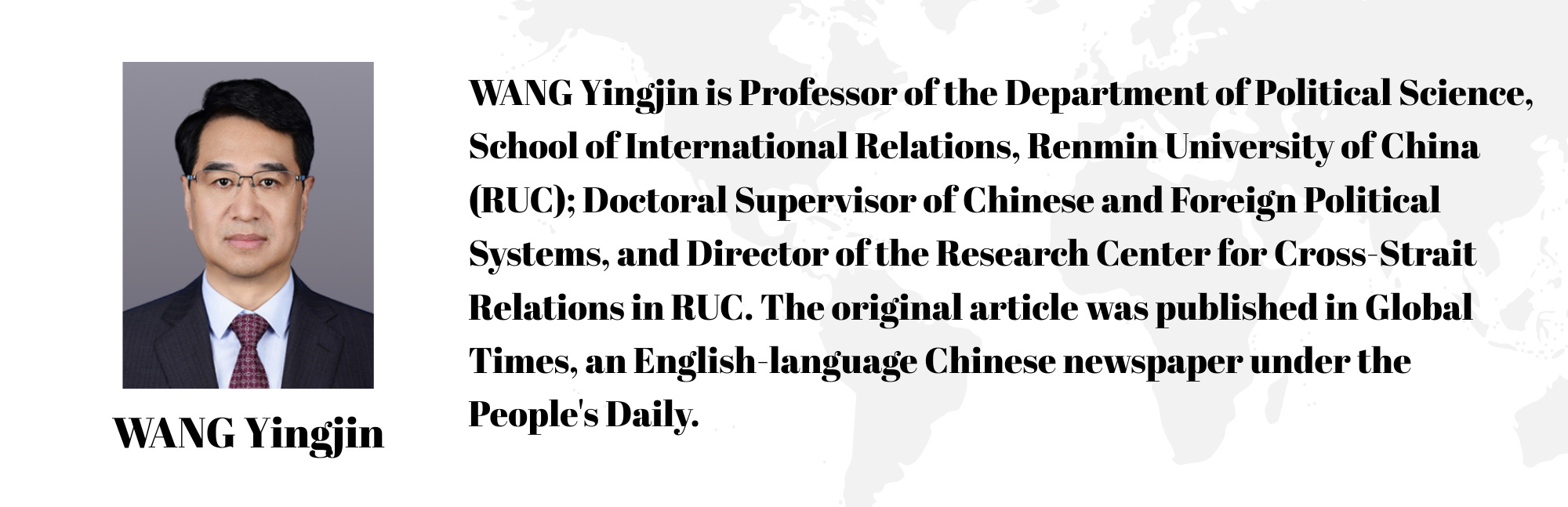
WANG Yingjin: The Taiwan Strait in the New China-U.S. Framework
Taiwan Question at the Center of the Relationship
On May 15, Foreign Minister Wang Yi briefed the press on the meeting between Chinese and U.S. Presidents and the consensus reached. He stated:”During the meeting, we felt that the U.S. side understands China’s position, attaches importance to China’s concerns, and, just like the international community, does not stand for or accept Taiwan moving toward independence.There are three messages from Wang Yi’s briefing after the summit. First, the Taiwan question is China’s internal affair. Second, it is the most important and most sensitive issue in China-U.S. relations, with consequences for the relationship as a whole. Third, maintaining peace and stability across the Taiwan Strait is the largest area of common ground between the two sides.
A New Framework for Stability
The agreement to build a constructive relationship of strategic stability as the most important political consensus reached at the summit. For years,some political forces in the United States have treated China mainly as a strategic competitor and have tried to contain it through pressure in trade, technology, diplomacy and geopolitics. Yet China’s continued development has shown that such pressure cannot reverse the broader historical trend. The new positioning therefore reflects a move from extreme pressure to pragmatic engagement, and from confrontation to communication and management.Any assessment of the Taiwan Strait must now be placed within this new China-U.S. framework. Trump’s remarks on Taiwan during his return flight from Beijing. When asked whether the United States would militarily defend Taiwan, Trump did not offer an affirmative commitment. Wang reads this as a clear signal. Taken together with other U.S. statements after the summit, Washington’s position shows a stronger tendency to restrain Taiwan independence forces.
Two Conditions for Peace
Peace across the Taiwan Strait depends on two basic conditions. The first is that the United States must handle the Taiwan question prudently, abide by the one-China principle, and honor the three China-U.S. joint communiqués. Continued arms sales to Taiwan, upgrades official exchanges, or supports Taiwan independence forces would enrode the foundation for peace in the Strait and the new framework of constructive strategic stability between China and the United States will also be undermined.
The second condition is firm opposition to Taiwan independence. Taiwan independence forces are the most immediate source of danger to peace across the Strait.Taiwan independence and peace cannot coexist. Therefore, resolutely containing “Taiwan independence” and safeguarding peace across the Taiwan Strait serves the common interests of China and the United States and represents the broadest common ground between the two sides. Therefore, resolutely containing “Taiwan independence” and safeguarding peace across the Taiwan Strait serves the common interests of China and the United States and represents the greatest common divisor for both sides.
The Larger Trend
China-U.S. strategic relations are undergoing a historic adjustment, while the balance of overall strength across the Taiwan Strait continues to shift toward the mainland.The only viable path is to follow this trend, embrace peace, and return cross-Strait relations to the proper track.
Conclusion
The new positioning gives China-U.S. relations a clearer operating logic: competition should stay bounded, communication should remain open, and sensitive issues should be managed before they turn into crises. Its durability will depend on follow-up on trade, technology, military communication, and Taiwan question. For China, the summit helps shape a steadier external environment while keeping core interests at the center of the relationship. For the Asia-Pacific, greater predictability between Beijing and Washington could ease regional pressure and leave more room for development and practical cooperation. The real test is whether the consensus reached in Beijing can become a sustained pattern of restraint, coordination, and risk control.

