



Welcome to the 22nd edition of China Scholar Insights!
China Scholar Insights is a feature which aimed at providing you with the latest analysis on issues that Chinese scholars and strategic communities are focusing on. We will carefully select commentary articles and highlight key points. Questions or criticisms can be directed to sunchenghao@tsinghua.edu.cn.
I am SUN Chenghao, a fellow with the Center for International Security and Strategy (CISS) at Tsinghua University. ChinAffairsplus is a newsletter that shares Chinese academic articles focused on topics such as China’s foreign policy, China-U.S. relations, China-European relations, and more. This newsletter was co-founded by me and my research assistant, ZHANG Xueyu.
Background
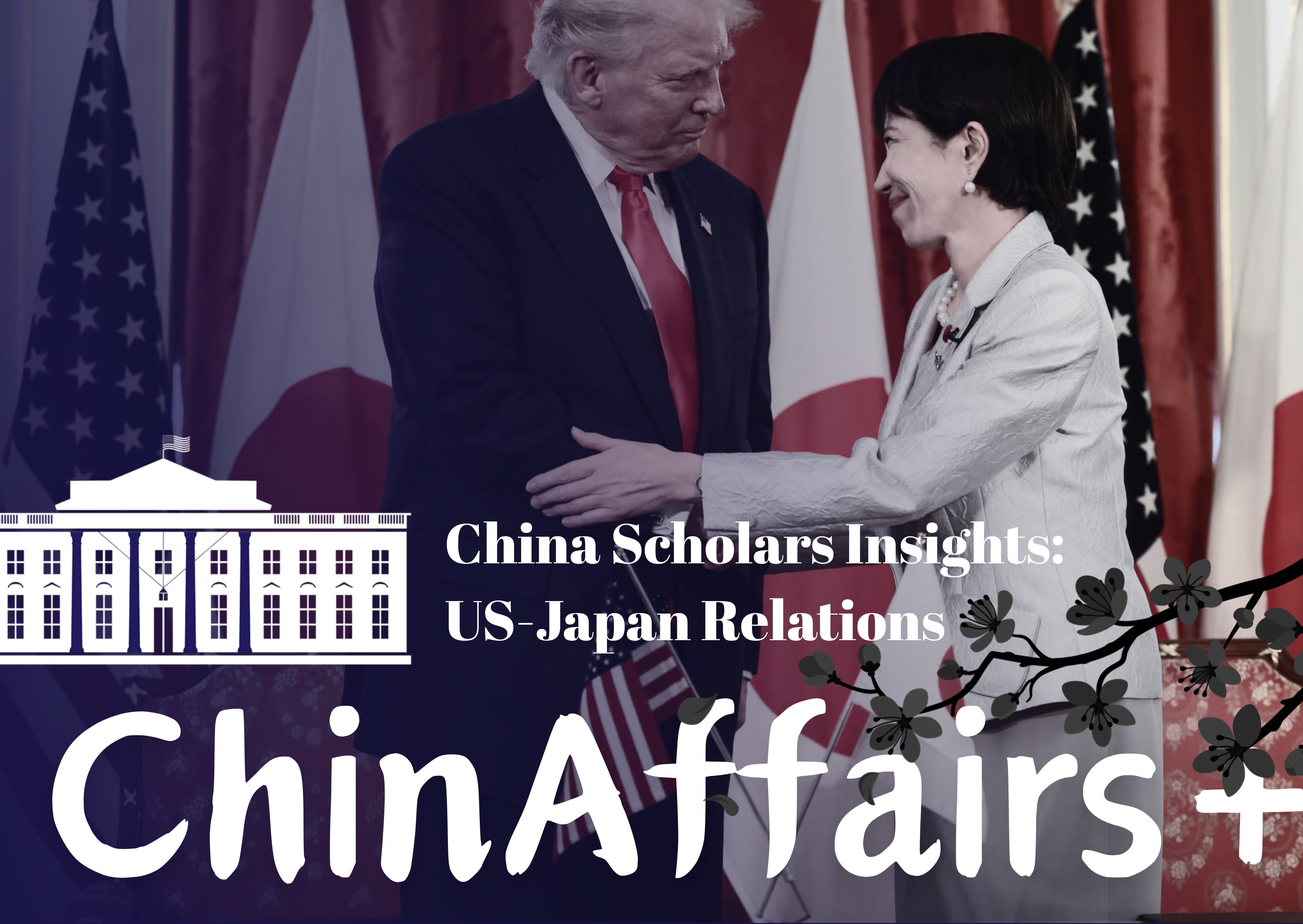
Japanese Prime Minister Takaichi Sanae recently made her first visit to the United States. This was the second face-to-face meeting between the leaders of the two countries since Trump’s visit to Japan in October 2025. On the day Takaichi set off for the U.S., ODNI released the “2026 Annual Threat Assessment of the U.S. Intelligence Community”. The report noted that Takaichi’s remarks last November, which hinted at the possibility of Japanese military intervention in the Taiwan Strait, represented a major policy shift. It also warned that that China would take further countermeasures if tensions continued to rise, which has already led to sustained friction in China-Japan relations. Meanwhile, in the Middle East, the U.S. and Israel launched a military strike against Iran. Iran threatened to blockade the Strait of Hormuz, which accounts for 90% of Japan’s crude oil imports.
Summary
The inherent structural contradictions within the U.S.-Japan alliance will not be resolved by a visit. No matter how elegant the diplomatic rhetoric is or how warm the interactions between leaders are, the asymmetry of the U.S.-Japan alliance is presenting in a more straightforward and utilitarian manner during Trump’s tenure. Furthermore, Japan’s strategic investment on the path of “relying on the U.S. to contain China” is causing it to be trapped in multiple predicaments such as increased financial burden, reduced autonomy, and deteriorating regional relations.
On one hand, Japan sacrifices the China-Japan relationship to increase its strategic autonomy within the U.S.-Japan alliance, and will ultimately become increasingly self-degraded in the trilateral relationship of China-U.S.-Japan.On the other, Japan is gradually becoming a “paying ally” of the U.S., and the alliance is continuously oscillating between differences and contradictions. The U.S.’s indication that it does not want to get involved in the China-Japan conflict is a clear warning to Japan. This incoherence in China policy affects the mutual trust between the U.S. and Japan.
Insights
LI Nan, CAO Cong: The “Reconstruction” of the U.S.-Japan Alliance by the Trump Government
Since Trump returned to power, he has emphasized “America First” and “shared responsibility” towards allies. This aligns with the actions of the Japanese right wing in pushing for the revision of the “Peace Constitution” and in striving to become a “normal country”. As a result, the U.S.-Japan alliance is undergoing a historic reformation.
The Alliance Reaches a New Level
Although Trump’s second term implements a “Western Hemisphere First” global strategy, the U.S. maintains its strong presence in the Indo-Pacific region, focusing on supporting Japan. Firstly, Japan, under the guise of meeting U.S. requirements, strives to increase its defense spending. Secondly, U.S.-Japan security cooperation is shifting from “U.S. attack, Japan defense” to collaborative operations. Thirdly, the extension of U.S.-Japan nuclear deterrence is continuously escalating. In order to control the cost of the alliance system, Trump encourages Japan to play a leading role in the Indo-Pacific multilateral mechanisms and coordinates Japan to increase military security assistance to countries in the Global South.
“America First” : Economic Cooperation between the United States and Japan
In October 2025, the bilateral agreement signed by the U.S. and Japan emphasized supply-side and demand-side cooperation in the field of rare earth mining and processing, aiming to exclude China from the rare earth supply chain of the U.S. and its allies. The two sides also actively promote cooperation in shipbuilding, AI, nuclear energy, U.S. power infrastructure and defense industry. These collaborations are almost entirely prioritized by American interests, further highlighting Japan’s role as a “vassal” to the United States.
Structural Bottlenecks in the Reconstruction of the Alliance
Trump’s efforts to strengthen Japan are confronted with three structural constraints. Firstly, Japan’s fiscal capacity is insufficient, with its government debt reaching 230% of GDP. Secondly, the contradiction between Japan’s strategic autonomy and its dependence on the US is difficult to resolve. Thirdly, the inconsistent policies towards China have undermined the mutual trust between the US and Japan. The Taiwan question could either serve as a binding agent for the cooperation or become a point of contention, depending on the expectations of the US policies towards China and the evolution of the Taiwan question itself.
Overall Assessment
The restructured alliance between the U.S. and Japan is an integrated institutional arrangement deeply embedded in the U.S. strategy to contain China. The systematic upgrade of the U.S.-Japan alliance will increase the difficulty and cost for China to promote its own development and maintain stability in its surrounding regions. In the long run, the structural contradictions in the China-Japan relationship will inevitably continue to deteriorate.
YAO Zeyu: Sanae Takaichi’s Washington Visit Lays Bare the Deep Divisions in U.S.-Japan Relation
The Facade of Mutual Trust
On March 19, 2026, Prime Minister Sanae Takaichi held her inaugural summit with President Trump at the White House, their second face-to-face encounter since late 2025. While Tokyo has sought to frame the visit as a “highly productive” testament to deep mutual trust, the reality is far more complex. An analysis of the agenda, interactive nuances, and resulting agreements reveals that the summit served not to deepen the alliance, but rather to further manifest its asymmetric structure. Particularly against the backdrop of a volatile Middle East, Japan has evidently lapsed into a state of strategic passivity across several critical issues.
Takaichi’s Multifaceted Gambit
The timing of Takaichi’s visit was far from incidental, reflecting a calculated geopolitical strategy formalized in late 2025. Tokyo’s objectives were fourfold: to synchronize its China policy and avoid marginalization within the U.S.-China-Japan triangle; to anchor U.S. commitment to the Indo-Pacific against the tide of “Western Hemisphere First” isolationism; to mitigate “supply-chain anxiety” by restructuring critical mineral networks to reduce structural dependence on China; and to secure policy leverage in trade and security by meeting Washington’s demands for increased defense procurement and burden-sharing.
The Disparity Gap
The Middle East escalation has pivoted Takaichi’s visit from a proactive strategic layout to a reactive, passive response. A pronounced “policy temperature gap” has emerged: while Tokyo prioritized pressuring Beijing, Washington’s shift toward regional energy stability resulted in a profound strategic misalignment. This is exacerbated by the Strait of Hormuz crisis, where U.S. demands for maritime participation clash with Japan’s constitutional constraints, forcing Tokyo into a strategic quagmire.
The summit underscores a structure of asymmetric reciprocity where Japanese capital functions as a direct subsidy to American re-industrialization. This lopsided division of labor, characterized by Japan assuming primary fiscal risks while the U.S. retains strategic dominance, serves as a definitive manifestation of structural inequality. Ultimately, by trading massive resources for elusive security guarantees, Japan has significantly compressed its strategic maneuverability and capacity for independent diplomacy.
ZHANG Yun: Sanae Takaichi’s U.S. Visit Amid China-U.S. Strategic Competition: Calculated Motives Behind the Political Spectacl
Japanese Prime Minister Sanae Takaichi’s White House visit became a political show, as the two leaders exchanged lavish praise and projected an image of close alliance. However, it was all surface gloss, with real shocks beneath.
Surface Gloss: High-Level Reception, Rare Reciprocal Visits, and Pro-Japan Messaging
The “outward gloss” of Takaichi’s U.S. visit was reflected in three ways. First, the diplomatic protocol was exceptionally high. Second, there was a breakthrough in scheduling. It is extremely rare for U.S. and Japanese leaders to visit each other within less than six months. Third, the public messaging was tilted in Japan’s favor, while belittling Europe.
Yet behind this glossy exterior, the Takaichi’s visit to the U.S. has in essence exposed severe “Trump shocks,” as reflected in the following three aspects.
The U.S. Indirectly Undercuts Takaichi’s Taiwan Remarks
On March 18, the U.S. Office of the Director of National Intelligence released its 2026 Threat Assessment, rejecting the widely circulated claim that mainland China would attack Taiwan in 2027 and warned that any military conflict would inflict unprecedented damage on the U.S., China, and the global economy. In recent years, Japan has used this “2027 attack” scenario to justify treating China as an unprecedented strategic challenge, lifting arms-export limits, raising defense spending, and expanding military capabilities. By dismissing that claim, Washington indirectly undercut the logic behind Takaichi’s Taiwan remarks on November 7, 2025.
The U.S. Does Not Want to Be Drawn Into a China-Japan Conflict
The report said that Takaichi’s remarks, which stated that a Taiwan contingency could place Japan in a survival-threatening situation and justify the use of force, were “a major shift by a sitting Japanese prime minister.” This clearly rejected Japan’s claim that her comments had not changed the government’s long-standing position on Taiwan. This shows that the U.S. does not want to be dragged into a China-Japan conflict initiated by Japan itself.
A Sudden Shift in the Diplomatic Agenda
Takaichi had wanted to center her U.S. visit on strengthening the U.S.-Japan alliance and boosting deterrence against China, especially by securing some sign of Trump’s support for her Taiwan remarks. But U.S. military action against Iran moved the focus to the Middle East.
The United States wants a controllable, predictable Japan, not a reckless ally. If Japan seeks greater strategic autonomy at the expense of China-Japan relations, it will only further diminish itself in the trilateral U.S.-China-Japan relationship.
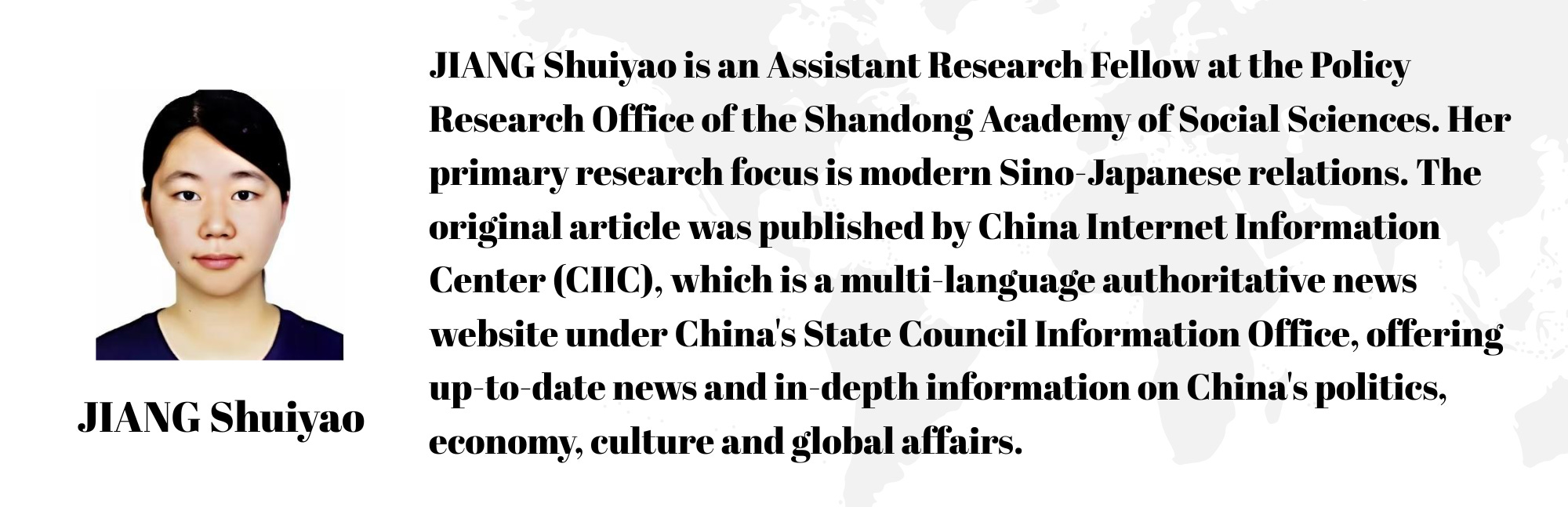
JIANG Shuiyao: Japan’s $73 Billion “Investment Gift”: Economic Concessions for a Hollow Alliance
A Conspicuous Offer That Defies Global Caution Toward Washington
After the US “reciprocal tariff” policy was ruled unconstitutional, most nations adopted a cautious stance. Japan did the opposite. During Prime Minister Takaichi Sanae’s first US visit in March 2026, Tokyo announced a $73 billion investment package – the second batch of a $550 billion commitment. The timing and scale of this “gift” are strikingly abrupt.
Three Forms of Entanglement: Energy, Mega-Projects, and Mineral Decoupling
The “grand investment gift” offered by Takaichi is mainly characterized by three aspects. First, the deepening energy integration between Japan and the U.S.. Japan seeks to further embed itself in the U.S. supply chain system by cooperating with the U.S. in energy initiatives such as boosting crude oil production in Alaska. Second, the large-scale investment projects, with the total investment of the three core projects expected to reach up to 73 billion U.S. dollars. Third, cooperation on critical mineral supply chains, with the introduction of a “minimum price system” to reduce reliance on China.
Security Anxiety Behind Generosity: Flattery Met with a Pearl Harbor Quip
Japan is trying to buy US security guarantees with economic sacrifices. When Trump demanded Japanese naval deployment to the Hormuz Strait, Takaichi gave only a vague response, citing constitutional constraints under Article 9. Her overture – “Only Donald can bring peace and prosperity to the world” – was met with Trump’s dismissive retort. Asked why the US did not notify Japan before striking Iran, Trump replied: “Who knows better about surprise than Japan? Why didn’t you tell me about Pearl Harbor?” This reveals Washington always prioritizes its own interests, never treating allied consultation as a necessity.
Tangible Costs Yield Only Symbolic Returns, Not Substantive Concessions
Japan’s “attack as defense” strategy failed. The US response was limited to Trump’s verbal praise, a welcome for Alaska oil purchases, and ceremonial courtesies. On Japan’s three core concerns – trade policy, security commitments, and coordination toward China – Washington made no substantive concessions. Japan’s payments are concrete and quantifiable; America’s returns are symbolic and gestural.
The Fundamental Asymmetry: Japan Trapped as a “Paying Ally”
The US-Japan alliance is an asymmetric interdependence. Japan’s security lifeline is held by the US, which values Tokyo only for its strategic location and economic resources. Under Trump, the more Japan pays, the hollower US assurances become. Whether such a one-sided model can lead to a “new golden age” is self-evidently doubtful. Japan’s dilemma remains: how to avoid being a “paying ally” while preserving its own interests within deep dependency on Washington.
Conclusion
Looking ahead, the U.S.-Japan alliance is unlikely to achieve the “new golden age” that both sides have claimed. Although the U.S. still regards Japan as the most important pivot for containing China in the Indo-Pacific region, the underlying logic of the Trump’s “America First” policy determines the instrumental and conditional nature of its commitment to Japan. This structural asymmetry of “Japan needs certainty while the U.S. retains uncertainty” will repeatedly test the stability of the alliance. The upgrading and reconstruction of the U.S.-Japan alliance will continue to pose strategic pressure on China, and may weaken the long-term efforts of Asian countries to promote stability and cooperation in the region.
Editor for Today’s Newsletter: SUN Chenghao, WEI Zongqin, WU Kexi, LI Yining, CHEN Weng U and BAI Xuhan.

