



Welcome to the 21st edition of China Scholar Insights!
China Scholar Insights is a feature that aims to provide you with the latest analysis on issues that Chinese scholars and strategic communities are focusing on. We will carefully select commentary articles and highlight key points. Questions or criticisms can be directed to sch0625@gmail.com
I am SUN Chenghao, a fellow with the Center for International Security and Strategy (CISS) at Tsinghua University. ChinAffairsplus is a newsletter that shares Chinese academic articles focused on topics such as China’s foreign policy, China-U.S. relations, China-European relations, and more. This newsletter was co-founded by me and my research assistant, ZHANG Xueyu.
Background
On February 28, 2026, the United States and Israel launched joint airstrikes on Iran, killing several senior officials, including Supreme Leader Ali Khamenei. Iran responded by striking U.S. bases across the region and, on March 1, announced the closure of the Strait of Hormuz. A day later, Donald Trump signalled a willingness to engage with Iran’s new leadership, but Tehran rejected the overture.
However, the Trump administration’s resort to force against Iran appears to lack a clearly articulated strategic end state, and bears signs of being significantly shaped—if not driven—by Israeli threat perceptions and operational preferences. As the conflict unfolds, Washington is showing increasing difficulty in shaping escalation dynamics and terminating the war on favorable terms, raising concerns that it may become drawn into a protracted and costly entanglement.
The ongoing U.S.–Iran confrontation has already had far-reaching consequences: it has destabilized the Middle East security environment, triggered volatility in global energy markets, and provoked intense domestic debate within the United States, thereby constraining the administration’s broader strategic flexibility and bandwidth.
At the same time, observers have begun to question whether the U.S. approach to Iran, when viewed alongside the earlier Venezuela episode, reflects a broader pattern in the Trump administration’s use of military intervention. In this regard, the extent to which these cases reveal an emerging logic—characterized by opportunistic intervention, ambiguous objectives, and reactive escalation—has become an increasingly salient subject of analysis.
Insights
Guo Hai: Three Critical Questions Urgently to Be Answered in the Wake of Khamenei’s Assassination
No Imminent Collapse of Iran’s Islamic Republic
In light of the structural characteristics of Iran’s political system and its domestic conditions, the assassination of the Supreme Leader is unlikely to lead to the disintegration of the Iranian polity under conditions of armed conflict. Institutional continuity is maintained through constitutional mechanisms, with the Assembly of Experts responsible for selecting a successor and an interim authority already in place. Besides, Iran features a highly decentralised governance system, and its power structure, underpinned by the separation of three powers, demonstrates strong institutional resilience in the face of internal and external turbulence. Furthermore, there is no severe political rift among Iran’s political elites that could lead to regime change. Meanwhile, the operation by the U.S. and Israel has significantly stoked Persian nationalism in Iran, and Khamenei’s death will also push Iran’s new leadership to adopt a tougher policy stance toward the U.S. and Israel. Although economic hardship has generated public discontent, in the absence of elite division, it is unlikely to develop into organised regime change.
Strait Closure Triggers “Inflation Shock and Growth Slowdown”
In general, the closure of the Strait of Hormuz will impose dual global economic pressures: short-term inflationary shocks and a medium-term growth slowdown. As a critical transit point for global energy flows, even partial disruption—through rising transport risks, insurance costs, and market expectations—can drive significant oil price volatility. The surge in energy prices will quickly be transmitted through global industrial chains via fuels, power generation, chemical raw materials and other channels, triggering widespread imported inflationary pressures. At the same time, financial markets may shift toward risk aversion, with downward revision of global growth expectations. Energy-import-dependent economies face compounded pressures on domestic demand, while sustained high prices could delay monetary easing and weaken global growth prospects.
“Fighting While Talking” as the Likely Future Paradigm
Despite Iran’s tough stance, interactions among the United States, Israel, and Iran are likely to evolve into a pattern of “fighting while talking,” in which trade blockades, localised clashes, proxy wars, cyberattacks, targeted assassinations, and diplomatic engagement proceed in parallel. The United States seeks to prevent Iran’s nuclear weaponization and uphold Israel’s regional predominance, yet reservations expressed by its domestic and Western allies over the Trump administration’s actions have constrained the room for direct conflict escalation. Accordingly, the Trump administration is more likely to persist with the offshore balancing model, using Israel as its proxy. Iran, for its part, takes its own political survival as its paramount objective, and aims to impose maximum cost pressures on the United States and its allies through countermeasures, with a view to bringing the United States to the negotiating table. This dynamic is likely to give rise to a prolonged war of attrition, until both sides recognize that further escalation cannot enable them to achieve their respective purpose, at which point a degree of strategic equilibrium may emerge in the Middle East.
The Risks of a “High-to-Low” Conflict Model
It is worth noting that Trump’s targeted decapitation strikes against the leaders of Venezuela and Iran have largely reshaped the paradigm of modern warfare. The “high-to-low” conflict model, which opens with high-intensity strikes to anchor the opponent’s perception of conflict costs at a high level, before pursuing incremental de-escalation through “fighting and talking”, carries extreme risks. Its core premise is accurate judgment of the opponent’s cost tolerance and political will; miscalculations will trigger fiercer countermeasures. A deeper flaw is the lack of a clear exit mechanism, with military operations unmatched to a defined end state. This model risks dragging the United States and the wider world into a deeper quagmire of warfare.
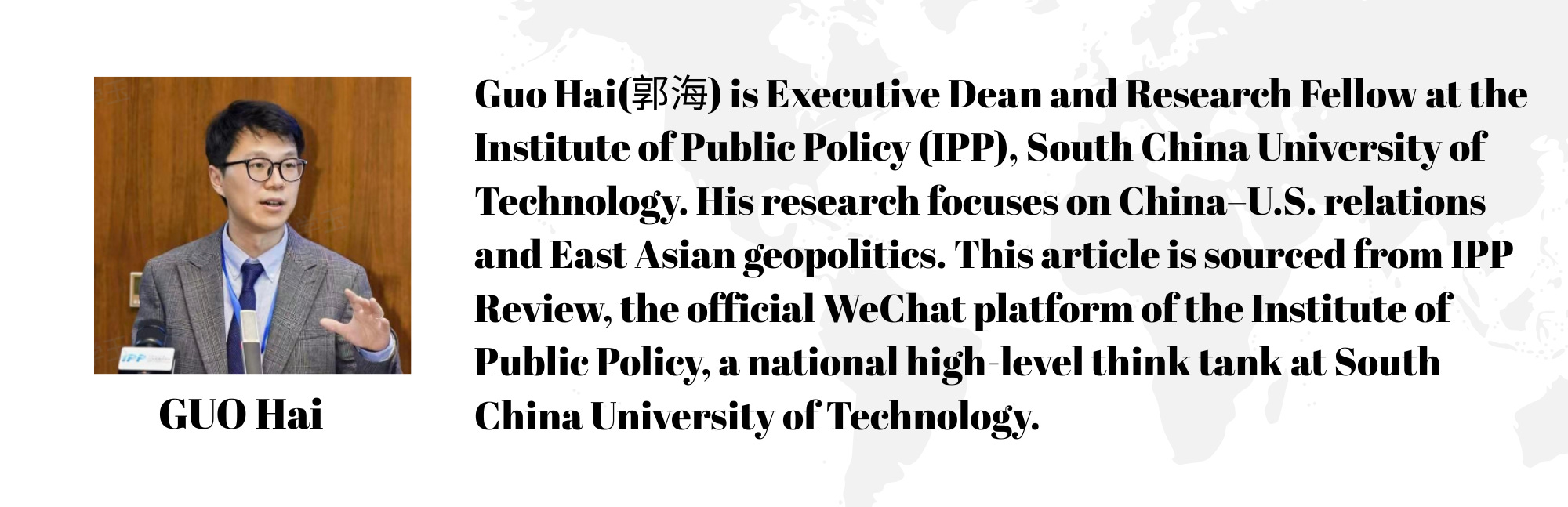
ZHU Feng: The Conflict in Iran as an Extension of Trump’s Neo-Monroe Doctrine
A Comparative Analysis: The Iranian Conflict vs. the Venezuelan Incident
The disparities lie primarily in Iran’s larger population, formidable military strength, and its long-standing defiance of the West, with its aggregate power far exceeding that of Venezuela. Conversely, the commonalities reside in the U.S. ambition to achieve regime change through surgical military strikes, install pro-American figures, and pivot foreign policy toward Washington within a condensed timeframe.
Yet, the fundamental objective of the U.S.-Israeli strikes is not merely short-term deterrence, but the assertion of de facto control over Iran to fulfil Trump’s personal geopolitical agenda. Significant uncertainties persist regarding the so-called “Venezuelanization” of the Iranian issue.
The Trajectory of the Iranian Crisis and its Implications for Global Energy Supply and East Asian Economies
The trajectory of the current military operations remains inherently uncertain. Primarily, it is contingent upon Iran’s indigenous armaments, including its defensive posture and sustained military resilience. Furthermore, Iran is not Venezuela; the threshold for Trump to conclude strikes within four weeks, dismantle the current regime, and extract substantive concessions is formidable. This strategy necessitates the cultivation of new pro-American factions within Iran and a wholesale reversal of the nation’s foundational anti-U.S. policy orientation. Thirdly, Iran has initiated retaliatory measures aimed at escalating the global costs of the conflict to elicit international intervention and support.
Presently, there is a risk that the hostilities may spill over into other Arab nations in the Middle East, potentially igniting a broader regional conflagration. Should the war persist, and the Strait of Hormuz remain blockaded, it would deal a severe blow to the energy imports of East Asian nations. Concurrently, this would destabilize currency markets, drive up energy prices, and induce volatility across international financial and capital markets.
Novel Characteristics of the Military Operation and the Extension of the Neo-Monroe Doctrine
This military operation exhibits several novel characteristics compared to historical conflicts. In terms of military technology, the U.S. and Israel initially deployed large-scale information suppression, utilizing AI and unmanned aerial vehicles (UAVs) that epitomize contemporary warfare. Following the Russia-Ukraine conflict, UAVs have emerged as a pivotal instrument and weapon on the front lines of military engagement. Additionally, the sophisticated anti-missile systems of the U.S. and Israel played a critical role in this engagement.
Beyond these factors, the current U.S.-Iran confrontation is essentially an extension of Trump’s “Neo-Monroe Doctrine.” Diverging from the logic of the 2003 Iraq War, this operation represents the overt exercise of power politics through coercive military force. It employs a strategy of “simultaneous engagement and suppression” to compel Iran into a geopolitical settlement aligned with U.S. interests.

Wu Bingbing: A Three-Way Game and Seven Key Variables: Is the Iranian Situation Becoming Protracted?
Domestic mobilization and social cohesion in Iran remain relatively stable. Meanwhile, the United States faces challenges. Combined with fluctuations in oil and gas prices and shifting alliances within the Middle East, the current situation increasingly points to a risk of protracted confrontation.
Iran: Asymmetric Warfare and Strategic Pressure via the Strait of Hormuz
First, Iran continues to rely on asymmetric retaliation. It possesses over 2,000 ballistic missiles with a range of up to 2,000 kilometers, along with a vast arsenal of drones, many of which are stored in underground facilities. This enables Iran to sustain a prolonged resistance. Second, Iran is exerting pressure through the Strait of Hormuz. Instead of being fully closed, the strait has seen restricted vessel passage, significantly disrupting global oil and gas supplies. Third, Iran has struck back at U.S. military bases and even diplomatic facilities in the region, such as in Erbil or Saudi diplomatic posts. This is considered to be a reminder to Gulf states that the presence of U.S. installations on their soil could make them targets. Although Saudi Arabia and others have voiced opposition to strikes on Iran, they have taken no concrete action, adding to regional risks. Fourth, Iranian patriotism has been stirred, preventing internal divisions. This sentiment could support a prolonged resistance.
The United States: Strategic Confusion and Constraints
First, U.S. objectives and the means to achieve them remain unclear. After the initial Israeli strike that killed Iran’s Supreme Leader, there was no clear strategy for regime change. At the same time, unseating the Iranian leadership would be extremely difficult for U.S. without preparation for a ground war. Second, the U.S. is not prepared for a long war. Initial expectations of a conflict is lasting from one to four weeks. Ammunition stockpiles, especially interceptors crucial for defense, are significantly lower than during the 2003 Iraq War, suggesting sustainability for only one to two weeks. Third, there is no clear U.S. exit strategy if Iran mounts a sustained, methodical resistance. Iran’s interim leadership council has been functioning effectively, maintaining policy continuity, which leaves the U.S. with no clear path to end the conflict.
Fourth, U.S. and Israeli strategic timelines diverge. Israel’s goal of regime change is more direct, and it may continue its campaign even if the U.S. decides to scale back, with no mechanism in place to align its actions. Fifth, the timing of the U.S. strike, coming amid diplomatic negotiations, has dimmed prospects for a deal. Past talks yielded Iranian concessions on nuclear enrichment. Following the military attack and the killing of its leader, Iran is unlikely to make further concessions on its nuclear or missile programs. Sixth, disruptions in the Strait of Hormuz have already driven up energy prices. Prolonged conflict would risk fueling inflation in the U.S. Seventh, the stance of neutral Gulf states remains uncertain. While they oppose Israeli expansion and favor diplomacy, attacks affecting their territory could shift their position.
In conclusion, the Iranian issue is unlikely to be resolved quickly. The risk of a prolonged conflict is clear, when U.S. is also facing a higher risk, and how the U.S. might end such a conflict remains an open question.

ZHENG Yongnian: Lessons from the Iran Conflict: Guarding Against Japan Becoming an “Israel of East Asia”
Israel as the ‘Tail that Wags the Dog’ in Driving U.S. Action
The motive for the strike on Iran originated more with Israel than with the United States. Israel serves as America’s strategic pivot in the Middle East. Despite Trump’s claims of control, the reality is that U.S. policy is being significantly driven by Israeli interests, using American power to settle regional scores. The attack occurred not despite diplomacy, but because the U.S. and Iran fundamentally distrust each other, making negotiation impossible.
Iran’s Future: Potential for Moderation or Risk of Chaos
The outcome hinges on Iran’s internal dynamics. While the U.S. seeks regime change, it will not occupy Iran. In the medium to long term, Iran may evolve toward a more moderate or secular governance model, which could ultimately stabilize the Middle East. However, if the existing political structure collapses without a viable replacement, the country could descend into chaos, breeding extremism that threatens the entire region—a scenario reminiscent of post-invasion Iraq or Afghanistan.
The ‘No-Exit’ Trap: Why Trump May Not Be Able to End This War
Trump likely hoped for a quick, limited strike—a “shock and awe” campaign similar to the Gulf War. However, once a war begins, it follows its own logic. By targeting Iran’s leadership, the U.S. may have triggered a response that prevents it from simply “cutting and running.” Iran has strong incentives to keep the U.S. engaged, potentially forcing Trump into a deeper, longer-term occupation similar to the later Iraq War model, an outcome he likely did not intend.
A Key Lesson for China: Preventing Japan from Becoming ‘an Israel of East Asia’
While China is not a direct party to the conflict, it must learn from it. China should proactively work to prevent Japan (and potentially the Philippines) from assuming a role in East Asia analogous to Israel’s in the Middle East. The risk is that these U.S. allies could manipulate Washington’s strategic focus, dragging U.S. into conflicts to serve their own national interests, thereby forcing China into a war it does not want.
A Warning on Tech: China Must Reorient AI Toward National Security, Not Just Entertainment
The strike on Iran represents a new generation of warfare, merging Silicon Valley with the Pentagon. While AI remains a tool, its application in warfare is now immediate and lethal. Recently, China’s tech sector has focused too heavily on entertainment and consumer apps, whereas the U.S. prioritizes military applications. If China possesses AI capabilities but fails to integrate them into national defense, it risks strategic obsolescence in future conflicts.

Editor for Today’s Newsletter: SUN Chenghao, ZHANG Xinyue, CHEN Didi, FAN Jiaji, LIU Zhuofan and ZHANG Xueyu.


Not sure it is right to compare Japan and Israel. Japan is a vessel of the US, whereas Israel is not a vassal of the US. It is the other way round. US is a vassal of Israel. Could Japan drag an unwilling US into a war with China? I don’t think so. It is the US that wants to drag Japan into a war with China. Japan is more a potential Ukraine than a potential Israel.
Interesting point of views, txs for sharing!
The last is not considering the ZioNazi of Mossad Israel are keeping many Western leaders under blackmail txs to extensive work of espionage and organized crimes like Epstein gang did to be able to black mail many VIPs.
You must recognize that the Evil Prime Minister of the ZioNazi Israel did it already with Clinton, organizing the sex assault of the Mossad "Lewinsky" knowing the weak side of Clinton for young girls. That time the out out didn't work from the Evils but Clinton went in trouble when they released the tapes...
Is it Japan blackmailing any leader, Chinese one? You should find out.
But one thing scholars should talk about is why China and Russia did/do not send a couple of squadrons of fighters and bombers to an airfield in Iran and in this way clearly showing that US and ZioNazi Israel have to stop those aggression, including Gaza and Palestinian territories, without a minimal single reason or justification based on International Laws whatever someone is still respecting them or not?
The multipolar world that China and Russia and other would like to have cannot be without beating once for all those American and Israel ZioNazi! Not only Ukraine need to be De.Nazified but US and Israel need too.