



Welcome to the 20th edition of China Scholar Insights!
China Scholar Insights is a feature which aimed at providing you with the latest analysis on issues that Chinese scholars and strategic communities are focusing on. We will carefully select commentary articles and highlight key points. Questions or criticisms can be directed to sch0625@gmail.com
I am SUN Chenghao, a fellow with the Center for International Security and Strategy (CISS) at Tsinghua University. ChinAffairsplus is a newsletter that shares Chinese academic articles focused on topics such as China’s foreign policy, China-U.S. relations, China-European relations, and more. This newsletter was co-founded by me and my research assistant, ZHANG Xueyu.
Background
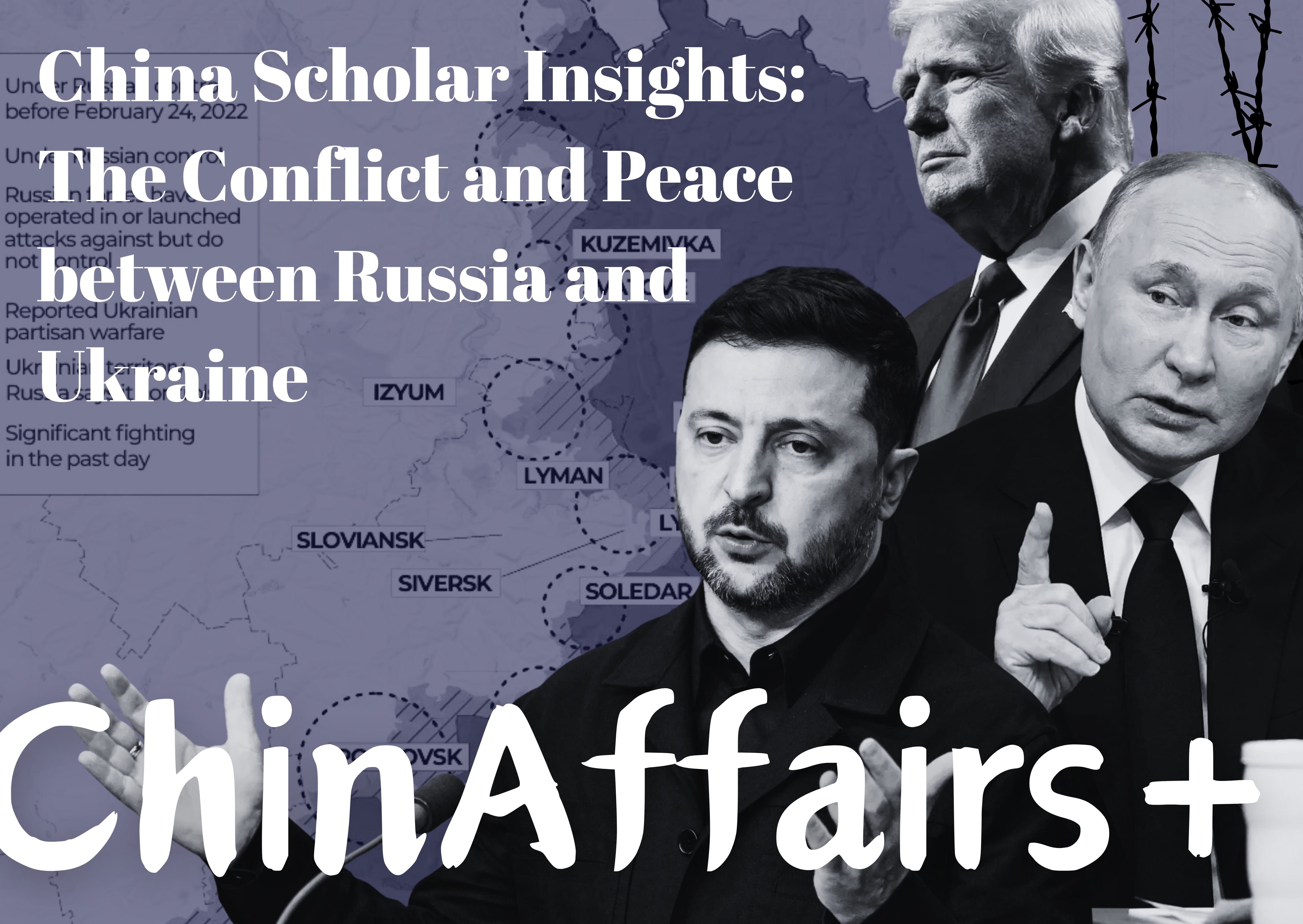
The Ukraine war has persisted for years, profoundly impacting the global geopolitical and security landscape. With Trump’s return to the White House and adjustments to U.S. foreign strategy, his push for ceasefire and negotiations has drawn international attention. All parties have intensified diplomatic efforts: the U.S.-proposed “28-point peace plan”—having undergone revisions—has driven interactions. Trump met Zelenskyy at Mar-a-Lago on December 28, noting nearly 95% consensus on key issues, with remaining differences over Donbas. He also held in-depth calls with Putin, with both sides agreeing to shun temporary ceasefires that prolong the conflict, as the international community monitors developments closely.
Summary
Regarding the direction of the Ukarine war, U.S. policy has shifted toward pragmatic retrenchment, prioritizing interests to promote a ceasefire. However, the vague and suspicious origins of peace plans have led to mutual blame-shifting among Ukraine, Europe and Russia. Europe’s marginalization in negotiations, bearing heavy costs without proportional influence, exposing the limitations of its strategic autonomy.
Meanwhile, Russia and Ukraine remain far apart on territorial issues and ceasefire terms, with differences in war costs and patience influencing the negotiation process. Additionally, potential U.S.-Russia normalization could pose challenges to China’s peripheral security. Finally, attention is also needed on the complex impacts of a peaceful resolution on China’s overall interests, including China-Russian relations and interactions among China, the U.S., and Europe.
Insights
HUANG Jing & JIA Qingguo:A Peaceful End to the Russia-Ukraine Conflict Would Serve China’s Overall Interests Better
The White House recently released the 2025 National Security Strategy report, elaborating on Trump’s policy since his January return. Centered on core national interests, it readjusts U.S. global security priorities.
The U.S. Abandons Global Hegemony
The 2025 strategy differs sharply from prior versions. It reflects Trump’s personal views on international affairs, highlights strategic contraction and primacy of U.S. interests, and shifts focus from the globe to homeland . It downplays ideology, weakens alliance bonds, and demands allies take greater regional security responsibilities. Overall, it reverts to the Monroe Doctrine and Jacksonianism, prioritizing military contraction and economic competition.
Shifts in Latin America & Europe Policies
The U.S. seeks to reassert influence in Latin America, stabilize the region, and combat smuggling/illegal immigration—marking a drastic policy shift. Its military deterrence against oil-rich but militarily weak Venezuela can be seen as means to assert U.S. influence in Latin America, warn potential challengers, and reinforce Latin American countries’ attention to U.S. views.
On Europe, Trump repudiates the previous administration’s stance on the Russia-Ukraine conflict, calling for an immediate ceasefire based on pragmatic interests instead of ideology. He argues prolonged war drains U.S./European resources and risks nuclear conflict with Russia, deeming early ceasefire beneficial even if Ukraine makes territorial concessions.
U.S.-Russia Reconciliation’s Pose Potential Risks to China’s Peripheral Security
Normalized U.S.-Russia ties may prompt Japan to improve relations with Russia, letting its right-wing forces focus on countering China. Russia-India relations follow the same logic. Vietnam and North Korea—major users of Russian weapons—have strengthened cooperation, reflecting Russian influence. Thus, U.S.-Russia normalization could pose potential risks to China’s peripheral security.
A Ceasefire Between Russia and Ukraine is Overall Beneficial to China
The prolonged Russia-Ukraine conflict pushes Russia to deepen political, military and economic cooperation with China amid Western sanctions, yet strains bilateral relations—Russia expects more support, but China avoids supplying weapons to evade Western sanctions.
The war has pros and cons for China: it diverts U.S. attention, easing China-related pressure, but hinders China-Europe relations as Europe aligns with U.S. pressure. An early ceasefire would reduce U.S. pressure, facilitate smoother China-Russia cooperation, and boost China-Europe ties as Europe’s focus shifts. Overall, a ceasefire benefits China.
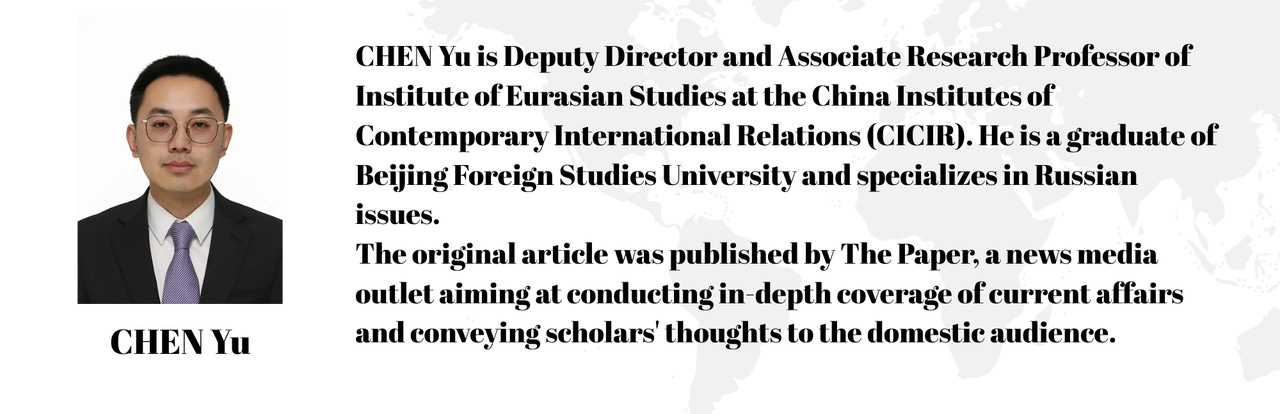
CHEN Yu: “The 28-Point Plan” Changed to “The 19-point plan”: This Suspicious “Ball” Was Kicked Back by Ukraine and Europe.
During the U.S.-Russia and U.S.-EU summits in August this year, all countries refused to compromise on the Russia-Ukraine conflict, while also not wanting to outright reject Trump’s ceasefire appeal. This led Russia, Ukraine and Europe to shift the blame for “refusing peace” onto each other. From the 28-point peace plan to the 19-point plan, the interactions among these countries might still be a “game of kicking the ball for Trump to watch”.
Suspicious plan: Unprofessional content and unknown sources
The official version of the 28-point plan has not been released till now, and the plan was only leaked by a Ukrainian parliamentarian and the U.S. media Axios. However, the revealed content contains obvious errors, lacks the design of key elements, and includes some provisions that seem difficult to implement.
The source of the plan is also highly suspicious. Some Western media outlets believe that the 28-point plan was jointly drafted by Trump’s trusted follower Steve Witkoff and the special representative of the Russian president Kirill Dmitriev, with some sentences resembling “direct translations from Russian”. The plan also raised suspicions among both the Democratic and Republican parties. Some critics of Trump believe that the leak of the plan might be a “fishhook” designed by Russia, aiming to urge Trump pressure Ukraine.
The response of Europe and Ukraine: Using negotiations as an excuse to “kick the ball back”
The original 28-point plan almost repeated Russia’s previous demands, making it hard for Ukraine and Europe to accept. Zelensky delivered a “darkest hour” speech, stating that “we will never give the enemy the pretext that ‘Ukraine does not want peace’”. Meanwhile, Europe released a “24-point peace plan”, which was formally similar to the original but had significant differences in content. Now as western media said, the plan has been reduced to 19 points.
Russia’s stance: Having the upper hand and little room for compromise
The 28-point plan sparked controversy within Russia. Putin’s attitude was very cautious, and some parliamentarians and commentators believed that Russia’s demands weren’t met. Therefore the revised 19-point plan, which takes into account Ukraine’s and Europe’s concerns, is obviously more difficult for Russia to accept. In particular, the new plan has deleted the content related to U.S.-Russia relations and Europe affairs, going against Russia’s “package solution” demands.
Moreover, the Russian army has the upper hand on the battlefield, and domestic public opinion supports continuing military actions. Russia lacks the urgency for tactical compromise and the space for political compromise, and may refuse the revised plan or may attempt to kick the ball back by having a dialogue with the U.S..
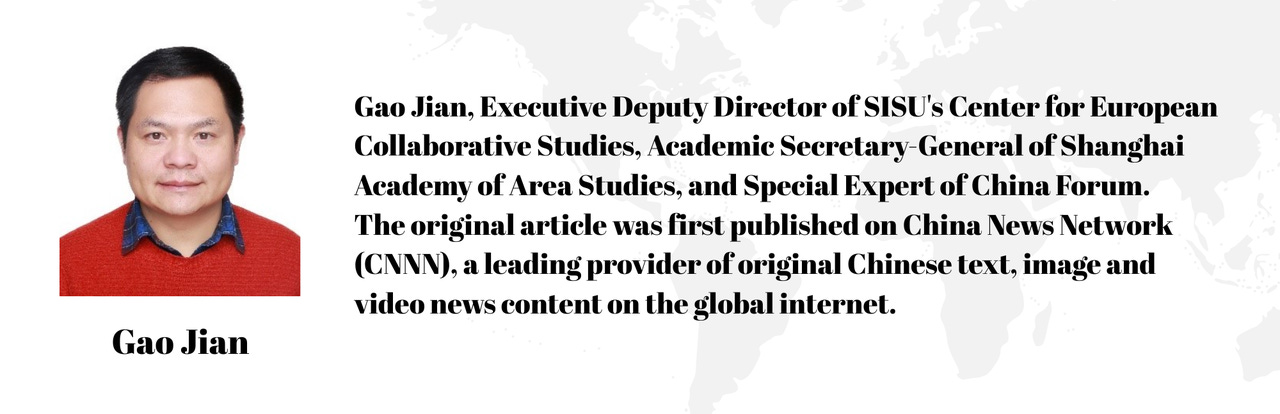
Gao Jian: U.S. Pushes New Russia-Ukraine Peace Deal, Is Europe the Biggest Loser?
The U.S. is advancing a new peace plan for the Russia-Ukraine conflict, triggering strong shock and dissatisfaction in Europe. European leaders worry their interests may be sacrificed in great-power rivalry and crave an “acceptable better solution.” This mocks Europe’s long-touted “strategic autonomy”—having paid heavy economic and social costs, it is excluded from the negotiating table.
Europe Is Marginalized in Peace Talks, Facing Over-the-Top Diplomacy
The conflict’s resolution is likely to follow the new deal, with Europe marginalized on core interests—exposing extreme power imbalance in the transatlantic alliance. Europe bet its security entirely on the U.S., mistaking a “values alliance” for an interest community. Washington’s direct negotiations with Moscow (for its global strategy) left Europe facing “over-the-top diplomacy,” showing Europe’s security interests are subordinate to U.S. goals—used as a frontline fortress or bargaining chip, lacking independent status in the U.S.-Russia-Europe triangle.
Europe as the Biggest Loser: Heavy Costs Without Voice
Aligning with the U.S. strategy, Europe cut cheap energy supplies, endured high inflation, faced manufacturing outflow and deindustrialization, and bore refugee and livelihood crises. Yet it gained no corresponding say—the conflict’s rhythm is controlled by the U.S. and Russia, depriving Europe of both interests and dignity as it realizes it may be a “geopolitical expendable.”
Unfulfilled Strategic Autonomy: Rooted in Lack of Strength
Europe’s “strategic autonomy” remains empty talk due to hesitant defense integration and blind foreign policy obedience. Unable to build an independent security architecture outside NATO, its anger is powerless without hard power backing—merely emotional venting
Europe Needs Self-Reflection, China-Europe Cooperation Holds Promise
The U.S.-Russia rumoured secret deal taught Europe a realist lesson. To avoid future sacrifice, it must rethink its dependent strategic culture and build independent defense and diplomatic systems. China sees Europe as a key multipolar world participant. Abandoning Cold War mentality, China and Europe—two major forces, civilizations and markets—can move forward together amid global changes.
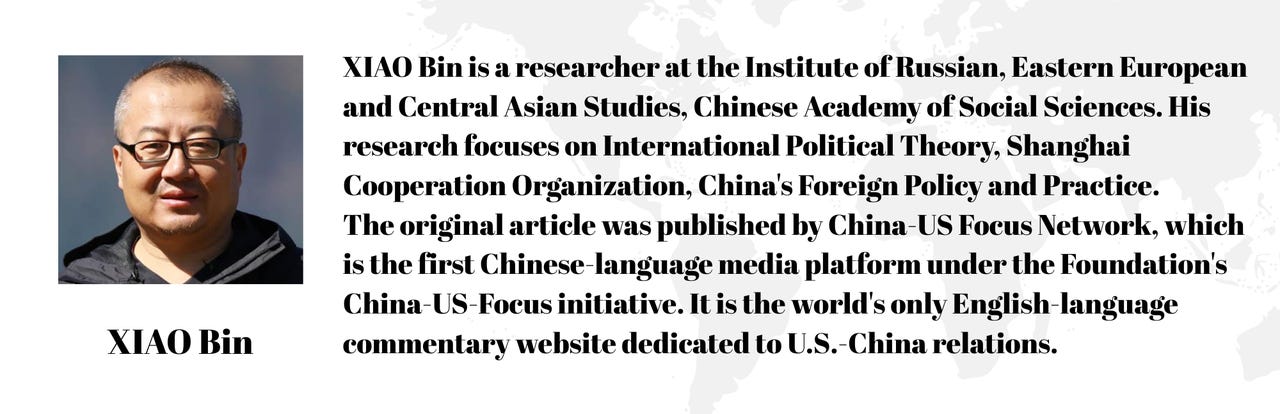
XIAO Bin: War Cost Calculations in Ukraine Conflict
After a five-hour meeting in Moscow on December 2, 2025, the United States and Russia remained at odds over the Ukraine peace proposal. Although Russian President Vladimir Putin’s active involvement in the talks signaled a willingness to engage, this alone did not bridge the gap between the two sides.
Territorial issues are at the heart of the dispute
Resolving the territory issue is the primary prerequisite for resolving the crisis and the current dispute is focused on two key dimensions.
First is the choice between “de facto recognition” and “de jure recognition”. Russia needs sustainable security architecture, while the U.S. seeks for strategic wiggle room, leading them to choose different ways to dispose of their gains. Russia insists on solidifying its gains through “de jure recognition”, while the U.S. Prefers “de facto recognition” to preserve policy flexibility.
Second is the conditions for freezing the front lines. The lack of consensus on the European security landscape results in this divergence. Russia seeks a long-term solidified border and pushes Ukrainian forces to unconditionally withdraw from the eastern regions. In contrast, the U.S. prefers short term management and hope Ukraine can make some tactical adjustments without sacrificing bargains in negotiations on a precondition of an ambiguous approach.
Patience and battle on cost
By the end of 2025, the cumulative cost of the war in Ukraine will have soared to nearly $3 trillion and counting.
In Putin’s view, Russia possesses sufficient leverage and a relatively flat cost curve, which is primarily grounded in Russia’s confidence in its institutional framework and resource allocation capabilities. Therefore,Russia will maintain a persistently high proportion of defense spending in its 2026 budget, so as to send a signal that it can bear war costs over the long term.
Conversely, Ukraine and its Western allies face steeper cost curves.Moreover, amid the competition with China, the U.S. is reallocating its strategic resources, so the European theater cannot monopolize more attention and resources. This imperative is driving the U.S. to necessitate a swifter de-escalation strategy.
Peace race
This Moscow Talks has been described as “productive” instead of substantial breakthrough.
The future peace process may be influenced by several dynamic factors: marginal changes of patience, the gap between freezing and peace and the recording of U.S. strategic priorities. These factors reveal that it is the dynamic changes in the cost curves of all sides that will ultimately determine the peace process.
Through the lens of strategic cost curves, the vast difference of the ability to bear between Russia, Ukraine and the West, which demonstrates that any peace plan on the table is just another form of conflict extending over time essentially.
LÜ Yunmou: Is the Russia–Ukraine Conflict Heading for an Endgame? Europe Has Three “Fears”
After the United States proposed a “28-point” plan on the Russia–Ukraine conflict, Europe’s major powers have grown anxious—fearing an outcome beyond their control, an unaffordable Ukrainian burden, and the undermining of Europe’s security.
Fear One: “No Seat at the Table”
Since Trump’s return to the White House, Europe has worried it will be shut out of Russia–Ukraine negotiations. After experiencing U.S.–Russia “over-the-head” talks, European leaders mounted sustained charm offensives, in hopes of securing a place in the talks. Yet Europe’s bid to sway Trump has largely fallen flat. Washington has rolled out a “28-point” plan with Moscow while keeping European capitals out of the loop—and Trump has publicly echoed Russia-favoring assessments while brushing off Europe-led consultation as “a waste of time.” To many European leaders, this amounts to a deliberate bypass that risks turning them into mere spectators on a security outcome that directly affects their core interests.
Fear Two: “Unable to Foot the Bill”
Even if Europe gets a seat at the table, it may still be forced to shoulder the postwar bill. With the United States likely to scale back, Europe doubts its ability to shoulder the responsibility of “helping Ukraine” alone. After four years of costly support—massive aid to Kyiv and an expensive energy and sanctions break with Russia—Europe worries much of its investment could be stranded under a U.S.-brokered ceasefire. It would then face open-ended obligations for Ukraine’s reconstruction and, potentially, EU accession, both of which could deepen existing EU fractures over budgets, subsidies, and migration. Meanwhile, disputes over using frozen Russian assets could trigger legal and political blowback once the war ends—adding financial strain and increasing the risk that European states splinter under pressure.
Fear Three: “Becoming a Bigger Ukraine”
Geopolitically, Ukraine is Europe’s gateway. If the conflict ends in an outcome unfavorable to Ukraine, Europe fears it could face a stronger threat and still be unable to close its near-term “security deficit”—sliding into the predicament of being wealthy and democratic yet unable to protect itself. A U.S. pullback would further expose Europe’s vulnerabilities: dependence on U.S.-made military equipment and NATO institutions could even deepen, while Europe’s own defense coordination remains fragmented. This also sharpens intra-European rifts over leadership and burden-sharing. Domestically, a perceived failure of pro-Ukraine, anti-Russia policies could rebound against Europe’s political elites, empowering anti-establishment forces and adding volatility to an already shifting political landscape. In short, Europe fears not only the war itself, but an endgame that sidelines European interests, constrains Europe’s development, and undermines its security.
Conclusion
The outcome of the Ukarine war remains uncertain, shaped by U.S. policy adjustments, cost calculations, and geopolitical maneuvering. While a peaceful resolution would benefit China overall, shifts in the regional security environment warrant caution. Future negotiations will test the strategic patience and pragmatism of all parties, requiring China to advance its interests and multilateral cooperation prudently within a dynamic landscape.
Editor for Today’s Newsletter: SUN Chenghao, CHEN Didi, FAN Jiaji, WEI Zongqin, LIU Xinman, LI Yining, BAI Xuhan, ZHANG Xueyu

