



Welcome to the 17th edition of China Scholars Insights!
I am SUN Chenghao, a fellow with the Center for International Security and Strategy (CISS) at Tsinghua University. ChinAffairs+ is a newsletter that shares Chinese academic articles focused on topics such as China’s foreign policy, China-U.S. relations, China-European relations, and more.
China Scholar Insights is a feature which aimed at providing you with the latest analysis on issues that Chinese scholars and strategic communities are focusing on. We will carefully select commentary articles and highlight key points. Questions or criticisms can be directed to sch0625@gmail.com.
Chinese Scholars’ Insights on Global Governance of Artificial Intelligence
Background
Global AI governance has established a UN-centered multilateral framework. However, technological evolution far outpaces regulatory processes and safety standard development, while geopolitical competition impedes global consensus, causing rule fragmentation. Global AI governance is characterized by divergent national policies, a widening technological gap, and ineffective international cooperation. Given AI’s borderless impact, no single nation can effectively regulate it, necessitating collective action. Therefore, it is crucial to build a global governance system that balances innovation and security norms, which is both a prerequisite for unleashing the full potential of artificial intelligence and a foundation for ensuring that all humanity can share the benefits of technology.
Summary
Global governance of artificial intelligence is of utmost importance. A multilateral framework must be established through international cooperation to ensure the safety, reliability and fairness of technological development. The core concept should be “making artificial intelligence beneficial”, which means AI should be people-oriented and benefit humanity. Collaborative governance through various tools such as regulations, standards and ethical guidelines is needed.
Some scholars aim to set value benchmarks and declare action paths, focusing on answering “why govern” and “where to head”, thereby fostering consensus and guiding direction. Specifically, they systematically expound principles such as people-oriented and collaboration, which is constructive and forward-looking. While other scholars focus on diagnosing the current predicaments and challenges, such as deeply analyzing structural problems like fragmented governance mechanisms and asymmetry in technological capabilities. Their discussions are more academic and critical, providing solid practical basis for solutions.
Insights
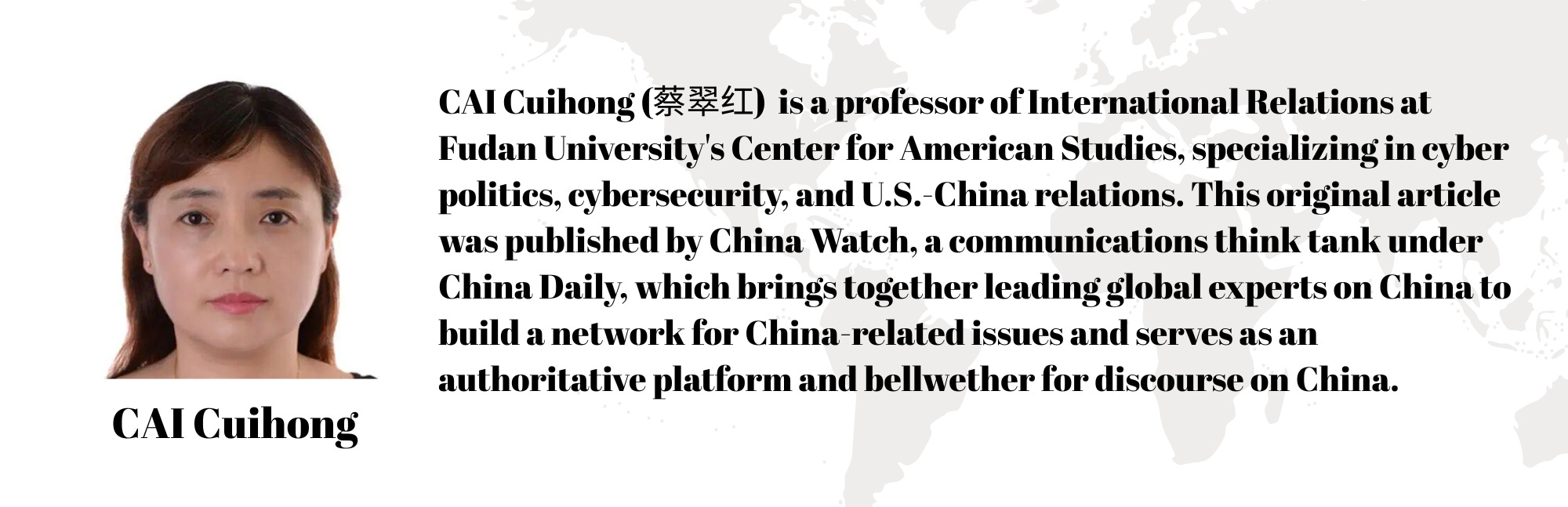
CAI Cuihong: Global AI Governance: Four Core Challenges and China’s Solutions
AI is reshaping global production and power structures, making its “good governance” a key issue involving ethics, equity, and security. However, global AI governance faces four critical obstacles.
Four Deep-Rooted Obstacles to AI Good Governance
First, fragmented governance mechanisms means principles from bodies like the OECD, UNESCO, and G7 lack unified standards and enforcement frameworks, with developed countries dominating and sidelining developing nations’ needs. Second, asymmetric technological capabilities see core resources (computing power, data, talent) concentrated in a few countries, widening the digital North-South gap and leading to issues like “algorithmic dependence.” Third, imbalanced discourse power lets Western ethical paradigms and tech giants dominate standard-setting, marginalizing developing nations’ value systems. Fourth, coordination mechanism among actors is weak and there is a lack of institutional support for diverse participation. Most non-state actors struggle to embed closed-loop policy feedback. And developing countries are on the margins in the game of international rules.
China has Proposed a People-Centered and Win-Win Cooperation Framework for Global Good Governance
For capacity building, China refines domestic AI regulations (e.g., the Interim Measures for the Management of Generative AI Services) and aids developing countries in establishing AI training centers via the Digital Silk Road to narrow the “intelligence gap.” In terms of institutional initiatives, it launches the Global AI Governance Initiative and hosts platforms like the 2024 World Artificial Intelligence Conference (WAIC)—which released the AI Global Governance Action Plan. On standard guidance, China promotes trusted AI via whitepapers and participates in ISO/IEEE to integrate diverse needs into global standards. Regarding multi-stakeholder collaboration, a government-led model (with enterprise participation and think tank support) boosts the international influence of China’s propositions.
As AI governance reaches a critical juncture, China continues to advocate for equitable and inclusive global norms, positioning itself as a proactive contributor to the international governance system.
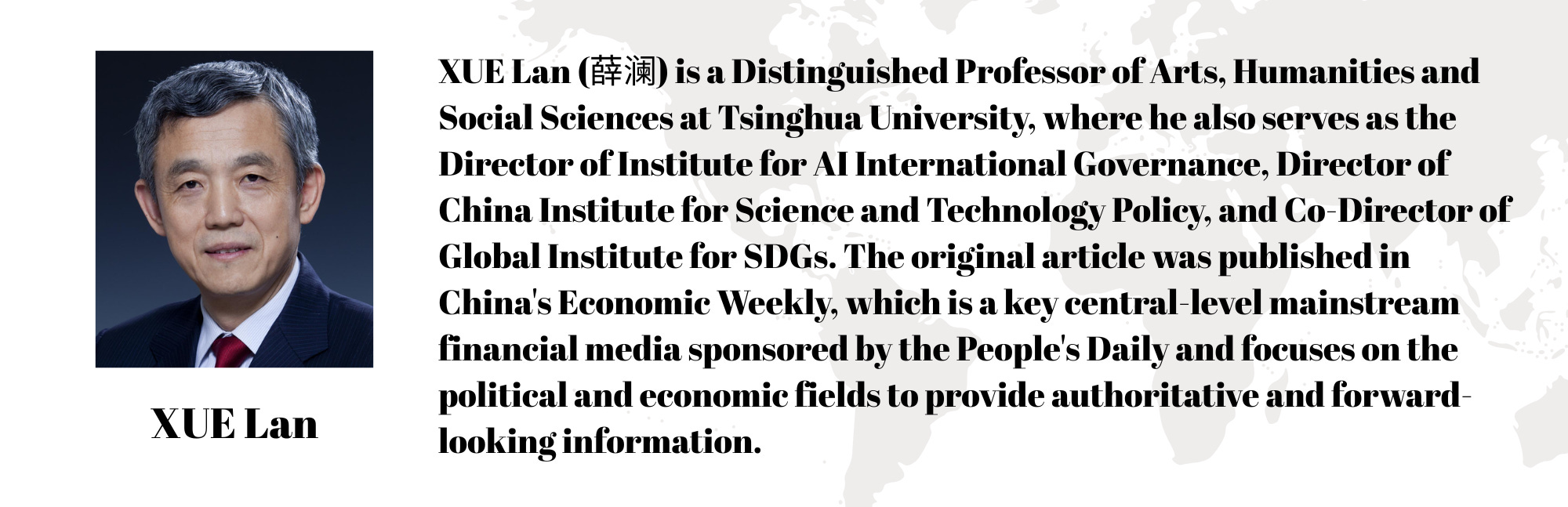
XUE Lan:AI Governance necessitates the coordinated application of diverse tools
Currently, how to establish a scientific and effective governance mechanism while promoting the innovation of AI technology has become an important issue in the research and practice of technology policies.
AI technology may pose risks to society, andthe governance mechanism can play a crucial role in guiding and shaping the development of this technology. Governance is not the opposite of innovation; rather, it is an indispensable institutional support in the process of achieving the healthy, orderly and sustainable development of AI.
Three common dimensions of AI governance
AI governance is a dynamic and systematic process involving multiple dimensions, multiple tools, and multiple stakeholders. The first governance dimension is the ethical and value dimension.It focuses on the fundamental ethical principles that AI systems should follow during their development and application. The second dimension is the policy support and market incentive dimension. It empowers AI innovation through policies including financial, R&D, and talent measures, while adopting anti-monopoly, data sharing, and other initiatives to safeguard the diversity and sustainability of the innovation ecosystem. Finally, there is the dimension of rules and standards,including laws and regulations, technical standards, responsibility mechanisms, etc.
Four Challenges in Global AI Governance
The characteristics of AI mean that its governance will not be limited to the national level. Firstly, the development paths of AI technologies vary among different countries. This is not only reflected in the selection of technologies and the focus of their applications, but also in the fundamental differences in the understanding of risk governance. The second issue is the mismatch between technological development and governance pace. The field of AI is evolving exponentially, while the governance system still exhibits characteristics of lag and fragmentation. Thirdly, although multiple initiatives and mechanisms have been established globally, there is a lack of hierarchical governance relationships and coordination mechanisms. Finally, geopolitical conflicts have erected barriers to cooperation. Issues that could have been widely collaborated on have been incorporated into the framework of strategic games, making global collaborative development and risk sharing difficult to achieve.
Looking ahead, AI governance should be characterized by cooperation, inclusiveness and legality, and return to the global cooperation framework so that it can safely, reliably and fairly benefit the world.
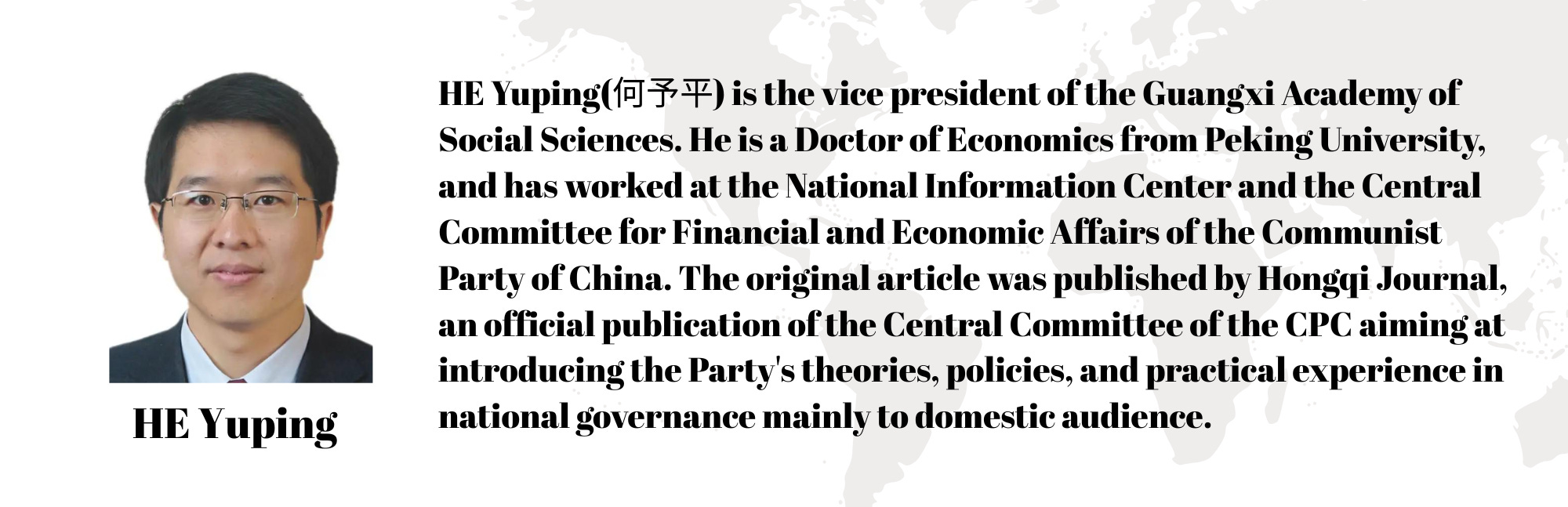
HE Yuping:Actively promoting global governance and international cooperation of AI
Significance of Advancing Global AI Governance
Firstly, AI is an important public good and a global governance issue that requires international cooperation to ensure its safety, controllability, fairness and inclusiveness. Secondly, AI is a key point for building an open world economy. All countries need to resist protectionism and promote industrial upgrading and world economic growth through global governance. Thirdly, the governance of AI is a key measure to address security risks. The world should build a global governance framework through multilateral cooperation and assist developing countries in their development. Lastly, China promotes international cooperation in AI through initiatives and plans, supports the establishment of governance systems under the United Nations framework, and promotes fair and inclusive global governance.
The Correct Direction for AI International Cooperation
As a responsible major country, China has always attached great importance to AI international cooperation. AI should serve the development of humanity and the common well-being of society. The misuse of AI should be prevented to ensure it progresses in a direction beneficial to human civilization. The benefits of AI should be shared by everyone in the world. Technological monopolies, digital barriers and technology gaps must be opposed. Equal rights, fair opportunities and reasonable rules for all countries are urgently needed. AI development relies on global collaboration and the integration of civilizations. More countries should get involved, so an open and inclusive international governance system can be established. It is also essential to abandon the Cold War mentality and zero-sum mentality, pay attention to the legitimate security concerns of all countries, so that the world could carry out transparent and traceable supervision to ensure the safe and controllable development of AI.
Strategic Measures for Enhancing Global AI Governance and International Cooperation
China is determined to build a global AI governance system working with other countries, contributing to addressing international challenges and promoting global development. Through facility construction, technological assistance and human resource cultivation, the international community can help developing countries improve their AI infrastructure and bridge the global digital divide.Moreover, by advocating multilateralism and establishing a global AI cooperation organization, the world can set up compatible technical standards and ethical guidelines. Meanwhile, host high-level World AI Conference to increase technology sharing and talent exchanges. Last but not least, a transnational security governance framework is needed. Countries should accelerate mutual recognition of security standards and assessment mechanisms, which can help them better respond to emergencies.
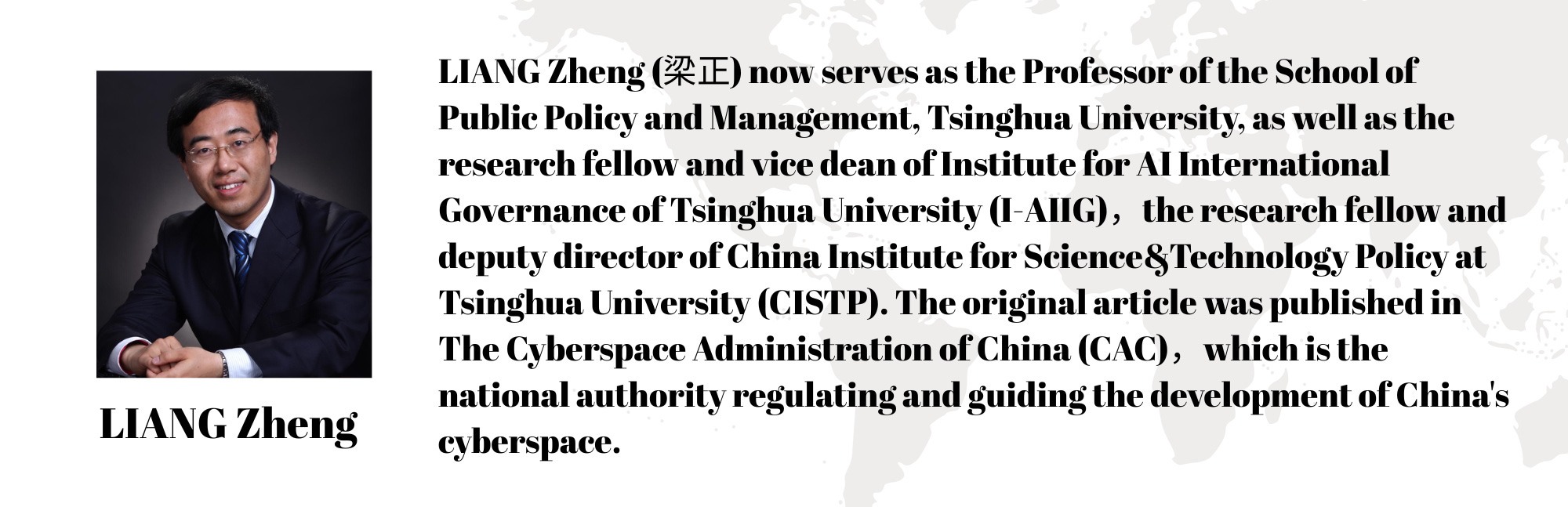
LIANG Zheng: Building the Path of AI Development with the Framework of Regulation
Generative AI is boosting productivity across various sectors, from creative work to healthcare and education. However, its ability to create highly realistic deepfakes and misinformation is fundamentally undermining trust and the concept of “seeing is believing.” In response, China has established a multi-layered governance framework, with newly enacted rules and standards mandating content labeling to restore trust and ensure controllable development.
Safeguarding Public Trust: From “Seeing is Believing” to “Label as Proof”
AI’s ability to create hyper-realistic content triggers an authenticity crisis. In response, new mandatory Labeling Measures and Standards establish a technical framework for identifying AI-generated material. This shifts trust from subjective judgment to objective disclosure. These rules protect consumers, hold creators accountable, and foster responsible AI development. Furthermore, clear labels help users distinguish humans from AI content, mitigating risks of over-reliance and the potential erosion of human cognitive and creative capacities.
Steering Industry Growth: From “Wild Expansion” to “Orderly Innovation”
The unchecked growth of generative AI initially led to misuse, and rampant misinformation, harming users and hindering industry development. The mandatory Labeling Measures and Standards establish clear obligations for content production and distribution. The framework builds crucial user trust, ensures market sustainability, and facilitates global coordination. Ultimately, the regulations compel a shift from pure technical pursuit to responsible innovation, integrating ethics into development and fostering a collaborative ecosystem.
Reinforcing Cyber Governance: A Collaborative Framework Enabled by Labeling
From a macro perspective on online content governance, the implementation of the “Labeling Measures” and “Labeling Standards” is a pivotal move to build a collaborative, healthy, and clear digital ecosystem. The practice of content labeling establishes a constructive synergy among government, industry, and users. The system moves beyond the outdated model of centralized government oversight. It establishes a unified information foundation: Regulators gain precision in supervision, enterprises assume active compliance roles, and users—equipped with clear labels—participate in social oversight.
Future Prospects: Establishing a Trust Foundation for Human-AI Collaboration
China’s new AI content labeling system represents a proactive move in generative AI governance, establishing essential trust for human-AI collaboration. This framework must now align with global standards, as cross-border content flows necessitate international recognition of labeling protocols. Simultaneously, public education should advance beyond basic label recognition to develop critical understanding of AI-generated content. Ultimately, AI’s development presents not merely technical challenges but profound social adaptation processes.
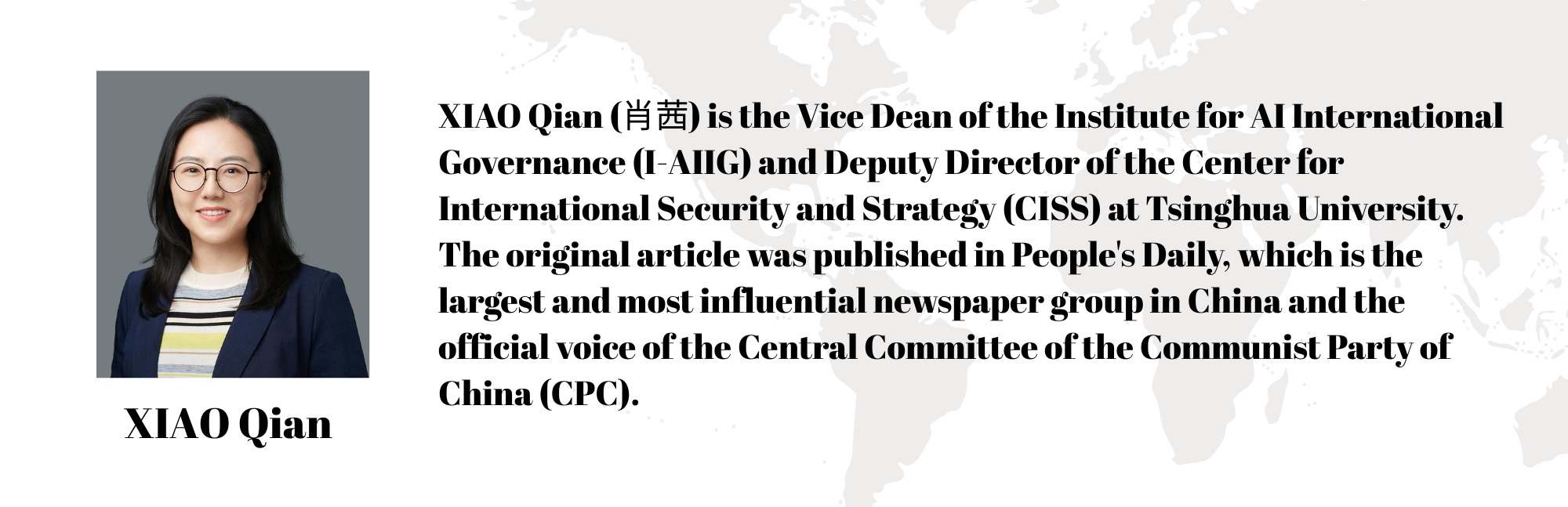
XIAO Qian: Pooling governance synergy and upholding the principle of “AI for Good”
In September 2025, China put forward the “AI+” International Cooperation Initiative at the UN Headquarters in New York, manifesting its steadfast commitment to advancing the global governance of artificial intelligence.
China’s Effective AI Development Trajectory: Policy Guidance, Sustained Technological Advancement, and Industry Demand
With effective policy steering, the establishment of AI industrial parks, supportive funding mechanisms, and regional development strategies have collectively fostered emerging cluster effects across the country. Technologically, China has made substantial breakthroughs in computational infrastructure, large-scale model development, and algorithmic efficiency. Industrially, AI technologies are now deeply integrated into key sectors including manufacturing, energy, transportation, and healthcare. A vibrant open-source culture and dynamic startup ecosystem have significantly lowered technical barriers to entry, catalyzing the rise of specialized and innovative enterprises that further accelerate industry-wide innovation.
Structural Challenges in Global AI Governance: From Fragmentation to Collaborative Imperatives
Structural dilemmas persist due to disparate technological capabilities, fragmented regulatory approaches, and insufficient international coordination. Some countries’ politicization of AI governance—evident in relaxed domestic oversight and external technological barriers—further undermines global cooperation.
As an inherently global technology, AI must serve all humanity. Technological fragmentation will only lead to the fragmentation of safety standards. Hindering cooperation and exchanges will further exacerbate the intelligent divide. Upholding the “AI for Good” principle requires inclusive governance that balances safety with innovation. By establishing shared standards and collaborative mechanisms, AI can evolve into an equitable public good for human progress.
China’s Global Contribution and Governance Approach: Advancing Equitable and Beneficial AI for All
Championing the dual emphasis on development and security, China grounds its approach in a human-centered philosophy, offering a value-based foundation for worldwide governance. It contributes practical regulatory models through advocacy of tiered management and agile governance frameworks. Furthermore, by promoting governable technological platforms and shared responsibility mechanisms, China provides actionable pathways for industry-technology collaboration.
China is committed to collaborating with all parties to align strategies, rules, and standards, fostering a global AI governance framework that ensures safe, equitable, and beneficial advancement.
Conclusion
Looking to the future, global governance of artificial intelligence will deepen its efforts to build an inclusive and fair multilateral cooperation framework, aiming to bridge the digital divide and ensure that the benefits of technology are shared globally. The international community will strengthen the alignment of governance rules and mutual recognition of technical standards, forming a new development model of collaborative governance and secure control. Ultimately, artificial intelligence is expected to become a key force enabling the comprehensive development of humanity and addressing global challenges, truly achieving the unity of technological progress and social well-being.
Editors for Today’s Newsletter: LI Yining, CHEN Didi, FAN Jiaji, WEI Zongqin, LIU Xinman, SUN Chenghao, BAI Xuhan, ZHANG Xueyu


