



Welcome to the 11st edition of Ask China! I’m Chenghao Sun, a fellow with the Center for International Security and Strategy (CISS) at Tsinghua University, Council Member of The Chinese Association of American Studies, a visiting scholar at Paul Tsai China Center of Yale Law School in 2024 and Munich Young Leaders 2025.
ChinAffairsplus is a newsletter that shares articles by Chinese academics on topics such as China’s foreign policy, China-U.S. relations, China-Europe relations, and more. This newsletter was co-founded by my research assistant, ZHANG Xueyu, and me. Through carefully selected Chinese academic articles, we aim to provide you with key insights into the issues that China’s academic and strategic communities are focused on. We will highlight why each article matters and the most important takeaways. Questions and feedback can be addressed to sch0625@gmail.com.
In this newsletter, we address concerns about China’s positions through a Q&A format, while also presenting key points of leading Chinese scholars’ commentaries. Through this series, we aim to provide policymakers, think tanks, and strategic communities overseas with access to Chinese scholars’ views, accompanied by curated academic perspectives that help readers better understand the considerations underlying China’s foreign policy choices.
Background
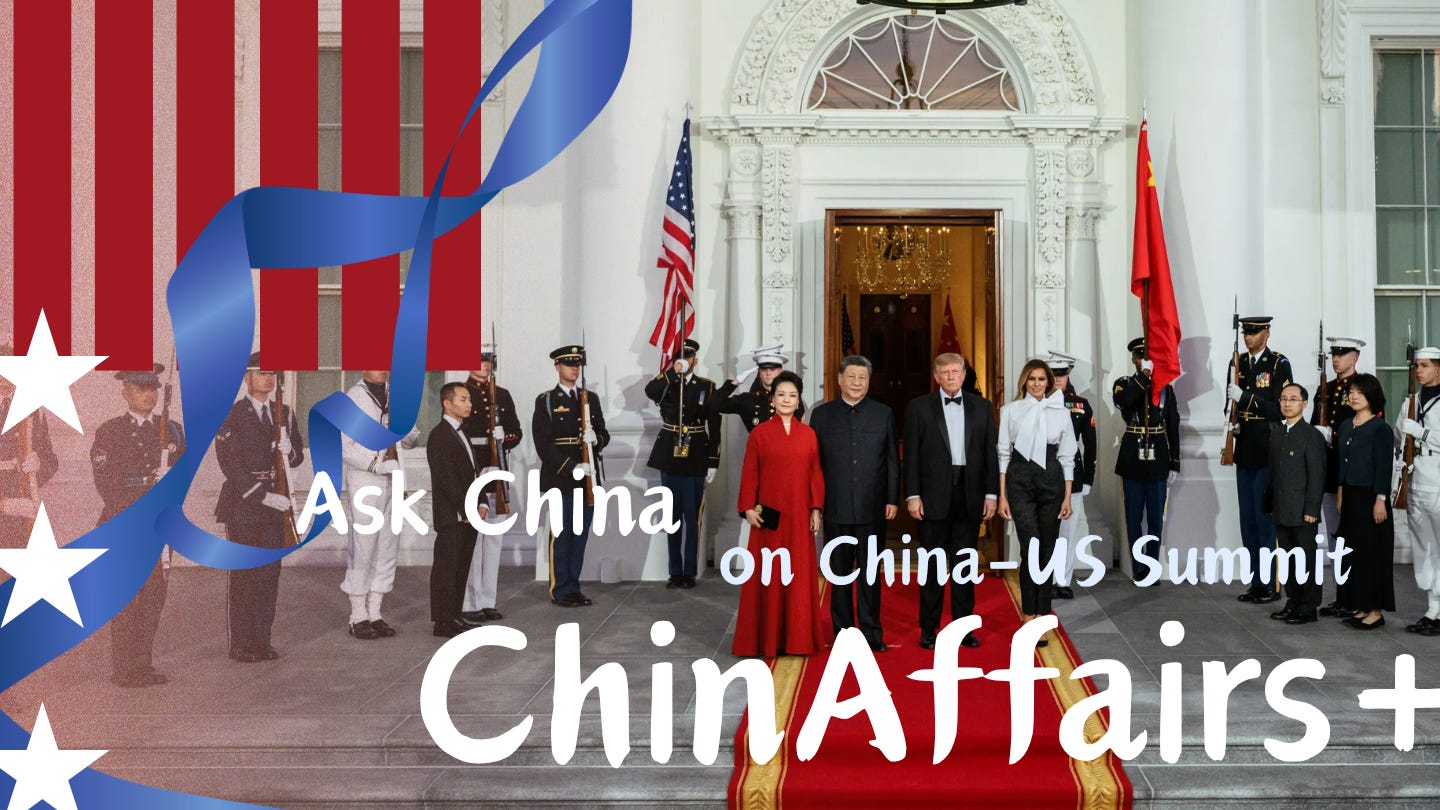
At the invitation of U.S. President Donald Trump, Chinese President Xi Jinping paid a state visit to the United States from Sept. 23 to 25 local time for bilateral talks. The visit yielded eight deliverables spanning economy and trade, artificial intelligence, people-to-people exchanges and other fields, with both sides agreeing to continue to feature the “constructive strategic stability” in China-U.S. relations.

Strategic competition between China and the United States continues to intensify, yet the two countries’ leaders have maintained exceptionally frequent engagement. Since their meeting in Busan in October 2025, President Donald Trump and the Chinese leader have met face-to-face three times—in Busan, Beijing, and Washington. If they meet again at the APEC summit in Shenzhen in November and the G20 summit in Miami in December, they could hold five face-to-face meetings within approximately 14 months. Such frequent engagement reflects the combined influence of the international landscape, bilateral dynamics, and domestic political considerations. It is a strategic choice by both major powers to manage differences and balance their interests.
From the perspective of the international landscape, the world is moving toward greater multipolarity, while unilateralism, regional conflicts, and sluggish economic recovery pose growing challenges. Traditional and non-traditional security risks are increasing, and global governance faces mounting pressures. As the world’s two largest economies, China and the United States have a profound impact on global stability and development. Major challenges such as climate change, energy security, nonproliferation, and public health are difficult to address without their coordination. Meanwhile, tensions in one area can easily spill over into others. Conventional diplomatic channels alone cannot resolve fundamental questions about the direction of China-U.S. relations, making head-of-state diplomacy essential for maintaining strategic direction. The crisis surrounding the Strait of Hormuz illustrates this point. Despite differences over regional order, neither country wants an energy crisis to destabilize the global economy. High-level communication is therefore necessary to contain risks and prevent regional instability from escalating into a global crisis.
From the perspective of bilateral relations, structural strategic competition between China and the United States will persist, but neither side can achieve a decisive victory through confrontation. Tariffs, technology restrictions, and resource-related countermeasures impose substantial costs on both economies without enabling either to dominate the other. Neither country can force the other to fundamentally change its development path, nor can either afford uncontrolled competition. For this reason, both countries have proactively adopted an approach of issue segmentation and compartmentalized governance: maintaining competition in technology and industry, establishing guardrails against military risks and tensions in the Taiwan Strait, and preserving cooperation in areas such as climate change and counternarcotics.
Domestic political considerations also drive frequent leader-level engagement. For China, implementing the 15th Five-Year Plan and advancing high-quality development require a stable external environment. As the United States remains the most consequential external variable affecting China’s strategic environment, stabilizing bilateral relations can reduce uncertainty and create more room for domestic development. Meanwhile, China’s growing national strength and accumulated experience in managing strategic competition have strengthened its confidence in pursuing a constructive bilateral relationship while safeguarding its core interests.
For the United States, although the Trump administration regards China as its primary strategic competitor, it does not seek complete decoupling or direct confrontation. Washington faces political polarization, high Treasury yields, inflationary pressures, and midterm elections. Escalating confrontation with China would disrupt American supply chains and harm domestic economic interests. Moreover, Trump places particular emphasis on personal diplomacy, viewing direct leader-to-leader communication as an important means of managing competition while preserving opportunities for economic and technological dialogue.
These frequent interactions send four important signals. First, head-of-state diplomacy is becoming a critical pillar of stability in China-U.S. relations. Regular communication between the two leaders can help prevent disputes from escalating and provide channels for crisis management and implementing agreements. This could gradually establish a more stable framework characterized by strategic guidance from the leaders, implementation by relevant government departments, and institutional mechanisms for managing differences, thereby reducing the risk of major disruptions in bilateral relations.
Second, China-U.S. relations are undergoing strategic adjustment, with both sides seeking to build a “Constructive Relationship of Strategic Stability.” Continued high-level engagement suggests that Beijing and Washington recognize the need for a bilateral relationship based on mutual respect, fairness, and reciprocity. Both countries seek greater stability, more cooperation, and more exchanges, alongside more effective management of differences and strategic competition.
Third, great-power competition is entering a new phase of competitive coexistence through compartmentalized management. In trade, the two sides are maintaining a fragile truce while seeking a balance of interests. In technology and AI, safety communication mechanisms and guardrails can help manage intense competition. In traditional security, both countries are strengthening crisis management to prevent tensions in the Middle East or the Taiwan Strait from destabilizing their broader relationship. China-U.S. relations are thus moving toward a pattern in which competition continues but risks remain manageable.
Fourth, frequent leader-level diplomacy offers a potential model for major-power relations and helps counter the trend toward global bloc confrontation. Sustained engagement sends an important message: the Thucydides Trap is not inevitable, and the rise of a major power need not lead to conflict. Such engagement can ease pressure on smaller countries to choose sides, stabilize global markets and supply chains, and provide greater predictability in an uncertain world. It also offers a practical reference for how major powers can coexist in a changing international order. Looking ahead, global markets, U.S. allies, and regional security dynamics will continue to adjust to this evolving pattern of China-U.S. relations.

Following the China-U.S. presidential meeting in Washington in September 2026, constructive strategic stability became a frequently used concept in Chinese discussions of bilateral relationships. It describes a positive stability with cooperation as the mainstay, a sound stability with moderate competition, a constant stability with manageable differences, and an enduring stability with promises of peace.
Compared with a framework centered mainly on strategic competition, constructive strategic stability places more emphasis on boundaries. Sun Chenghao argues that China-U.S. competition should not spread without limit across every area of the relationship. He calls for clearer limits on the objectives, instruments, and scope of competition so that national security concerns do not absorb every bilateral issue and disputes in one field do not automatically spill into others. Fu Suixin makes a similar point. Competition is likely to continue for a long time, but neither side can avoid the costs of constant escalation. From this perspective, constructive strategic stability is less about reducing rivalry than about keeping it under control.
It is also different from détente. Major disagreements over technology, Taiwan, trade, and AI security remain unresolved, and strategic trust has not significantly recovered. Da Wei describes the current phase as one of adjustment, suggesting that both sides remain distrustful but have become more pragmatic about managing risks. Détente usually suggests a broader easing of tensions and an improvement in relations. Constructive strategic stability sets a narrower goal: maintaining a workable relationship even when serious disagreements remain.
The concept also extends beyond the Cold War meaning of strategic stability. Traditionally, strategic stability was mainly associated with military competition, nuclear deterrence, crisis management, and preventing catastrophic escalation. In current China-U.S. discussions, it now covers a wider range of issues, including trade, technology, artificial intelligence, supply chains, and people-to-people exchanges. Wang Yong and Jia Qingguo, for example, discuss AI safety dialogue, incident notification, and risk communication as possible tools for managing new forms of strategic risk. The word “constructive” adds another layer. Stability is not only about avoiding conflict. It also leaves room for practical cooperation in areas such as economic dialogue, AI governance, and social exchanges.
Seen together, these discussions suggest a relationship in which competition continues but is not supposed to become unlimited, disagreements remain but are kept manageable, trust stays weak but communication continues, and cooperation survives in selected areas. Whether this framework can last will depend on how far presidential-level understandings are translated into regular communication, crisis-management arrangements, clearer limits on policy behavior, and concrete cooperation.

The September Washington summit between the Chinese and US heads of state served as a vital anchor in steering bilateral ties toward a “constructive strategic-stability relationship,” marking a distinct progression from high-level consensus toward institutionalized mechanisms. However, this shift does not signal the eradication of structural friction, but rather active stabilization through structured interaction.
At the strategic level, the Washington summit built directly upon May’s Beijing talks. As Wu Xinbo observed, the summit played a pivotal transitional role in sustaining strategic momentum and managing bilateral friction. The central anchor remains identifying the right path for two major powers to coexist. Ambassador Xie Feng stressed that mutual respect, peaceful coexistence, and win-win cooperation are imperative to prevent catastrophic conflict. Da Wei noted that bilateral ties have entered a protracted period of strategic adjustment, where regular leader-level engagement sets the guardrails. Zhao Minghao highlighted that the summit’s extraordinary protocol reflected both capitals’ urgency to preclude miscalculation.
Institutionally, this consensus materialized into actionable frameworks, encompassing defense, trade, and multilateral governance. Wang Dong argued that institutionalizing strategic-stability consensus via regular inter-agency channels prevents high-level commitments from eroding. Jia Qingguo underscored that accumulating mutual trust hinges on steady, incremental implementation. Crucially, Wang Yong identified bilateral AI safety and risk dialogues as an emerging institutional anchor for managing technological friction. Scholars at Shanghai Jiao Tong University similarly assessed that these platforms provide an indispensable resilience network.
Yet, the long-term viability of these arrangements faces persistent hurdles. Wu Xinbo cautioned that constructive strategic stability requires affirmative public-goods cooperation beyond mere crisis avoidance, a prospect hindered by Washington’s pan-securitization tendencies. Fu Suixin pointed out that both sides are seeking stability amidst intensifying rivalry. Xin Qiang noted that genuine stability requires Washington to accept China’s legitimate development rights, rather than weaponizing procedural guardrails as unilateral containment. Sun Chenghao added that competition must not veto cooperation.
In the end, turning promises from leaders into lasting rules is an ongoing, practical test. The Washington summit proved that working-level talks can act as a helpful shock absorber when tensions run high. However, holding meetings alone is not enough; both countries must show real restraint, drop zero-sum thinking, and respect each other’s core red lines. Only when both sides treat these mechanisms as a shared safety net—rather than a tool to pressure each other—can their agreements truly lead to long-term stability.

China views the agreement reached by the two governments to launch a governmental dialogue on artificial intelligence and establish a notification mechanism on relevant issues as an important development. From Beijing’s perspective, this represents that China and the United States have demonstrated a shared willingness to engage at the governmental level on frontier AI governance. Beyond the bilateral relationship, such a mechanism carries broader significance for global AI governance and international technology security by creating an institutional channel for communication between the world’s two leading AI powers.
One issue that has attracted external attention concerns terminology. Following the leaders‘ meeting, the U.S. side described the upcoming dialogue as one on “super intelligence,” whereas China’s official readout continued to refer to “artificial intelligence.” From the Chinese perspective, the Trump administration’s adoption of the term “super intelligence” primarily serves its domestic political agenda and policy narrative. China therefore has little incentive to replicate this terminology in its own diplomatic statements. At the same time, within the context of bilateral governmental dialogue, “super intelligence” and “artificial intelligence” largely refer to the same scope of frontier technologies and governance challenges. The difference in wording is therefore not viewed as a substantive obstacle. China’s primary concern is whether both sides can successfully implement the dialogue mechanism and sustain practical cooperation.
China’s expectations for the governmental dialogue can be summarized in four areas.
First, China expects the mechanism to help manage frontier AI risks and prevent strategic competition from generating dangerous spillover effects. These risks include excessively accelerated frontier model development driven by technological rivalry, the military application of AI that could intensify intelligent arms competition or increase crisis instability, and competition over AI technology diffusion that creates opportunities for malicious use by third-party actors. A governmental dialogue offers a platform for both sides to align their understanding of emerging risks, communicate threat perceptions, and establish common awareness of the most urgent governance priorities. The objective is to prevent strategic competition from evolving into uncontrolled escalation while reducing the likelihood that AI-related risks undermine international security.
Second, China regards AI dialogue as a stabilizer for the broader China–U.S. relationship. Technology competition has become one of the central arenas of bilateral strategic competition, and many of the sharp fluctuations in recent China–U.S. relations have been closely connected to technology issues, including U.S. export controls, restrictions on advanced semiconductors, and recent disputes over model distillation and other AI-related technologies. Establishing a governmental communication mechanism in the AI domain can provide an institutional channel to address emerging technological frictions before they spill over into broader bilateral tensions. More importantly, meaningful progress in AI governance would represent a form of positive cooperation that goes beyond crisis management and demonstrates that the two countries remain capable of jointly providing global public goods.
Third, Beijing hopes the dialogue can introduce a broader Global South perspective into frontier AI governance. Current international AI safety governance remains dominated by American and European technological communities and political elites. Their technological leadership and institutional influence largely shape existing frontier AI safety standards and governance principles. Although Chinese frontier AI models have become increasingly competitive, China has not yet been fully integrated into the core agenda-setting process of frontier AI governance. A bilateral dialogue provides an opportunity to incorporate more diverse governance perspectives before global standards become further institutionalized.
Fourth, China sees bilateral dialogue as complementary to multilateral governance under the United Nations. China has consistently supported conducting global AI governance within the UN framework. At the same time, meaningful consensus between China and the United States would significantly narrow differences among the world’s leading AI powers and facilitate broader multilateral cooperation. Recent developments—including China’s announcement of the World AI Cooperation Organization (WAICO) and reports that the United States seeks to encourage partners in its own AI security initiatives to align strategically—have generated concerns about bloc formation in global AI governance. Effective China–U.S. coordination would reduce the risk of competing governance camps and create a more favorable environment for international AI governance.
China nevertheless maintains pragmatic expectations regarding the dialogue. First, technological competition will continue. The United States remains committed to preserving its technological advantages, and this fundamental strategic orientation is unlikely to change. Second, U.S. technology restrictions, particularly export controls, may be adjusted according to circumstances but will not disappear. The key challenge is to separate competitive issues from areas where cooperation on AI governance remains possible, preventing one from undermining the other. Third, expectations regarding the dialogue should remain realistic. The most desirable outcome is the establishment of a stable governmental communication mechanism. A more modest outcome would involve initial progress in terminology coordination, conceptual exchanges, and risk alignment that lays the foundation for future cooperation. Even if substantive implementation is delayed, maintaining communication would still carry value. China is actively pursuing the most ambitious outcome while preparing for more limited progress. The immediate priority is to address the most pressing AI risks and reduce strategic pressures generated by the accelerating global technology competition.
From China’s perspective, the dialogue could begin with exchanges on terminology, conceptual frameworks, and shared understandings of frontier AI risks. Over time, Track 2 dialogues involving experts and research institutions could support Track 1 governmental negotiations by refining technical proposals and exploring areas of consensus. Governmental dialogue would provide strategic direction, while Track 2 mechanisms develop detailed policy options that can eventually be translated into jointly announced outcomes. Such interaction would create a constructive cycle between official diplomacy and expert engagement, increasing the prospects for sustained bilateral AI governance cooperation.

Short-term tariff restraint can improve firms’ policy expectations, particularly for immediate trading decisions. Its contribution to long-term investment depends on whether continued negotiations produce reliable implementation and clearer boundaries for future restrictions. A pause creates planning space and sustained consultation must make that space credible beyond the next deadline.
The suspension of additional tariffs would extend until 10 January 2027, alongside reciprocal tariff-reduction arrangements covering US$30 billion in goods on each side. The White House described the latter as consensus on recommendations for favourable treatment of non-sensitive goods. Preventing further escalation and reducing existing costs are distinct achievements, and neither guarantees broader continuity in market access.
For businesses, known trade costs differ from uncertainty about future policy. A predictable tariff can be incorporated into prices and contracts. Uncertainty over access to customers or essential inputs complicates investment appraisal. The pause can facilitate covered shipments before its expiry, but factories and specialised supplier relationships require commitments extending over years. Because much of their initial expenditure is difficult to recover, firms may rationally postpone investment while resuming orders. Stronger trade flows would therefore provide insufficient evidence that long-term expectations have improved.
Continued restraint nevertheless has an economic basis. Cooperation can rest on shared interests and mutual constraints despite limited strategic trust. The costs each country can impose through critical supply chains. Such constraints may discourage uncontrolled escalation, but offer less assurance to individual industries. The adjustment anticipates selective separation alongside continued commercial ties, making sector-specific policy clarity essential.
Artificial intelligence illustrates this distinction. There are opportunities to separate sensitive activities from legitimate cooperation, while warning that expanding security restrictions undermines dialogue. For firms, discussions of shared AI risks do not establish future access to chips, research partnerships or investment opportunities. Confidence requires clearer definitions of restricted activities and more predictable procedures for revising them.
The trade and investment boards could help address these uncertainties. Their commercial value depends on regular meetings, identifiable responsibilities and practical dispute resolution. Leader-level diplomacy allows cooperation to continue despite disagreements; While implementation and trust accumulated through successful cooperation. Together, these assessments suggest how political engagement might strengthen expectations: successive rounds must demonstrate that commitments survive implementation problems and political friction.
Published product coverage, effective dates and review schedules would help firms evaluate transactions. Advance notice and transition periods, where feasible, could reduce disruption from policy changes. These remain potential improvements rather than established summit outcomes. Progress should be assessed through usable regulatory guidance, functioning consultation during disagreements, and firms’ actual willingness to commit capital. Business surveys and investment data would help distinguish improved sentiment from sustained confidence.
The truce can support near-term commerce and begin improving longer-term expectations. Its lasting value depends on an observable record of delivery and clearer limits on policy change. Firms need sufficient grounds to assess how continuing disagreements will affect operations throughout an investment’s lifetime.


