



Welcome to the 71st edition of our weekly newsletter! I’m SUN Chenghao,a fellow with the Center for International Security and Strategy (CISS) at Tsinghua University, Council Member of The Chinese Association of American Studies, a visiting scholar at Paul Tsai China Center of Yale Law School in 2024 and Munich Young Leader 2025.
ChinAffairsplus is a newsletter that shares articles by Chinese academics on topics such as China’s foreign policy, China-U.S. relations, China-Europe relations, and more. This newsletter was co-founded by my research assistant, ZHANG Xueyu, and me.
Through carefully selected Chinese academic articles, we aim to provide you with key insights into the issues that China’s academic and strategic communities are focused on. We will highlight why each article matters and the most important takeaways. Questions and feedback can be addressed to sch0625@gmail.com
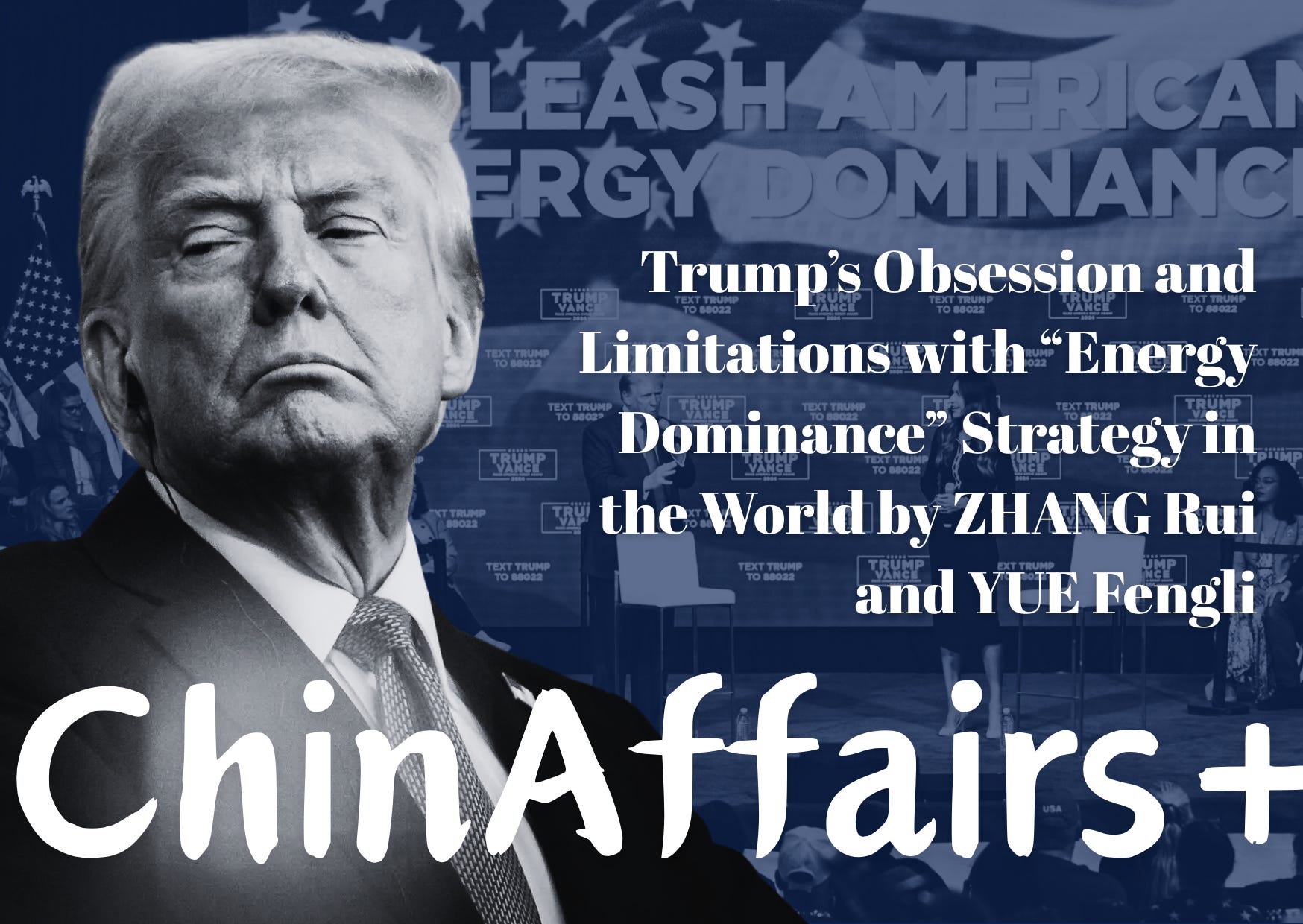
Today, we have selected an article written by ZHANG Rui and YUE Fengli on Trump’s obsession and limitations with “energy dominance” strategy.
Summary
During Trump’s second term, the “energy dominance” strategy was revitalized, reinforcing the supremacy of fossil fuels and nuclear power domestically, while utilizing energy to uphold America’s hegemonic position in the global order.
This strategy focuses on five key areas: enhancing domestic fossil fuel development, strengthening oil and gas exports and global market influence, advancing nuclear power capacity and technology exports, reducing support for energy transition policies, and restructuring domestic energy governance. Strategic motivations include the realization of energy power, the construction of energy export hegemony, surging energy demands in the age of artificial intelligence, and considerations related to domestic electoral politics. This strategy significantly disrupts both U.S. and global energy transitions, exacerbates the geopolitical nature of the global energy system, and poses challenges to China’s energy security.
The Trump administration also faces considerable obstacles in reversing the U.S. energy transition, manipulating oil and gas market dynamics, and expanding geopolitical influence, while trade wars may generate counterproductive effects. Current U.S.-China energy cooperation is limited, necessitating flexible cooperation strategies from China to strengthen energy security, enhance support for the new energy industry, and engage more effectively in global energy governance.
Why it Matters
Energy issues consistently occupied a central role in the Trump administration’s policy agenda. The “Energy Dominance” strategy proposed during Trump’s first term aimed to translate the energy power amassed since the shale revolution into energy authority, thereby expanding U.S. international influence and leadership. During his 2024 campaign, Trump prominently revived the slogan of former Republican presidential candidate John McCain, “Drill, baby, drill,” signaling his unwavering preference for and strategic reliance on the fossil fuel industry.
On January 20, 2025, at the beginning of his second term, Trump initiated a series of significantly symbolic energy policy shifts: unilaterally re-exiting the Paris Agreement, declaring a national “energy emergency,” and issuing four executive orders aimed at “enhancing America’s dominance in the global energy sector,” systematically reversing the Biden administration’s zero-carbon political stance. Clearly, the new administration not only fully reinstated the “Energy Dominance” strategic framework but also expanded the boundaries of energy power and external action paths through the intensive introduction of supporting policies.
Currently, the U.S. is the largest energy producer, consumer, and exporter globally, and its energy strategy has far-reaching implications not only for national competitiveness and domestic welfare but also for the evolution of global energy order and low-carbon transition. This paper systematically examines the focus of Trump’s energy policy during his second term, deeply analyzes the motivations driving his commitment to energy dominance, and anticipates the negative impacts and limitations of this strategy.
Key Points
1. Focus Areas of Trump’s Energy Strategy During His Second Term
Trump’s pursued notion of “energy dominance” represents a dual-dominance objective: maintaining the primacy of fossil fuels and nuclear energy within the domestic energy system, while leveraging energy resources to assert U.S. dominance in the global order. This reflects new characteristics shaped by changes in the international energy landscape and U.S. medium- to long-term strategic needs. The key foci of the energy strategy during Trump’s second term can be categorized into five areas:
Promoting Domestic Fossil Fuel Development
The Trump administration largely disregarded global climate governance and low-carbon transition calls, designating coal as a critical mineral for “national security and energy stability,” thus granting it a special status for federal funding and regulatory relief, alongside diverse systemic support. With respect to oil and gas, Trump aimed to create a more conducive environment for resource development, issuing three pivotal executive orders: Unleashing American Energy, Declaring a National Energy Emergency, and Unlocking Alaska’s Extraordinary Resource Potential. The Trump administration planned to invest $20 billion to enhance the U.S. strategic petroleum reserve to stimulate domestic crude oil production.
Enhancing Oil and Gas Exports and Global Market Control
Trump explicitly positioned the expansion of oil and gas exports as a core policy tool to improve trade balance and strengthen national power. This involved pressuring major global economies, such as the EU and India, to increase imports of American oil and gas; compelling Japan and South Korea to invest in Alaskan LNG export projects; and intensifying efforts against rival oil-exporting countries like Iran and Venezuela to gain structural power in manipulating the international energy market.
Advancing Nuclear Power Capacity and Technology Exports
As the world’s largest nuclear power producer, there is bipartisan consensus regarding nuclear energy expansion in the U.S. Nonetheless, Trump asserted that “the U.S. has failed to deploy nuclear technology at the required pace and scale to meet national urgent security demands, while strategic competitors are rapidly exporting and deploying these technologies worldwide.” On May 23, 2025, Trump signed four executive orders aimed at revitalizing the nuclear sector, emphasizing nuclear technology exports as a focal point of energy diplomacy.
Reducing Policy Support for Energy Transition
Trump consistently resisted low-carbon transitions in the energy sector, ideologically asserting that clean energy lacks stability and economic viability. Under the framework of his energy dominance strategy, Trump weakened policy support for energy transitions, allowing the U.S. to absolve itself of climate governance responsibilities while focusing on developing fossil fuels with resource advantages, delaying the global low-carbon transition process, and reinforcing other countries’ dependence on U.S. fossil fuels.
Restructuring Domestic Energy Governance
Eager to transcend the constraints of the existing governance framework to facilitate the energy dominance strategy, Trump announced the U.S. was entering an “energy emergency,” thereby categorizing conventional policy issues as “existential threats,” which provided a legal basis for expanding executive power. Additionally, he formed a multi-agency energy decision-making body, the National Energy Dominance Council, reflecting a “whole-of-government” governance model while underscoring the profound interconnections between energy policy and diplomatic security matters. This structure seeks to translate the outcomes of energy governance into foreign influence efficiently.
2. Major Motivations Behind Trump’s Energy Strategy
Accelerating the Realization of Energy Power Benefits
With a surge in production capacity, the U.S. has undergone a significant role shift in the global oil and gas trade, emerging as a net oil exporter and the world’s leading LNG exporter. U.S. LNG possesses a notable price advantage, coupled with considerable flexibility in destination and contract duration. Consequently, from the 2024 campaign through to his presidency, Trump and his core team have consistently emphasized the strategic economic value of oil and gas resources, attempting to use energy supply expansions to manage domestic inflation and reduce the substantial trade deficit while reinforcing the mutual dependency between “energy and the dollar”, thus consolidating U.S. dominance within the global financial system. Trump also hopes to generate economic returns and political dividends based on nuclear technology prowess.
Constructing a Strategic Framework for Energy Export Hegemony
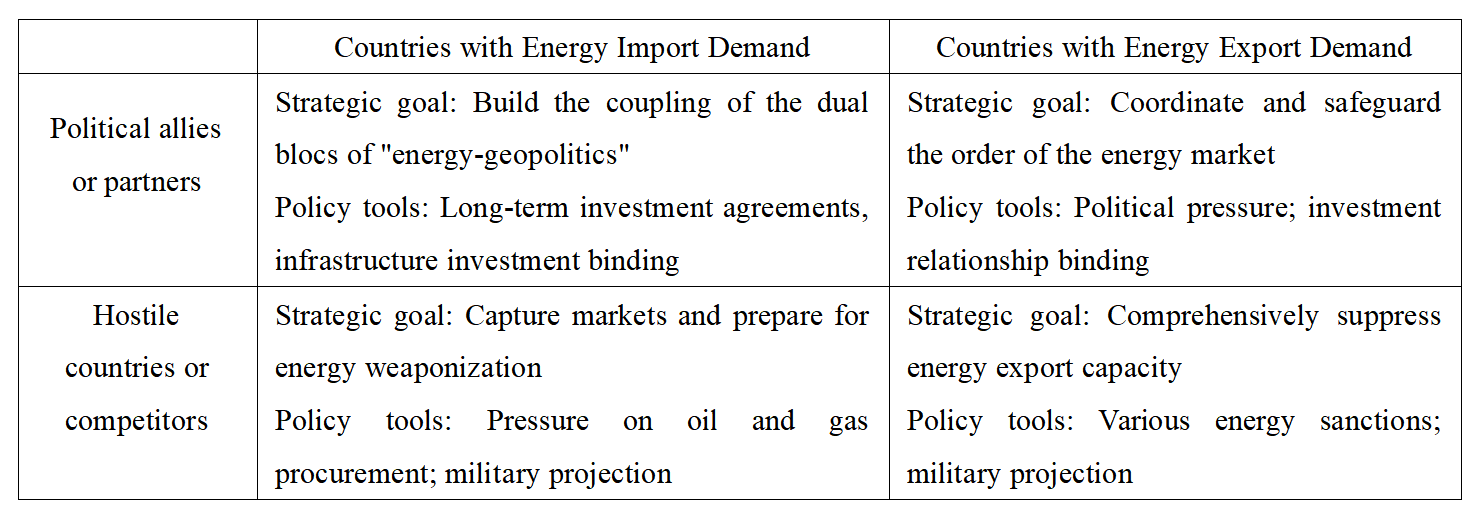
As the U.S. has become a major global oil and gas exporter, the strategic logic of its energy diplomacy is undergoing fundamental changes, shifting from the traditional “energy import security” paradigm to a more expansive “energy export hegemony” paradigm. This shift demonstrates three key characteristics:
(1) the strategic objective has transitioned from securing supply safety to enhancing export volume and seeking global oil and gas market dominance;
(2) the strategic perspective has broadened from primarily focusing on key oil and gas import sources (especially in the Middle East) to encompassing major consumer countries across all global regions;
(3) the strategic measures increasingly emphasize the geopolitical utility of energy trade to maintain U.S. hegemonic status.
Appeasing the Fossil Fuel Industry and Voter Base
Trump’s Republican Party has long maintained a symbiotic relationship with the fossil fuel industry. In the 2024 presidential election, Trump achieved significant victories in oil and gas-producing states such as Texas and Louisiana. Naturally, matters of mutual benefit align with Trump’s ongoing favor towards fossil fuel policies. Moreover, Trump is keen to disseminate populist rhetoric within the energy sector, catering to the conservative political demands of right-wing voters by attributing various energy challenges faced by the U.S. to the policy failures of the Democratic administration, painting energy transition negatively. Recent increases in electricity prices have influenced public sentiment on energy costs and transitions, further bolstering support for some of Trump’s policy stances.
Addressing the Energy Challenges of the Artificial Intelligence Era
Considering the exponential growth of the AI industry in the U.S., the Trump administration has recognized that “the energy sector is an essential prerequisite for the sustained development of AI technology.” Ensuring a steady energy supply for AI industries has become a significant agenda for maintaining American hegemony, providing legitimate support for its energy strategy. AI is expected to drive the development of several energy-intensive industries, ushering the U.S. into an era marked by the resurgence of electricity-intensive industries. Concurrently, the U.S. AI sector faces acute challenges regarding electricity shortages, with the accessibility of power supply emerging as a key limitation against enhancing domestic computational capabilities. Data center developers are actively seeking solutions to overcome supply bottlenecks, such as directly connecting to power generation facilities, but face three constraints:
(1) regulatory restrictions on non-traditional energy supply methods;
(2) technical challenges related to the cost allocation of backup capacity in electricity market mechanisms;
(3) compliance with environmental and social standards.
3. Impacts and Limitations of Trump’s Energy Strategy
Adverse Impacts
(1) Stalling the U.S. Decarbonization Process
The Trump administration’s stance on climate governance remains passive, and its pro-fossil fuel strategy will undoubtedly impede the U.S. energy sector’s emission reduction efforts, potentially reversing gains made during the Biden administration. Estimates from British energy research institutions show that a second Trump term could thwart the U.S. from achieving previously set carbon reduction goals. Additionally, due to the prospects of subsidy eliminations and tariff wars inflating raw material and equipment import costs, U.S. clean energy investments face a contraction trend, and plans for grid modernization and storage deployment may be delayed or scaled back.
(2) Disrupting Global Energy Transition
Trump’s energy strategy will affect the decarbonization processes of multiple countries. First, withdrawing from international climate financing initiatives and exiting the Just Energy Transition Partnership (JETP) restricts channels for climate financing, weakening support for developing countries’ transitions. Additionally, the strategy promotes the abandonment or modification of energy transition strategies among smaller countries to open overseas fossil fuel markets. For U.S. interests, this includes stoking internal discord in European energy strategies and encouraging energy-weak Central and Eastern European countries to shift away from Western European low-carbon guidance towards high-carbon development reliant on U.S. resources and technologies. Lastly, the strategy provides leniency for resource-dependent economies to delay their low-carbon transitions; many analysts expect Middle Eastern oil and gas nations to embrace Trump’s pro-oil policies, promoting a “comprehensive” energy development strategy emphasizing the priority of fossil fuel development over clean energy deployment.
(3) Exacerbating Geopolitics in the Global Energy Framework
Historically, the U.S. has shown a tradition of politicizing energy matters, and with the current backdrop of significant domestic energy security, Trump’s energy strategy is poised to reflect even more audacious geopolitical tendencies. This may involve frequent market manipulation through geopolitical means, pushing a new form of energy colonialism characterized by strong-arm practices and possibly utilizing or exacerbating geopolitical turmoil to acquire market shares. Additionally, energy issues are increasingly becoming instrumental in counteracting China’s rise, particularly in the oil, gas, nuclear, and renewable energy sectors, with potential tactics including “long-arm jurisdiction,” “small yard high fence,” and “decoupling chains.”
Strategic Limitations
In response to the deep transformation of the global energy structure and the accelerating restructuring of energy powers among nations, Trump’s “energy dominance” strategy faces substantial limitations in implementation, with a significant gap between its policy goals and actual outcomes.
(1) Challenging the Reversal of U.S. Energy Transition
The U.S. energy low-carbon transition is driven by profound market mechanisms, technological iterations, and industrial interests, surpassing political cycles, making Trump’s energy strategy ineffective in reversing its achievements and processes. First, reviving coal power is unlikely. Its decline reflects market decisions following the shale revolution, with Trump’s past support proving ineffective, and varying fossil fuels failing to thrive while state environmental regulations and transition trends discourage investment in coal power expansion. Second, halting clean energy development faces substantial resistance. Solar and wind power now constitute America’s lowest-cost electricity sources, squeezing out fossil fuel generation. State governments possess energy decision-making authority under the federal system and have deployed litigation, legislation, and high transition targets to counteract Trump’s oppressive actions. Third, altering the already established U.S. new energy industry landscape is improbable. The new energy sector, having developed over a decade, is deeply integrated into the U.S. economy, transcending political divides, while Biden’s green new deal spurs transformative momentum, with some Republican figures adopting “pro-green” stances. Investments in the wind power supply chain further hinder policy reversals.
(2) Inability to Manipulate Oil and Gas Market Trends
First, Trump’s oil and gas expansion confronts rigid constraints stemming from global market dynamics. The slowdown in oil demand growth, coupled with production increases from oil-exporting nations, leads U.S. oil companies to adopt conservative strategies amid oversupply. Additionally, the LNG market faces dual pressures from supply and demand, potentially entering a phase of structural surplus by 2027, with limited capacity and export growth.
Second, the Trump administration’s influence over oil and gas import and export states is bounded. On the export side, OPEC+ can adjust markets, while Middle Eastern oil producers compete on the basis of low-cost and CCUS technologies. On the import side, although the EU and Japan may align with the U.S., they are committed to diversifying energy supplies and are hesitant to accept long-term contracts and significant investments without clear benefits.
(3) Limited Expansion of Geopolitical Influence
Trump’s efforts to leverage growing energy power for enhanced geopolitical influence are constrained by various factors. Firstly, global energy transition inhibits U.S. geopolitical potential based on oil and gas; the relative reduction of energy scarcity significantly erodes the energy power of producer nations. Secondly, as competition in global oil and gas exports intensifies, U.S. attention and control over Middle Eastern producer nations are bound to wane as Gulf countries pursue strategic autonomy and more diversified security partnerships. Thirdly, the shale oil strength of the U.S. cannot be effectively transformed into geopolitical power, as fragmented and self-interested producers fail to become reliable supplementary powers for U.S. diplomatic strategies. Finally, the marginal effectiveness of U.S. energy sanctions has been declining; nations such as Russia and Iran have adopted counterstrategies, making it challenging for the U.S. to extract further strategic value from energy-related leverage.
(4) Trade Wars Inducing Counterproductive Effects on Energy Strategy
First, the imposition of tariffs significantly disrupts the global economy, restraining energy demand and indirectly constituting a barrier to U.S. expansion in overseas oil and gas markets. Second, retaliatory measures by countries like China and Canada during the trade wars impose costs on the U.S. energy sector and energy security. Third, these tariffs elevate development costs for the U.S. energy sector, shrinking profit margins.
Conclusion
The energy strategy of Trump’s second term adheres to the belief of “dominating the world through energy,” allocating substantial support to fossil fuel development and exports, while minimizing support for clean energy policies and emphasizing the potential of nuclear power. This results in a complex policy framework that caters to traditional energy interest groups while simultaneously addressing emerging energy technologies. The strategy seeks to construct a framework that corresponds to the interests of energy export hegemony, maximizing the benefits of energy trade and geopolitical capital. Although Trump’s “energy dominance” strategy may create short-term disruptions in global energy market dynamics and pose adverse impacts on China’s energy security and international cooperation, its effectiveness is constrained by multiple factors, including the irreversible nature of global energy transition, the increasing resilience and strategic maneuverability of major economies, and the “boomerang” effect of unilateral U.S. policies.
Considering the current circumstances, it is evident that the space for U.S.-China energy collaboration during Trump’s second term is quite limited, with both sides lacking strategic trust and a common platform for energy policy dialogue or cooperation in emerging technologies based on global climate governance. For China, it is crucial to remain vigilant against potential risks manufactured by the U.S. in collaboration with allies or individual countries concerning oil and gas import channels and critical mineral supplies. In light of this study, the following policy recommendations are proposed: first, maintain a flexible stance towards cooperation with the U.S.; second, solidify the foundations of national energy security; third, intensify support for the overseas expansion of the “new three items” industries; and fourth, actively engage in global energy governance.
About the Author

ZHANG Rui (张锐): Researcher at the Economic and Technological Research Institute of the Global Energy Interconnection Development and Cooperation Organization, specializing in international energy politics, climate change, and other related fields.
YUE Fengli(岳锋利): Researcher at the Economic and Technological Research Institute of the Global Energy Interconnection Development and Cooperation Organization.
About the Publication
The Chinese Version of this article was published on Northeast Asia Forum(《东北亚论坛》). The journal, managed by the Jilin University, is a comprehensive bimonthly periodical in politics, military, and law. Founded in 1992, the magazine focuses on analyzing the current situation, development strategies, economic cooperation, friendly exchanges and theoretical research in various countries and regions of Northeast Asia. It also evaluates new trends and developments in industry, agriculture, science and technology, finance, commerce, and foreign trade in the Asia Pacific region.

