



Welcome to the 67th edition of our weekly newsletter! I’m SUN Chenghao, a fellow with the Center for International Security and Strategy (CISS) at Tsinghua University, Council Member of The Chinese Association of American Studies and a visiting scholar at the Paul Tsai China Center of Yale Law School (fall 2024).
ChinAffairsplus is a newsletter that shares articles by Chinese academics on topics such as China’s foreign policy, China-U.S. relations, China-Europe relations, and more. This newsletter was co-founded by my research assistant, ZHANG Xueyu, and me.
Through carefully selected Chinese academic articles, we aim to provide you with key insights into the issues that China’s academic and strategic communities are focused on. We will highlight why each article matters and the most important takeaways. Questions and feedback can be addressed to sch0625@gmail.com
Today, we have selected an article written by Cui Shoujun, which focuses on U.S. Nuclear Renaissance Strategy.
Summary
Following his second inauguration, President Trump has identified the revival of nuclear energy as the core of America’s energy transition. The newly introduced Nuclear Renaissance strategy seeks to reshape US nuclear policy across five dimensions: strategic positioning, regulatory framework, technological pathway, capital structure, and supply chain restructuring. Its overarching goal is to rebuild the foundation of the nuclear industry, strengthen energy resilience, and restore the United States’ global competitiveness in the nuclear sector.
Beneath this policy shift lie deeper strategic considerations: meeting the soaring electricity demand driven by artificial intelligence, forging bipartisan political consensus, stimulating economic growth, and competing for global leadership in nuclear energy. Although there are high expectations surrounding Trump’s Nuclear Renaissance strategy, its implementation is facing challenges relating to economic cost, technological innovation, safety regulation, and geopolitical competition. These challenges constitute the obstacles to revitalizing America’s nuclear industry.
Why It Matters
In recent years, the rapid development of artificial intelligence has sharply increased global demand for computing power, and in turn highlighted energy as the foundational constraint of the digital era. With high efficiency, stability, low carbon emissions, and strong resistance to climatic fluctuations, nuclear energy provides a continuous low-carbon option with high energy density. Amid the global energy transition and the reshaping of geopolitical dynamics, the strategic value of nuclear energy is increasingly prominent.
In April 2025, China released the Nuclear Energy Development Report (2025), emphasizing that a global nuclear energy revival is underway and that the development of AI and nuclear energy has become increasingly interdependent. The report highlights a two-way integration trend: AI technologies are accelerating innovations in nuclear engineering, while nuclear energy,due to its low-carbon, clean, safe, and reliable nature, is becoming an energy source favored by the rapidly expanding AI and computing-power industries. The rise of energy-intensive AI applications has further strengthened the strategic significance of nuclear energy as a reliable, scalable, and sustainable power source.
As AI becomes the commanding height of national competitiveness, states are not only competing over high-end chips, advanced lithography, critical minerals, and semiconductor supply chains. They are also racing to secure the energy sources required to support long-term, large-scale, low-carbon computing power. Against this rapidly shifting landscape, the Trump administration has positioned nuclear energy as a central pillar of future U.S. technological strength and energy security. This agenda has marked the most aggressive shift in American nuclear policy since the 1980s, with far-reaching implications for the country’s energy mix, decarbonization strategy, industrial competitiveness, and geopolitical posture.
Understanding the drivers, logic, and constraints of this policy shift is essential for grasping how the United States seeks to compete in an era where energy, AI, and geopolitics are increasingly fused. This article therefore provides a comprehensive review of the transformation of nuclear policy under the Trump administration and offers an in-depth analysis of its strategic motivations and domestic limitations.
Key Points
1. Five Aspects of Trump’s Nuclear Renaissance Strategy
The Trump Administration’s Nuclear Renaissance Strategy seeks to reshape U.S. nuclear development across five dimensions: strategic positioning, regulatory framework, technological pathway, capital structure and supply chain restructuring.
(1) Comprehensive Upgrading of Strategic Positioning
Nuclear energy is redefined as a key pillar for restoring the US’s leadership in energy and achieving energy independence. First, the role of nuclear power is upgraded from merely “one component of the energy mix” to a strategic lever for the U.S.’s energy leadership. Second, the Trump administration links nuclear power not only to energy security but also to national security and global leadership. Nuclear energy is viewed as an ultimate guarantee, enabling the U.S. to dominate the global nuclear market ahead of China and Russia. Third, the Trump administration removes administrative barriers and leverages the Defense Production Act (DPA) and other policy tools to stimulate the nuclear industry. It also expands federal support for reactor development, nuclear-technology exports, and U.S. nuclear enterprises.
(2) Structural Reform of the Regulatory Framework
Trump views excessive regulation as the primary barrier to the development of the U.S. nuclear industry. Therefore, he has initiated sweeping reforms of the Nuclear Regulatory Commission (NRC). These include establishing expedited approval pathways, relaxing radiation-protection standards and strengthening White House intervention by incorporating the approval of innovative technologies into a national strategic evaluation framework.
(3) Multi-Track Nuclear Technology Development
First, Trump’s nuclear strategy focuses on optimizing existing mature technologies including by extending the operational lifespans of large reactor systems. Second, it accelerates the deployment of small modular reactors. Third, it advances next-generation technologies such as microreactors and fast-neutron reactors. This ecosystem aims to rapidly revitalize the nuclear sector in the near term, form an industrial ladder over time, and support long-term breakthroughs.
(4) Dual-Track Capital Structure Combining Government Leadership and Market Mechanisms
On the government side, federal and state authorities increasingly provide nuclear infrastructure investment and risk-mitigation tools, while reprioritizing budget allocations to support nuclear projects. On the market side, the Trump administration actively attracts private-sector investment, accelerating the commercialization of U.S. nuclear power.
(5) Strengthening the Resilience of the Nuclear Fuel Supply Chain
The Trump administration aims to achieve this by enhancing domestic fuel cycling. First, it will expand uranium mining and processing. Second, it will increase domestic enrichment capacity, particularly High-Assay Low-Enriched Uranium (HALEU). Third, it will advance fuel recycling, such as repurposing excess plutonium into advanced nuclear fuel.
2. Underlying Drivers of Trump’s Nuclear Renaissance Strategy
(1) Artificial Intelligence and National Defense as the Immediate Drivers
Trump places great emphasis on the development and deployment of AI, which is increasingly integrated into the U.S. military system and plays a critical role at both strategic and tactical levels. The surge in AI computing demand requires a reliable, high-density power supply, and nuclear energy is the preferred solution to meet this future electricity gap.
(2) Nuclear Development’s Role in Stimulating Manufacturing Revitalization and Job Creation
Expanding nuclear energy can drive demand for power-plant construction and nuclear equipment manufacturing. The Trump administration seeks to revive the full nuclear industrial chain and promote “reindustrialization,” supporting upstream sectors such as mining, chemicals, and precision processing, facilitating midstream technology commercialization, and developing downstream professional services. Nuclear energy also generates diverse employment opportunities, improves the trade balance, and drives economic growth.
(3) How the Low-Carbon Narrative Helps Mitigate Partisan Divisions on Energy Issues.
Trump’s withdrawal from the Paris Agreement and cancellation of renewable energy subsidies under the Biden administration have fueled political and legal conflicts. Nuclear energy, positioned between traditional fossil fuels and renewables, allows the administration to advance a low-carbon agenda while satisfying Republican support for traditional energy industries, thereby securing broader domestic political backing and reducing Democratic attacks on energy policy.
(4) The Geopolitical Logic of Pursuing the Global Nuclear Leadership
In recent years, Russia and China have rapidly developed their nuclear sectors and gained market share, weakening U.S. influence in global energy geopolitics. Under these circumstances, Trump’s second term emphasizes nuclear energy as a lever for energy security and geopolitical competition, strengthening U.S. competitiveness in strategic interactions with China and Russia.
3. Challenges Facing the U.S. Nuclear Renaissance Strategy
(1) High Construction Costs and Intense Market Competition
Nuclear projects require substantial investment and are prone to delays, which hinder U.S. nuclear development. The lack of standardized designs and construction experience means that each project is essentially custom-built, limiting the cost reductions that come from learning curves. Historical data show that the construction costs of 75 U.S. reactors exceeded initial budgets by an average of 207%. In addition, nuclear power faces competition from other energy sources due to its high costs, technical complexity, and long construction timelines.
(2) The Degradation of the Industrial Ecosystem and Supply Chain Constraints
Developing next-generation small reactors requires not only new materials and manufacturing processes but also a completely new industrial ecosystem. Bottlenecks in U.S. heavy nuclear manufacturing and gaps in high-precision component production impede commercialization. Moreover, the U.S. nuclear fuel supply chain remains highly dependent on imports, particularly from China and Russia.
(3) Regulatory Safety Concerns and a Deficit of Public Trust
The Trump administration’s shift from a “safety-first” to an “efficiency-first” regulatory approach, aiming to place the Nuclear Regulatory Commission under closer presidential oversight, may undermine public confidence. Accelerating or bypassing environmental reviews for nuclear reactors is likely to trigger opposition from environmental groups and the broader public.
(4) International Competition and Compatibility with Nuclear Standards
China and Russia have established strong competitive positions in the global nuclear market, making it difficult for the U.S. to compete in the short term. Expanding U.S. nuclear exports also faces legal and diplomatic hurdles, as imposing domestic safety standards on foreign partners during the negotiation of Agreements for Peaceful Nuclear Cooperation may provoke opposition from allies and create barriers for non-allies, weakening U.S. international competitiveness in nuclear energy.
Conclusion
Unlike his first term, which focused on promoting fossil fuels, Trump’s second term demonstrates a strong emphasis on nuclear energy. The administration is restructuring U.S. nuclear policy, aiming to secure reliable power for artificial intelligence and national defense, build bipartisan consensus, stimulate economic growth and job creation, and reestablish the U.S. as a global leader in nuclear energy. However, this effort faces significant challenges, including high nuclear costs, a weakened U.S. industrial base, and a deficit of public trust.
About the Author
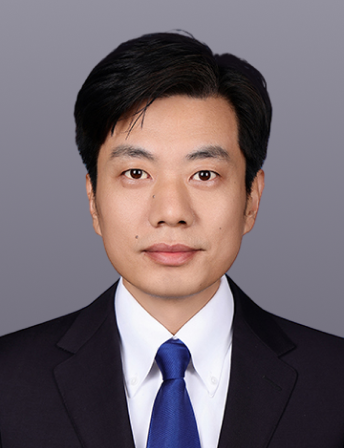
CUI Shoujun 崔守军: Professor and Deputy Director of the Institute of International Development Studies at the School of International Studies, Renmin University of China (RUC). In addition to his academic role, he also serves as the Associate Dean of the School of Global Governance. He holds the position of research fellow in the National Academy of Development and Strategy, as well as the directorship of the Centre for Latin American Studies, the executive directorship of the Centre for Middle East and African Studies, and the executive directorship of the Contemporary China Studies Program at RUC. He has participated in the International Visitor Leadership Program (IVLP) as a visiting fellow to the U.S. Department of State. Additionally, he has worked as a visiting fellow for the EU Marie Curie International Research Staff Exchange project.
About the Publication
Contemporary International Relations (《现代国际关系》)is a comprehensive academic monthly journal on international studies sponsored by the China Institutes of Contemporary International Relations. It has long been listed as the source journal of the Chinese Social Science Citation Index (CSSCI), the Chinese Core journal (International Politics) and the core journal of the Evaluation of Chinese Humanities and Social Science Journals (AMI). The CICIR mainly publishes the latest research produced by experts and scholars on international strategic issues, international relations theory, world politics, diplomacy, economy, military and other major topical issues. Its main columns include international politics and security, world economy, relations between major powers, regional and country studies, foreign publications, academic debates, conference information, and so on.

