



Welcome to the 69th edition of our weekly newsletter! I’m SUN Chenghao, a fellow with the Center for International Security and Strategy (CISS) at Tsinghua University, Council Member of The Chinese Association of American Studies and a visiting scholar at the Paul Tsai China Center of Yale Law School (fall 2024).
ChinAffairsplus is a newsletter that shares articles by Chinese academics on topics such as China’s foreign policy, China-U.S. relations, China-Europe relations, and more. This newsletter was co-founded by my research assistant, ZHANG Xueyu, and me.
Through carefully selected Chinese academic articles, we aim to provide you with key insights into the issues that China’s academic and strategic communities are focused on. We will highlight why each article matters and the most important takeaways. Questions and feedback can be addressed to sch0625@gmail.com
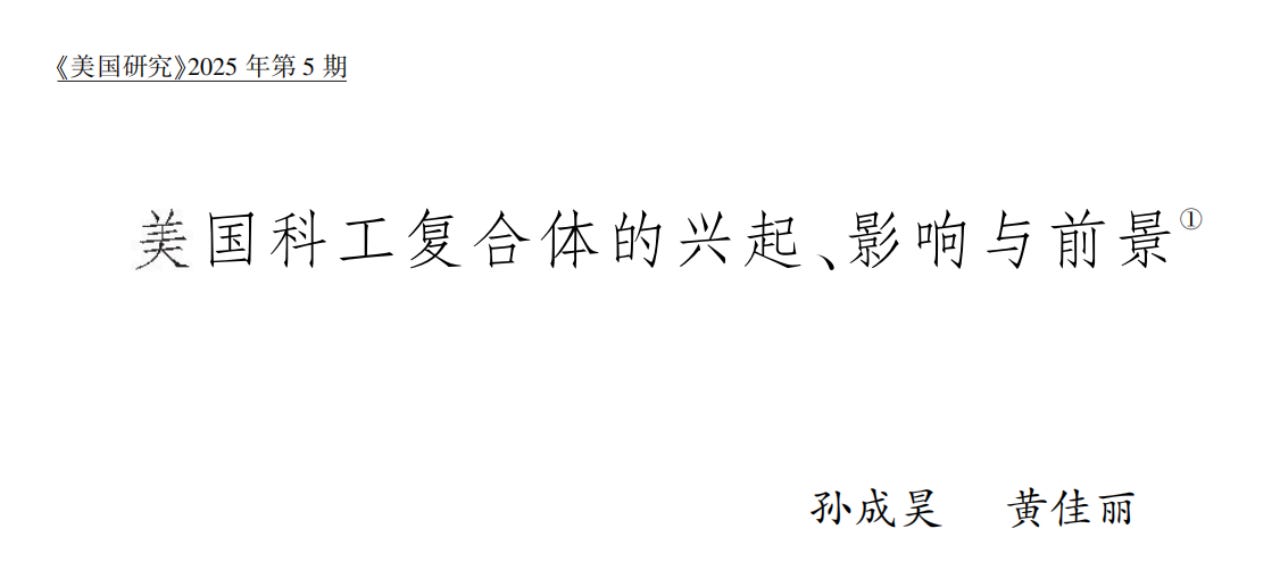
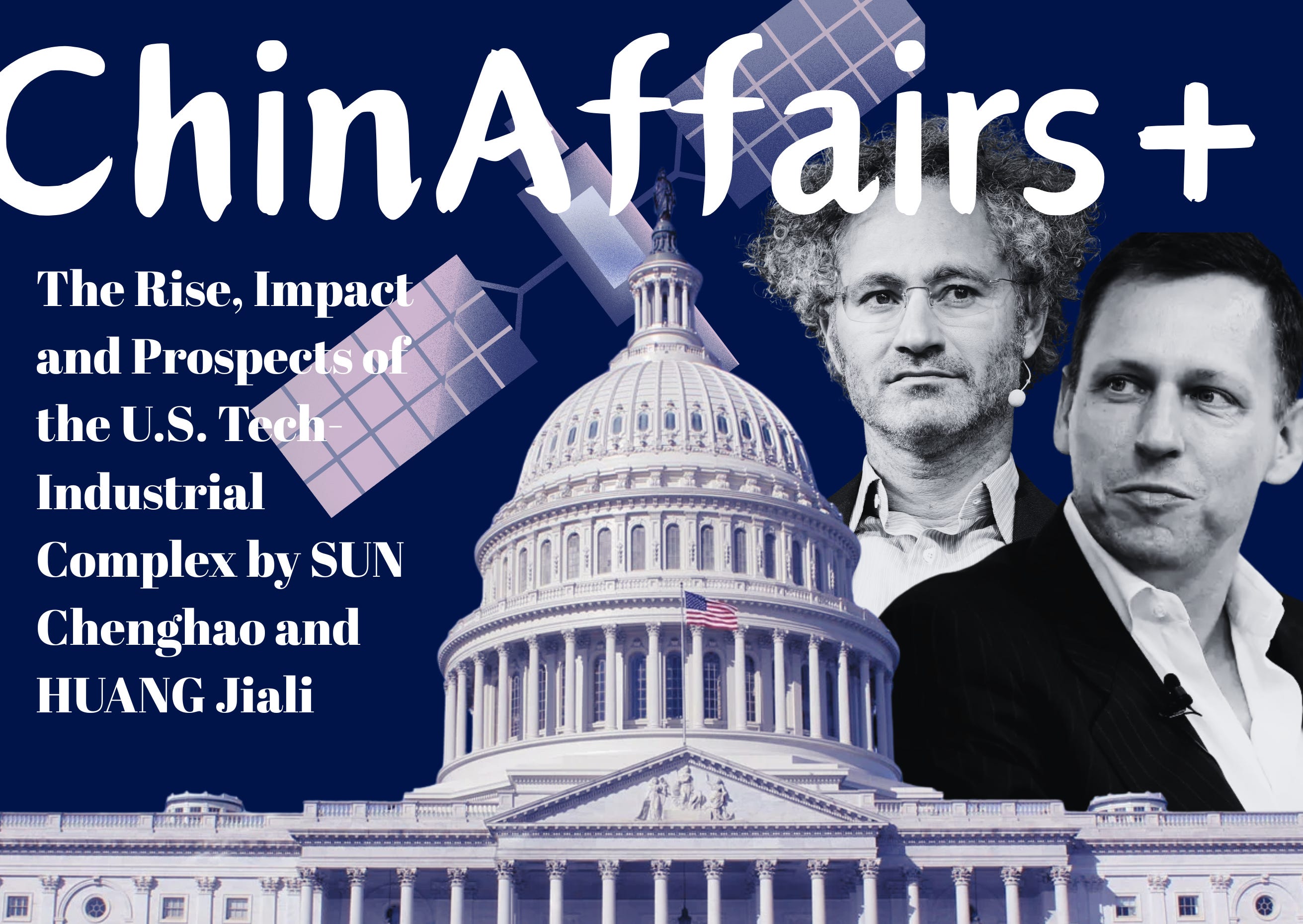
Today, we have selected an article written by Sun Chenghao and Huang Jiali, which focuses on the rise, impact, and prospects of the U.S. Tech-Industrial Complex.
Summary
The essence of the U.S. Tech-Industrial Complex is a techno-political power structure driven by national security imperatives and technological innovation. Its rise stems from the deep integration of state power, technological capital, and security logic, embodying the fusion of capital and political power: government agencies incorporate key technologies like artificial intelligence, semiconductors, and quantum computing into the national security framework; venture capital and industrial giants accelerate technological change; policymakers facilitate high-frequency interaction between government and corporate elites through the “revolving door”; both sides also seek a balance between regulation and innovation, creating a resonance effect between capital and policy.
As a strategic choice in response to global technological competition, the Tech-Industrial Complex has spurred the rise of techno-nationalism, reflecting profound adjustments within the U.S. domestic political-economic structure. At the institutional level, this new governance architecture may evolve into a long-term mechanism for science and technology governance, yet it also faces difficulties in avoiding strategic shifts due to policy changes, industrial risks triggered by market fluctuations, and public oversight pressures concerning ethics and equity. The rise of the U.S. Tech-Industrial Complex may become a significant variable driving the “tech cold war” landscape, and its development will, to some extent, shape the future global governance order.
Why It Matters
In recent years, interactions between U.S. tech companies and the government have grown increasingly intimate, leading to the gradual emergence of a new power structure termed the “Tech-Industrial Complex.” Composed of diverse entities including government departments, leading high-tech enterprises, venture capital firms, research institutions, and think tanks, this complex is relevant not only to the restructuring of the U.S. domestic political economy but also profoundly influences the evolving trends of global technological competition. Against the backdrop of intensifying U.S.-China tech competition and rising techno-nationalism, understanding the formation logic, operational mechanisms, and institutional prospects of the Tech-Industrial Complex has become a crucial entry point for analyzing the direction of U.S. technology strategy and grasping trends in global governance transformation.
Existing academic research primarily focuses on how the Tech-Industrial Complex evolved from the traditional Military-Industrial Complex, paying particular attention to the gradual formation of collaborative mechanisms between the government and tech companies amidst the Trump administration’s promotion of techno-nationalist policies. However, current studies offer limited discussion on the potential long-term institutionalization prospects of the “Tech-Industrial Complex” and its geopolitical implications for transforming global technology governance. To address this gap, this paper attempts to construct a systematic analytical framework centered on the logic of capital-power, defining the “Tech-Industrial Complex” as a “techno-political complex” deeply coupling state power, technological capital, and policy mechanisms, with the government and leading high-tech enterprises as the dominant actors, to explain the dynamic synergy and feedback effects between policy drive and technological dominance.
Key Points
1. The Formation of the U.S. Tech-Industrial Complex
(1) Embedding Technological Issues into the National Security Framework
In line with the warning given by former U.S. President Dwight D. Eisenhower in his 1961 farewell address, the deep integration of wartime technology and defense needs gradually shaped a “military-industrial-congressional” complex. In contrast, although the Tech-Industrial Complex reconstructs the structure of technology governance under the guidance of national security logic, it is not confined to traditional weapons systems. Instead, it encompasses broader frontier fields like artificial intelligence, semiconductors, and quantum computing, and permeates economic competition, social governance, and even diplomatic interactions. Within this embedded structure, tech companies are no longer mere innovators but become part of a “national capability.” Technological innovation is not purely market-driven but a process highly aligned with national strategic objectives.
(2) Deep Intertwining of Power and Capital
A second distinctive feature of the Tech-Industrial Complex is the high-frequency interaction between the government and tech elites, manifested concretely in the trend towards institutionalization of the “revolving door” mechanism. Under this mechanism, the flow between tech entrepreneurs and government officials has become increasingly frequent, forming a closed-loop power field encompassing policy, capital, and technology, thereby enhancing tech companies’ influence over government policy. As technological competition between the U.S. and China has escalated, national security has become a core concern. Consequently, companies have adjusted their strategies, relying on state power for policy protection and resource support to obtain dual guarantees for capital security and competitive advantage.
(3) Synergistic Resonance Between Capital and Policy
The third core feature of the Tech-Industrial Complex is the interaction between capital and policy through which the government and corporations promote technological commercialization and reinforce their respective strategic objectives. The government supports the landing and marketing of technological innovations through massive investments, tax incentives, and regulatory relaxation. Corporations, through lobbying, policy penetration, and close cooperation with the government, ensure national strategic goals are highly aligned with their interests, thereby pushing policy formulation in a direction favorable to their own development. This ultimately fosters a resonance effect between technology-based capital and policy, constructing a collaborative ecosystem covering the entire chain of research, legislation, and industrialization.
(4) Coexistence of Deregulation and Innovation Monopoly
Within the framework of the Tech-Industrial Complex, innovation and monopoly are deliberately shaped into a “symbiotic” relationship to serve the strategic goal of national technological hegemony. By relaxing regulations, the government both boosts the development of tech companies and consolidates the market control of tech giants in global competition. Technological monopoly is gradually evolving into governance monopoly; innovation is no longer merely a driver of economic development but has become a tool for reshaping the global power structure.
2. Drivers Behind the Rise of the U.S. Tech-Industrial Complex
(1) The Demand for Dominance by Technological Capital
The absolute U.S. advantage in key areas such as computing power, algorithms, and data means that tech companies are no longer just market participants but are gradually transforming into core actors in implementing national strategy. This trend of technological capital dominance is reflected, firstly, in the revolving door mechanism. The technological advantages and capital power of tech companies, combined with the needs of national strategy, form a powerful policy impetus, accelerating the achievement of national goals through technological commercialization.
(2) The Significance of Technology for Political Power
Policy shifts during the Trump administration marked a new stage in U.S. reliance on technology for its political power. Firstly, driven by policies such as the militarization of AI and the reshoring of semiconductor industries, the “scientific powerhouse” strategy launched during Trump’s first term elevated federal focus on key technology areas, aimed at safeguarding national security and the U.S. competitive advantage in global technology, particularly dominance in AI. Secondly, cooperation between the Pentagon and Silicon Valley deepened significantly, marking a new phase in the integration of U.S. military and civilian technology. From a broader perspective, the reliance of powerful political actors on technology is a result of the role of technology in national security, reflecting the impact of technology on modern political operations and strategic priorities.
(3) National Security Considerations and Strategic Interests
Against the backdrop of increasingly fierce global technological competition, the U.S. has gradually incorporated key technology fields into its national security system and promoted a “technology as security” governance paradigm through institutionalized measures. The formation of the Tech-Industrial Complex is the institutionalized embodiment of this shift in governance paradigm, exhibiting a strategic function of “hedging” against China. Through strengthened export controls, increased industrial investment, and the construction of technological alliances, the U.S. attempts to build a tech “iron curtain” to consolidate its leadership in global innovation.
3. The Impact of the U.S. Tech-Industrial Complex
(1) Shaping U.S. Politics
Through deep integration with government policy, legislation, and regulatory processes, the Tech-Industrial Complex has formed a pattern of “public-private co-governance.” Companies rely on policy support to enhance their technological advantages, while the government utilizes corporate technology and resources to achieve national security and economic objectives. However, the political influence of the Tech-Industrial Complex is not unconditional and may also bring profound negative effects. For instance, tech giants assisting the government in data monitoring and guiding public opinion could foster a model of “techno-authoritarianism.” This may subtly weaken oversight of the tech industry, exacerbate potential risks of social control by the U.S. government, and even gradually erode the democratic values and civil rights championed by the U.S.
(2) Reshaping Global Governance
As the Tech-Industrial Complex globalizes, its influence has long transcended corporate boundaries, permeating the institutional level of global governance. In the process of the U.S. promoting tech blockades and building technological alliances, these companies are both executors of policy tools and shapers of strategic objectives. On one hand, tech giants, by setting industry standards and dominating international forums and standards organizations, gradually translate their own interests into global rules. On the other hand, in areas like digital infrastructure and platform governance, the ecosystem of the Tech-Industrial Complex has become a core node of global cyberspace. The “technological hub” built by these companies significantly enhances their influence over information flows and digital sovereignty. Simultaneously, the transnational capital structure and patent control of the Tech-Industrial Complex also drive the development of the new logic of a tech cold war, serving as a tool for the U.S. government’s competition with China. Compared to traditional diplomatic tools, the actions of the Tech-Industrial Complex are faster and more covert; by promoting the rapid implementation of technology export restrictions, they have effectively caused a substantive redistribution within the existing multilateral technology governance system.
(3) Challenges and Impact on China
As the U.S.-China “tech war” intensifies, the Tech-Industrial Complex has played a key role in the U.S.-led technological blockade against China. This has had a profound impact on China’s technology strategy and industrial layout. In the short term, the technological blockade by the Tech-Industrial Complex has placed immense external pressure on China in multiple key technology fields, particularly in core technologies like semiconductors and high-end communication equipment. Concurrently, these U.S. measures have also prompted the Chinese government to focus more intently on indigenous technology R&D and supply chain construction, while actively expanding international cooperation.
4. Challenges and Development Prospects of the U.S. Tech-Industrial Complex
(1) Multiple Challenges Facing the Tech-Industrial Complex
Declining Autonomy of U.S. Enterprises
Corporate market behavior is increasingly influenced and constrained by national policy. Excessive government intervention may subject their decision-making processes to factors like political cycles and policy adjustments, preventing companies from quickly adapting their strategies or responding to consumer demands in the face of changing global market needs. Government intervention might also lead to a “path dependency” effect, where corporate innovation directions become locked in by government objectives.
Furthermore, enterprises within the Tech-Industrial Complex model face a dilemma between globalization and local policies: on one hand, global markets offer opportunities for transnational cooperation and expansion; on the other hand, increasingly stringent localization policies from various governments require companies to adhere to national political, economic, and technological strategies. Therefore, intensified U.S.-China technological competition in this context presents more complex transnational compliance challenges for large U.S. tech companies.
Constraints from Intensifying Political Polarization
Different political parties exhibit significant differences in their understanding and support of technology policy. Democrats tend to favor regulation-dominated tech governance, emphasizing data privacy protection, antitrust measures, and algorithmic fairness, striving to maximize public interest through strengthened government oversight. Republicans place greater emphasis on market autonomy, championing corporate freedom, and warning against the potential negative impact of excessive government intervention on innovation capacity. Moreover, political polarization exacerbates conflicts among interest groups both inside and outside the Complex, particularly regarding priority setting on key issues like data sovereignty, national security, and global market strategy. With deepening polarization, the Tech-Industrial Complex might form a tactical policy coalition in the short term rather than a stable institutional arrangement.
Significant Public Scrutiny and Regulatory Pressure
In recent years, ethical issues in the technological innovation process of tech companies, especially large platform companies, have drawn widespread attention. Examples include runaway AI-generated content, algorithmic bias, and platform manipulation of public opinion. These issues have not only led the public to demand higher standards of transparency and fairness but have also increased scrutiny of the social responsibilities of tech companies. In this environment of public opinion, the policy legitimacy of the Tech-Industrial Complex faces severe tests. If the public perceives the deep binding between enterprises and the government as exacerbating technology misuse or regulatory failure, a trust crisis for the Complex could erupt swiftly. This could lead not only to public dissatisfaction and backlash but also trigger stricter government regulation and antitrust actions.
(2) The Tech-Industrial Complex as a Potential Representative of Structural Reform
As a key lever for the U.S. to promote the upgrading of its technology strategy, the Tech-Industrial Complex could, in institutional conception, evolve into a long-term S&T governance structure, integrating government, industry, and technological forces through institutionalized means to reshape the layout of the global value chain. However, as an expedient measure based on political consensus, this model likewise faces difficulties in avoiding uncertainties arising from policy changes, market fluctuations, and ethical risks, and its high dependence on government support also constitutes a structural limitation.
From the perspective of institutional design, the construction of the U.S. Tech-Industrial Complex follows the organizational logic of the “Military-Industrial Complex,” but its goals have gradually shifted from being military-led to focusing on technological security and industrial restructuring. The U.S. government seeks to deeply intervene in the technology industry chain to promote the advantages of U.S. enterprises in technological innovation and market leadership, thereby reshaping the global technology map. If the institutionalization process of the Tech-Industrial Complex continues to advance in the future, this government-led model of technology governance may not only become a new normal for U.S. S&T governance but will also profoundly influence the rules and frameworks of global technological competition.
Conclusion
This study demonstrates that the rise of the Tech-Industrial Complex is not only a manifestation of underlying changes in the U.S. model of technology governance but also a force that reshapes the global structure of technological power. Under the dominance of the Tech-Industrial Complex, global technological competition is entering a new “Cold War” stage. However, although the Tech-Industrial Complex consolidates its technological dominance through its profound influence on the U.S. government, this model reliant on government support also faces significant tests regarding its stability and sustainability.
Confronted with this situation, China is accelerating efforts to achieve technological self-reliance and innovation, strengthening its R&D architecture, optimizing its industrial chain layout, and actively building a more resilient technological ecosystem. On this basis, the global governance concept advocated by China is gradually taking shape, promoting the establishment of global technical norms and ethical standards, and gradually breaking down the “technological iron curtain” advanced by the U.S. Tech-Industrial Complex.
Overall, the U.S. Tech-Industrial Complex will occupy an important position in the 21st-century contest for technological power. However, its ability to balance innovation with ethics, and monopoly with collaboration, will determine its future sustainability. In this technological contest, dual innovation in both institutions and technology will become the core driving force. Continuous research on the U.S. Tech-Industrial Complex is essential for understanding U.S. technology strategy, analyzing the evolution of the global technological landscape, and providing references for promoting a more open and sustainable form of global technology governance.
About the Author
SUN Chenghao孙成昊: Fellow with the Center for International Security and Strategy (CISS) at Tsinghua University, Council Member of The Chinese Association of American Studies and a visiting scholar at the Paul Tsai China Center of Yale Law School (fall 2024). Professor Sun’s research interests mainly include: American politics and diplomacy, China-U.S. relations, U.S.-Europe relations, U.S.-Russia relations, AI and international security governance.

HUANG Jiali黄佳丽:Master’s candidate at the Shanghai Institutes for International Studies.

About the Publication
The Chinese version of this article was published in American Studies《美国研究》.This is a comprehensive academic publication that delves into various aspects of the U.S., including its politics, economy, culture, and foreign relations. The journal aims to provide valuable insights and foster a deeper understanding of American society and its impact on the world. It is an essential resource for anyone interested in the multifaceted nature of the United States and its role in international affairs.

